
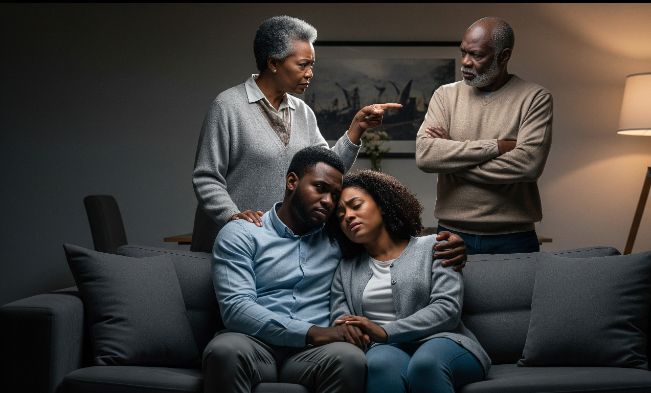
Dealing with in-laws has been reason enough for some Kenyans to steer clear of marriage.
Popular shows have long depicted the kind of maltreatment that can arise from these relationships, creating early awareness for many viewers.
Still, in pursuit of the fairytale romance, many Kenyans are willing to try and make peace with their in-laws.
Speaking to The Star, Veronica Nkatha, a recent divorcee, said she never saw the blatant hostility from her in-laws coming.
If you were a guest at Nkatha’s wedding, watching how her in-laws excitedly embraced her, you would have been astounded by what followed.
The turning point came during a family gathering. Having travelled from Nairobi in the early hours of the morning, and in her first trimester of pregnancy, Nkatha was exhausted. After informing her in-laws, she excused herself to take a short nap.
Unbeknownst to her, this act sparked deep resentment. Her in-laws believed that, as a “Nairobi woman,” she thought herself too good to join the other women in the kitchen to prepare food for guests.
In a panicked attempt to make amends, Nkatha volunteered to clean the pile of greasy dishes. But the damage had been done. When the gathering ended, none of her in-laws bid her goodbye.
“I think my in-laws always harboured deep hatred for me that they expertly concealed,” Nkatha lamented.
“I don’t believe such a trivial matter could have led them to treat me like an outcast.”
Nkatha endured eight more years of cold treatment. What finally pushed her to ask for a divorce was when her husband dismissed her concerns as being dramatic.
The person who was supposed to shield her from the world’s cruelties turned a blind eye to her pain.
From his first introduction ceremony, David Ngugi, who has now been married for three years, knew his in-laws were not fond of him. Coming from a humble background, he felt judged by his fiancée’s family, who believed he was just another man looking to marry into wealth.
To make matters worse, the bride price they demanded was exorbitant—Ngugi joked that he’d have had to rob a bank to raise it.
Defeated, Ngugi returned home and began fundraising among his friends. Despite their warnings that he was marrying out of his league, Ngugi was determined.
He couldn’t imagine life without his fiancée and was willing to go to great lengths to be with her. Since she wasn’t present when her family belittled him, she was unaware of the mistreatment he had faced.
“I tried so hard to hide the stress I was going through,” he said. “But when my fiancée found out how her family treated me, she stormed to her parents and berated them.”
Though her parents remained adamant in their disapproval of Ngugi, she refused to back down. Eventually, she cut ties with her family. While Ngugi tried to talk her out of it, she insisted she wouldn’t associate with people who judged others based on money.
While many Kenyans describe their in-laws as the epitome of a nightmare, others defy the odds and build strong relationships. One such case is Hannah Benta, married for eight years.
Before her marriage, Benta was anxious about how things would unfold with her in-laws. Although they had been kind during the dating phase, she worried it was all a façade.
Her fears were not unfounded. As a child, Benta had witnessed her mother suffer mistreatment from her in-laws. Living in the same compound, her mother had nowhere to escape the cruelty. Yet she always wore a smile, masking the pain she endured.
“I vowed from a young age never to put up with the same treatment,” Benta said.
“But despite the walls I’d put up, my in-laws consistently showed me love and care. Today, my mother-in-law is one of my best friends.”
According to marriage therapist Will Okello, dealing with in-laws remains one of the biggest hurdles for Kenyan couples. He advises couples to pay attention to patterns.
“Humans are predictable, and so are your family members,” Okello said.
“The best predictor of future behaviour is past behaviour. Knowing this allows you to prepare for how situations might unfold.”
He encourages couples to reflect on previous visits, conversations, and reactions: “Is communication met with openness, or with dismissal? Get curious about past interactions. They’ll give you clues about how to show up in the future, because people rarely change that much.”
Okello concludes, “I can never encourage anyone to stay in a toxic environment created by in-laws. Walking away doesn’t make you weak, it means you’re prioritising your peace, which I will always applaud.”






