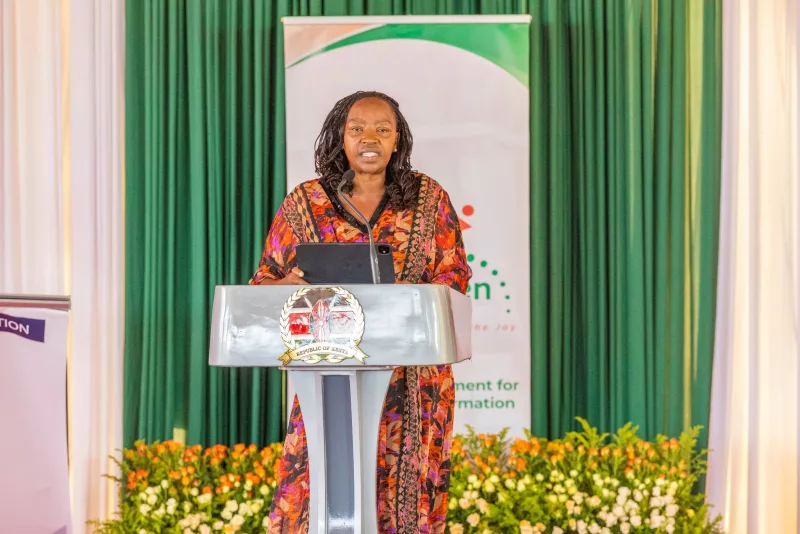
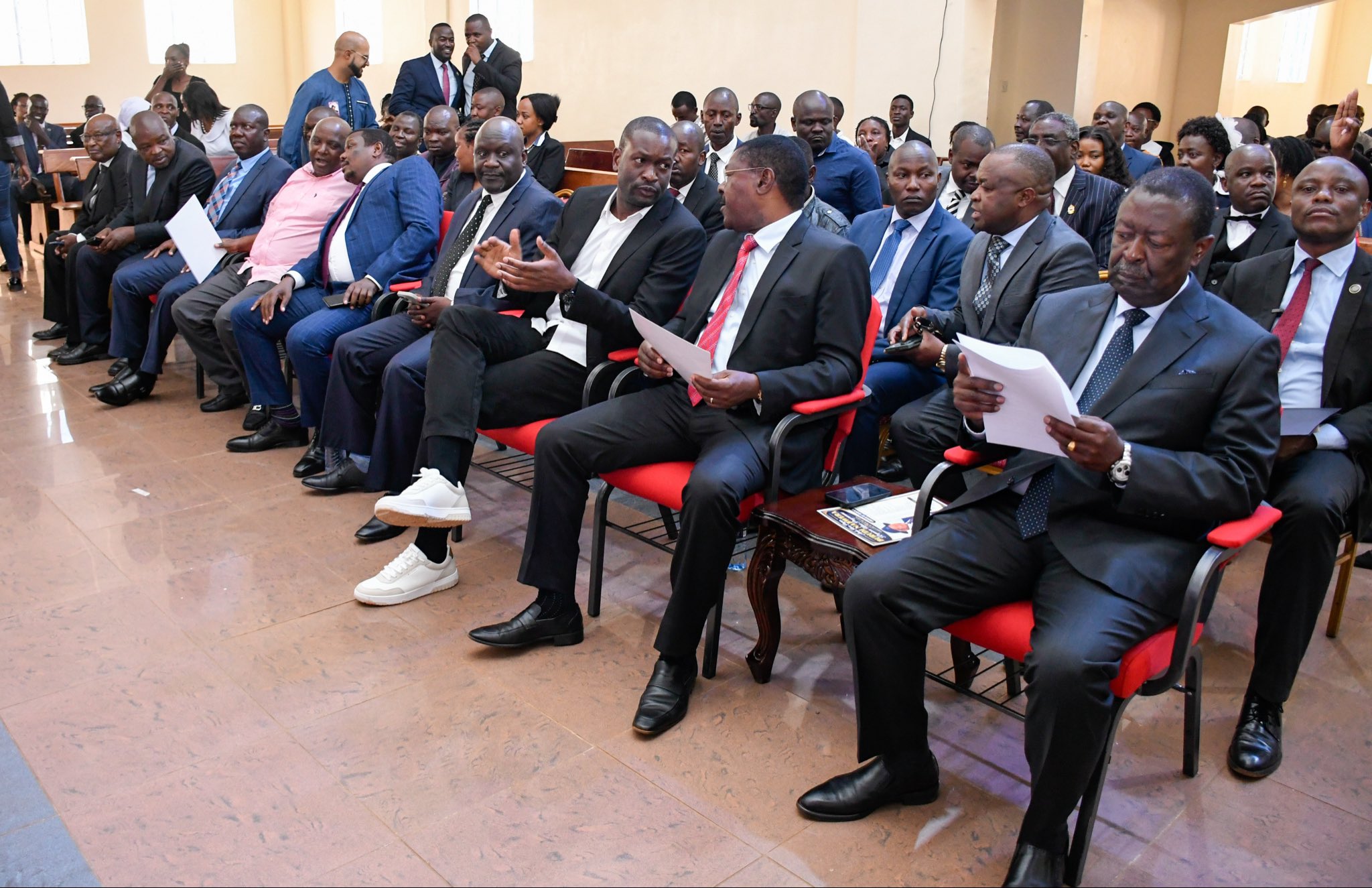
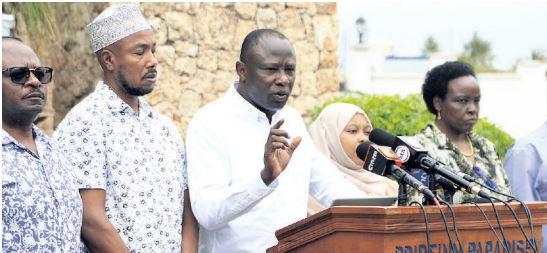
 IEBC commissioner Moses Mukhwana, CEO Hussein Marjan, chairperson Erastus Ethekon, vice chairperson Fahima Abdalla and commissioner Mary Sorobit in Mombasa county /JOHN CHESOLI
Although the Independent Electoral and Boundaries Commission has come in 906 days late, the agency is in for a wild ride.
With barely two years until the 2027 general election, the commission’s in-tray is overflowing.
Due to the prolonged vacancy, several pending by-elections remain for positions in the National Assembly, Senate and county assemblies.
Additionally, the commission must conduct continuous voter registration to ensure eligible citizens are enrolled.
There is also an ongoing need to clean up the voter register and address concerns about “ghost voters” or discrepancies.
Then there is the issue of laws requiring amendment. These include draft revisions to election-related regulations, such as the Elections (General) (Amendment) Regulations, 2024; the Elections (Voter Education) (Amendment) Regulations, 2024; and the Elections (Technology) (Amendment) Regulations, 2024.
A key challenge would arise if these amendments were enacted too close to the general election, hindering adequate preparation.
The agency is also staring at underfunding—amid the need to procure new Kiems kits—and has limited time to review lessons from previous elections to refine its processes and implement its strategic plan. This is a potential problem.
The pending workload further includes reviewing the names and boundaries of constituencies, which should be done at intervals of not less than eight years and not more than 12 years, and must be completed at least twelve months before a general election.
While an increase in constituencies is unlikely, the IEBC may need to redraw boundaries based on demographic changes.
The last review was conducted in 2012, making the upcoming one overdue. Its fate now rests with the courts after missing the 2024 deadline.
But the new elephant in the room is the issue of recalls.
Barely had the newly constituted IEBC touched ground than petitions for the recall of leaders started pouring in.
The commission confirmed receiving petitions seeking the removal of four Members of Parliament.
While the names and detailed reasons were not disclosed, current events offer plenty of clues. One can only imagine the unease among leaders who have angered citizens over the past year.
The Bill to recall leaders, primarily enshrined in Article 104 of the constitution, provides a structured process for voters to remove an elected official from office before the end of their term.
This provision—a crucial element of direct democracy—empowers constituents to demand greater accountability from those they entrust with their representation.
Positions subject to recall include MPs and MCAs. However, despite the constitutional provision, no leader in Kenya has ever been successfully recalled. While there have been past attempts, none have resulted in removal.
Globally, recall elections are rare. Countries such as Peru, Ecuador, Taiwan, and Japan are among the few examples.
Taiwan took it a notch higher and experimented with the simultaneous recall of multiple parliament members, showcasing a robust application of the mechanism.
The US, particularly California, has seen high-profile recalls, including the 2003 removal of Governor Gray Davis.
The recall process begins with submission of a petition. The petition must be signed by at least one-third of registered voters.
The IEBC has 90 days to verify signatures and ensure compliance. A petition can only be filed once per term and only in the third or fourth year of a leader’s term. If validated, a recall election must be held within 90 days.
Grounds for recall include gross violation of the constitution or other laws, incompetence in performing duties, gross misconduct, and conviction for an offence punishable by imprisonment of at least six months.
Consequently, should a recall be successful, the leader is immediately removed from office. A by-election must be held within 90 days to fill the vacancy.
Pending the by-election, duties may be handled by an interim arrangement (such as other regional representatives).
The successful application of the recall bill, though yet to be fully realised, signifies a strengthened commitment to citizen participation and accountability in Kenya's democratic journey.