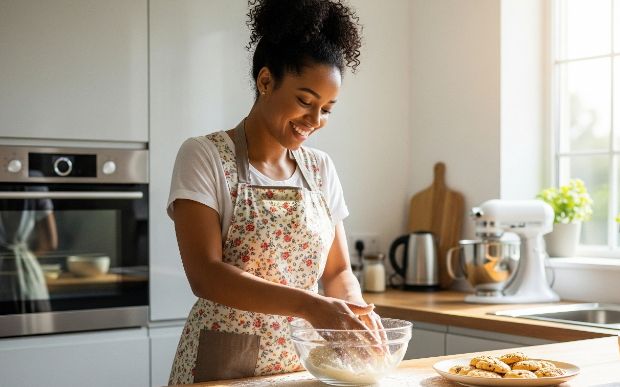
For several years, the dream for many women has been to successfully join the workforce.
Growing up and seeing how their mothers were shackled to maltreatment because of relying on a man, many women vowed to escape this reality.
A stable job meant freedom for these women- freedom to choose what situations they want to deal with.
However, there has been a sudden shift of more women being open to traditional gender roles. For this group of women, being a homemaker sounds more appealing than fighting tooth and nail in the corporate world.
Agnes Njoki had for a long time had a tunnel vision of making it big in the corporate world.
Coming from a turbulent family, Njoki had the front seat to the physical violence that her mother put up with in the hands of her father.
Njoki’s mother had been impregnated while still in high school and after dropping out, the opportunities for career advancement that would have otherwise been at her disposal, were immediately cut off.
Completely trapped, Njoki’s mother was forced to stay in an abusive household just to be assured of financial stability.
Two years after she graduated, Njoki met her husband who turned the world she knew upside down.
By that time, Njoki had been up and about in her entrepreneurial pursuits. The last thing she wanted to do was rely on a man for anything.
However, when her husband showed up in her life, the pessimistic perception of men that was etched in Njoki’s mind dissipated.
This man was soft-spoken, kind, mature, romantic- just to mention a few. Even on days when Njoki tried to self-sabotage by pushing him away, he continued reassuring her.
“Ultimately, he made me feel safe. I equally surprised myself when I decided to be a stay-at-home wife. Despite my previous apprehension, I finally accepted that the universe had finally gifted me one thing- a good man. It’s been seven years since I made that decision and I can’t complain," Njoki said.
Speaking to The Star, Natalie Adongo explains that priviledge may have played into her openness to traditional gender roles.
Growing up in a middle-class household, Adongo’s father was the breadwinner while the mother was a stay-at-home wife.
Therefore, in Adongo’s eyes, traditional roles where a woman is a homemaker has always been more her speed. Every morning, Adongo would see her mother waking up earlier than her father to get the house running.
By the time Adongo’s father left for work in the morning, breakfast was laid on the table and a scrumptious meal was packed in a lunch bag.
In the evening when her father would come from work, he would find the house sparkling clean with the nearly-done dinner simmering on the cooker.
“The family set-up that I grew up in is what feels familiar to me. I have not yet found the love of my life but trust, when I do, this is the kind of family set-up I want to embody in my future household," Adongo explained.
Right before Kimberly Njeri got pregnant with her first child, she was basking in the glory of being at the pinnacle of her accounting career.
After all the overtime she readily volunteered to take and numerous rejections when she asked for a promotion, Njoki’s efforts had come to fruition.
Therefore, when Njeri found out that she was pregnant, she was elated.
Njoki felt like it was the most optimal time for her to take up a new responsibility. Her plan was simple- give birth, take maternity leave then bounce back career-wise.
The reality of motherhood however hit her like a ton of bricks.
Njeri assumed that motherhood would come naturally to her, just like she thought it did to other women. Even though Njeri’s husband had hired a nanny to lighten the load, Njeri still felt like she was crumbling under pressure.
As if not overwhelmed enough, Njoki’s baby was colic and her constant crying almost sent Njoki over the brink of insanity. In the midst of this chaos, the only thing that would give Njoki comfort was new cooking recipes.
Whenever she got the baby to sleep peacefully for a few hours, Njoki would either be on TikTok watching cooking tutorials or in the kitchen implementing her new-found knowledge.
“Unbeknownst to me, I began embracing the homemaking life. By the time my maternity leave was over, I was not interested in going back to work.
"Most of my friends thought that my decision purely stemmed from mom guilt because they could not comprehend giving up a lucrative job position just to be a stay-at-home wife. However, I stood firm in my decision because I knew that even if I went back to work, my heart would not be in it.” Njoki says.
Sharing with The Star, Mark Kibet insists that women should be allowed to choose the kind of life that is more appealing to them.
Kibet further expresses that the women who embrace traditional gender roles should not be viewed as naïve by the rest of society.
“It is time that we stop assuming that women cannot think for themselves. Unless a woman is in a situation that is forcing her hand in being a housewife, let her make her own choice. Women who decide to be stay-at-homes are no less than women who are making big waves in the corporate world," Kibet says.
However, Roy Wafula insists that women should exercise extra caution before deciding to embrace traditional gender roles.
According to Wafula, the highly staged videos of women enjoying their lives as stay-at-homes should not be the fuel driving a decision of embracing the same life.
Every woman is in a situation that is unique to them.
Just because a stay-at-home wife with eight children on TikTok looks happy while making homemade meals does not necessarily mean that the same reality would be possible for every other woman.
“At the end of the day, as a woman, you are the one who will have to live with the consequences of your actions. If you impulsively decide to embrace traditional gender roles, you will be the one alone in the house catering to your family’s needs. Choose wisely," Wafula advises.