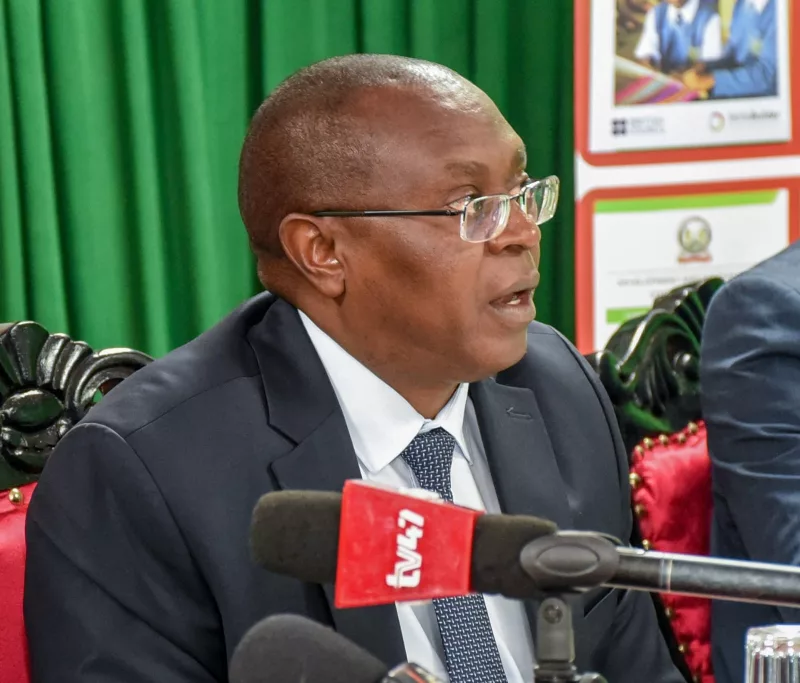
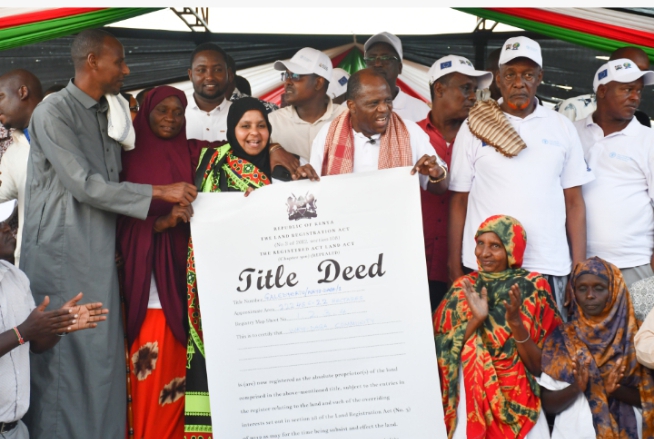
 Tana River Governor Dhadho Godhana, with other officials, hand over the title on July 24, 2025/COURTESY
The title is the first of its kind in the county and only the second in Kenya under the Community Land Act.
It concludes an 11-year journey that began in 2014, ending decades of historical land marginalisation.
The handover ceremony, held in Wayu-Boru village, drew residents, county officials, and representatives from the Food and Agriculture Organisation (FAO), which implemented the project in partnership with the Tana River County Government and the Residents' Land Committee.
The initiative was funded by the European Union under the Digital Land Governance Programme.
For years, Wayu-Dabba residents lived on their ancestral land without legal documentation, facing threats of eviction, land encroachment, and frequent inter-community conflict.
“This is a historic moment, not just for Wayu-Dabba, but for Kenya as a whole,” said Guyo Ibrahim, chairperson of the Community Development Committee.
“Since 1963, we have lived as squatters on our land. Today, we are finally recognised as rightful owners. This ends years of uncertainty and opens the door to development and security.”
With formal ownership, the community now has the power to manage and protect its land, pursue sustainable practices, and resolve long-standing conflicts.
Ibrahim said the title deed also lays the foundation for economic growth and peaceful coexistence in the region.
The process was praised for its inclusivity.
Galedyertu Sub-County Persons with Disabilities chairperson, Mohammed Dido, lauded the engagement of women, persons with disabilities, and minority groups at every stage.
“This process has set a new benchmark in participatory governance,” said Dido.
“We felt involved, respected, and represented. This level of inclusivity must now be replicated across future land governance efforts.”
FAO Land Governance Officer Husna Mubaraka congratulated the community, noting the achievement aligns with FAO’s goal to strengthen land tenure and promote sustainable land use.
“This milestone proves what’s possible when development is community-led and grounded in equity and transparency,” she said.
“Our next phase will focus on building capacity, training communities on sustainable agriculture, land use, and market access.”
She emphasised that Wayu-Dabba and other pastoralist communities in Tana River possess arable land with the potential to enhance Kenya’s food security.
Governor Dhadho Godhana, who presided over the handover, commended the community’s resilience despite political resistance and misinformation campaigns that tried to derail the process.
“Some tried to politicise this process and cast doubt on our partners’ intentions,” said the Governor.
“But the community stood firm. Today, we celebrate the fruits of their unity and perseverance.”
He said more community land registration proposals are underway, with some awaiting County Assembly approval.
He reaffirmed his administration’s commitment to securing land rights for all.
“We are determined to ensure no community is denied what is rightfully theirs due to ignorance or manipulation,” he said.
“Land must become a tool for empowerment, prosperity, and development.”
The event ended with traditional blessings, cultural performances, and the symbolic handover of the title deed to community leaders.
For many, it was an emotional moment.
Some shed tears of joy, overwhelmed by the realisation of a long-awaited dream.
As the sun set over Wayu-Dabba, a community once living in fear of displacement now stood united and proud.
The title deed in their hands signified more than ownership; it was a declaration of identity, resilience, and a hopeful future.