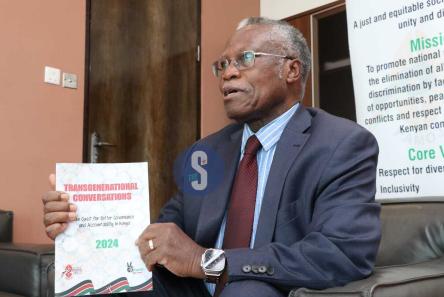
The country's national unity is under serious threat as early political campaigns stir ethnic tensions and organised gangs gain ground, warns National Cohesion and Integration Commission (NCIC) chairperson Samuel Kobia.
In an exclusive interview with The Star, Kobia raised concern over politicians using tribal rhetoric and identity-driven slogans that risk deepening divisions across the country.
He revealed that NCIC is investigating 23 hate speech cases—most involving leaders from the ruling coalition—and urged political responsibility.
Kobia also sounded the alarm on growing gang activity in major cities and their links to international criminal networks, warning that Kenya could face Latin America-style criminal influence if urgent action isn’t taken.
He called for expanded powers for NCIC, including vetting candidates, and highlighted the commission’s successes in peacebuilding and boundary conflict resolution.
Below is the full Q&A with Dr. Kobia on Kenya’s cohesion challenges and NCIC’s ongoing efforts.
Q: What is the current state of national cohesion and unity in Kenya?
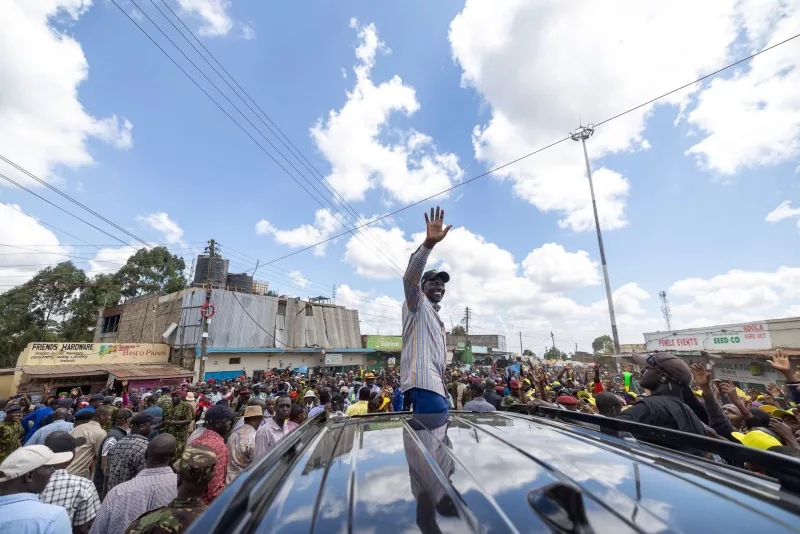
We are facing a serious threat to our national unity. Politicians have already begun early campaigns—over two years ahead of the next general election—and their rhetoric is increasingly tribal. This is creating tension across the country and undermining the idea of a unified national identity.
Many Kenyans now feel more aligned to their ethnic groups than to the nation as a whole.
Instead of focusing on issues, political leaders are stoking ethnic divisions using coded language like “Hi Cousins” or “Cuzo,” which subtly segment Kenyans into ethnic or linguistic blocs.
Q: How dangerous are these emerging tribal expressions in the political space?
They are extremely dangerous. We’re seeing people now self-identify as Bantus, Cushites, or Nilotes in political conversations. That type of messaging sows division and risks taking us back to a dangerous path of tribal politics that undermines national progress.
Q: What is the status of hate speech investigations being conducted by the Commission?
As of July 21, the Commission is investigating 23 active hate speech cases. Most involve politicians. Out of these, 14 individuals have appeared before us for questioning. Five have failed to respond to official summons, while three others are yet to appear.
We have already forwarded two cases to the Office of the Director of Public Prosecutions (ODPP) for further action. We are determined to hold individuals accountable for divisive rhetoric and will fulfil our mandate without fear or favour.
Q: The Commission is sometimes accused of bias. What is your response to such criticism?
Some opposition politicians claim we are targeting them while ignoring those in government. That is false. Of the 23 cases under investigation, nearly three-quarters involve individuals affiliated with the ruling coalition. The facts speak for themselves.
In fact, a prominent Kenya Kwanza politician is scheduled to appear before us next week, with another following soon after. Our commitment is to impartiality and the rule of law—not political affiliations.
Q: The NCIC lacks prosecutorial powers. How does the Commission address this limitation?
We’ve long advocated for prosecutorial powers, but those haven’t yet been granted. Instead, we are engaging Parliament to amend the law and allow us to vet individuals aspiring for elective positions. That would enable us to stop unfit candidates from running, which could be more effective than simply prosecuting after the fact.
Q: What do you consider the biggest threats to national cohesion moving forward?
Organised criminal gangs pose a significant and growing threat to Kenya’s unity. We have just completed a nationwide study and will release a detailed report in the coming weeks.
Q: What did the study reveal about the extent of gang activity?
These gangs are evolving fast and resemble those I studied in South and Central America. If urgent action isn’t taken, we risk seeing gangs so powerful that they could rival government institutions—just like in parts of Latin America where politicians must negotiate with gangs to win elections.
In Kenya, gangs are already being hired to intimidate or assault political rivals. Some are well-organised and respond directly to politicians’ instructions, including through blackmail and violence.
Q: Where are these gangs concentrated?
They are mainly active in Nairobi, Mombasa, Kisumu, Kiambu, and Nakuru. Alarmingly, they are expanding into rural areas and are now collaborating with international criminal networks involved in drug trafficking and human smuggling. We must act decisively before the situation gets out of hand.
Q: How does the NCIC work with other agencies to enforce hate speech laws?
We rely heavily on collaboration. We work closely with the Directorate of Criminal Investigations (DCI), which has seconded professional investigators to us. Their support in evidence gathering and identification of suspects is critical.
We also engage the Judiciary. When I came into office, we had cases pending for over four years. Thankfully, the Judiciary has now established special courts to handle NCIC cases. We also collaborate with county administrators, community peace ambassadors, and reconciliation committees.
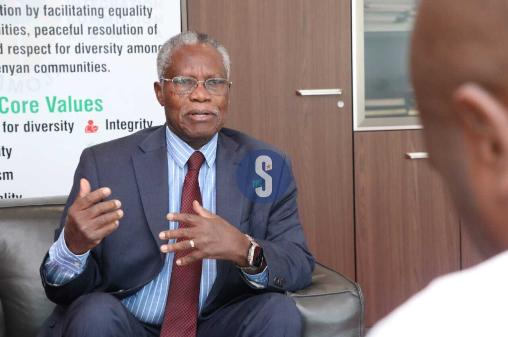
Q: What are the Commission’s most notable achievements?
We’ve achieved significant milestones in community reconciliation. In counties like Marsabit, Isiolo, Narok, and Samburu, we’ve helped communities negotiate and sign peace accords. In Mandera, we reconciled two clans that had been at war for over 10 years—they not only made peace but agreed on reparations in 2023.
Q: What remains the leading cause of inter-community conflict?
Boundary disputes remain the top trigger. Currently, 33 of Kenya’s 47 counties are experiencing conflicts rooted in boundary disagreements. The Sondu conflict, dating back to 1929, is a good example.
We are working with Kericho and Kisumu counties to establish a Peace Garden and Monument in Sondu. This site will include clearly marked boundary beacons and serve as a shared space to symbolise reconciliation.
We plan to officially inaugurate the Peace Garden on September 21, during the International Day of Peace. The site will include a market, an IT hub, and sports facilities to promote unity through development.
Q: How does the Commission ensure accountability among political leaders?
We’ve introduced the “Wall of Shame,” a public listing of leaders who breach codes of conduct, regardless of party affiliation or ethnicity. It’s a tool for transparency and public scrutiny to reduce bias and ensure that Kenyans can see who is undermining national unity.