A toxic mix of power struggles, supremacy battles and political blackmail between county executives and assemblies is severely delaying critical service delivery across multiple devolved units.
The Star has established that governors and MCAs are embroiled in bitter feuds, stalling the passage of essential county budgets and development plans and crippling public services.
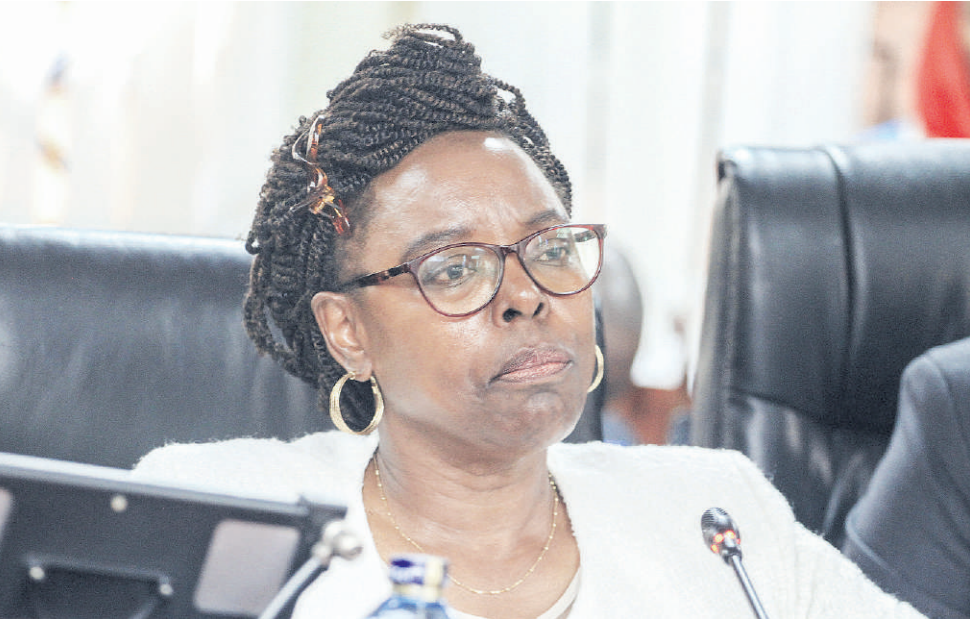
“These wrangles are affecting service delivery significantly,” said Controller of Budget Margaret Nyakang’o.
Nyakang’o described the relationship between some county executives and assemblies as dysfunctional and “convoluted,” with political rivalry often taking precedence over citizen needs.
At least five counties – Bungoma, Machakos, Isiolo, Nyamira and Meru – are grappling with active or recent standoffs between the executive and legislative arms of government, undermining day-to-day operations.
Other counties, including Kilifi, Wajir, Nandi, Kakamega and Kericho, have also experienced infighting, fuelled either by executive interference in assembly operations or internal power struggles among MCAs.
“If county priorities are not agreed upon, implementation becomes lopsided. That means citizens don’t receive the services they deserve,” Nyakang’o warned.
In many cases, development projects are being executed in a fragmented and uncoordinated manner due to deep-seated mistrust between MCAs and governors.
“We’ve seen cases where MCAs insist on spreading resources thinly. Because of mistrust, they can’t focus on completing one project before moving to another. Everyone wants their own share, regardless of the bigger development picture,” she said.
Citing Meru county as a case in point, Nyakang’o noted that MCAs frequently demand control over specific development funds, leading to incomplete projects that fail to yield meaningful impact.
“The result is scattered, half-baked projects that serve no one,” she observed.
In some instances, assemblies have resorted to what she termed “political blackmail” – deliberately delaying, overhauling, or rejecting crucial proposals to extract concessions from governors, assert political dominance, or settle personal vendettas.
“The assembly sometimes acts not out of necessity but to punish the executive. Unfortunately, this only ends up hurting the people they represent,” Nyakang’o said.
As counties approach a new financial year amid mounting public expectations, the Controller’s warning is likely to reignite debate on whether the devolution framework is being undermined by the very institutions meant to uphold it.
In Bungoma, the power struggle has morphed into a full-blown legal standoff between Governor Kenneth Lusaka’s administration and the county assembly.
Nyakang’o revealed that MCAs disbanded the legally constituted budget committee and formed an ad hoc team that significantly altered the executive’s budget proposal.
“There is a serious case in Bungoma. The assembly disbanded the budget committee and formed an ad hoc one, which then mutilated the proposed budget. They passed their own version using coercive tactics,” she said.
Following the fallout, courts intervened and issued orders barring the disbursement of funds, effectively freezing all county operations and halting the implementation of Lusaka’s development agenda.
In Nyamira, chaos erupted after a failed attempt to impeach Governor Amos Nyaribo. The fallout led to the impeachment of speaker Enoch Okero, accused of betraying pro-impeachment MCAs.
This sparked a bizarre turn of events – two separate assemblies emerged. One, led by Okero, was dubbed Bunge Mashinani and held its sittings outside the official chamber. The other continued as the main assembly.
Surprisingly, the executive forwarded its business to the Okero-led faction for consideration.
The matter caught the attention of the Senate, which formed a committee to probe the standoff. The committee, along with a Bomet court, declared Bunge Mashinani illegal and ordered those involved to be surcharged.
Eventually, Ekerenyo MCA Thaddeus Nyabaro was elected speaker. A committee was subsequently formed to investigate 12 MCAs allied with Okero, recommending their removal for missing eight consecutive sittings.
However, the suspended MCAs challenged the move and secured a court order temporarily lifting their suspension. They are now also contesting the legitimacy of Nyabaro’s election.
Isiolo county assembly is similarly gripped by leadership wrangles. At the centre of the chaos are two rival speakers and two competing clerks, all claiming authority.
Tensions intensified following the impeachment of Governor Abdi Guyo, which the Senate later nullified for procedural irregularities.
Currently, speaker Abdullahi Banticha and his predecessor, Mohamed Koto, are locked in a court battle over control of the assembly.
Last week, Justice Hellen Wasilwa of the Employment and Labour Relations Court issued conservatory orders temporarily halting the removal of Banticha, preserving the status quo pending a full hearing.
Banticha moved to court after clerk Salad Guracha, who had signed his appointment gazette notice, later signed another notice revoking the same. Ironically, Guracha had earlier been suspended by Koto.
The impeachment debacle has left the assembly bitterly divided and deeply dysfunctional.
In Machakos, the county assembly has been rocked by fistfights, suspensions and political infighting, with reports of interference from the executive.
Speaker Ann Kiusya suspended the business of the House indefinitely on April 8, following fracas in the chamber.
The trouble began when Kiusya announced the removal of minority leader Julius Ndawa, who was accused of disloyalty by his Maendeleo Chap Chap party.
Chaos erupted again when the speaker moved to announce the removal of majority leader Nicholas Nzioka, seen as an ally of the executive.
As tensions flared, MCAs engaged in a shouting match and some got into physical altercations. The speaker was forced to suspend assembly sittings indefinitely.
The Senate Devolution and Intergovernmental Relations Committee has since taken up the matter.
Nzioka told the committee that the speaker's decision was unconstitutional and disruptive.
“She usurped the assembly’s legislative mandate. Her decision to suspend sittings lacks a legal basis and is impairing governance and service delivery,” Nzioka said.
Last month – more than two months after the suspension of the activities – the Senate committee ordered the assembly speaker and members to resume their plenary sessions, operations and other programmes.
“The committee resolves that the members of the county assembly should operate within the law and never resort to physical confrontations as such action is contrary to Chapter Six of the constitution on leadership and integrity of elected leaders.”
Instant Analysis
As power struggles continue to erupt across counties, ordinary citizens remain the greatest casualties. Roads go unbuilt, hospitals lack medicine, stalled budgets delay salaries and essential projects grind to a halt – victims of political turf wars. What was once envisioned as a transformative tool for grassroots empowerment through devolution now teeters on the edge of dysfunction. Instead of delivering services closer to the people, county governments are increasingly consumed by political brinkmanship, personality clashes and a deepening disregard for constitutionalism and the rule of law. Unless urgent reforms and responsible leadership take root, the promise of devolution risks being reduced to an empty slogan – betrayed not by structure, but by those sworn to uphold it.