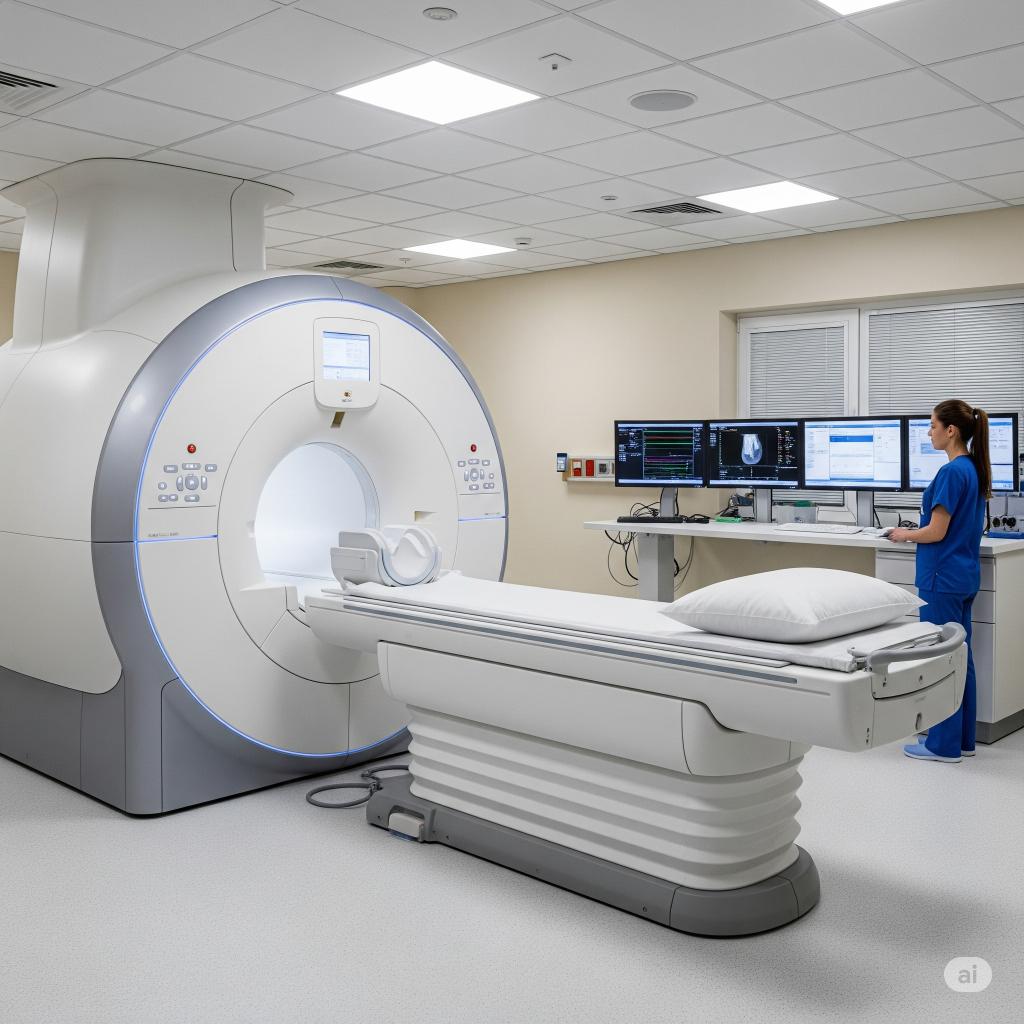
Last week, a 61-year-old man died after he was sucked into a Magnetic Resonance Imaging (MRI) machine at a medical centre New York's Westbury, Long Island.
His mistake was entering the MRI room at Nassau Open MRI while he was wearing a heavy metal necklace. He had been called by his wife, who is a patient at the facility after a scan.
Nassau County Police Department said he entered while the machines were still running. He was rushed to hospital but succumbed on Thursday.
"The male victim was wearing a large metallic chain around his neck causing him to be drawn into the machine, which resulted in a medical episode," said Nassau County Police Department.
Accidents in MRI rooms are rare occurrences with just a few reported cases as staff always ensure safety measures are taken.
One fatal incident that was reported was in 2017, where 32-year-old man, Rajesh Maru, died after being pulled into an MRI machine while carrying an oxygen cylinder, which was drawn by the magnet into the scanner.
The cylinder struck the machine and ruptured, leaking liquid oxygen that Maru inhaled, causing a fatal pneumothorax
The other was in 2001, where a six-year-old boy, Michael Colombini, died of a fractured skull at a New York City medical centre while undergoing an MRI exam after its powerful magnetic force propelled an oxygen tank across the room.
There are other non-fatal MRI related incidents that have also been reported before.
How MRI works
MRI machines use a strong magnetic field and radio waves to produce detailed images of organs and soft tissues.
These machines are essential in modern medicine. But they pose significant risks when metal is involved.
The interaction between metal and MRI machines can be dangerous. It can even be fatal and therefore, safety protocols are vital.
The primary danger with metal and MRI machines lies in ferromagnetism. Ferromagnetic materials are strongly attracted to magnetic fields like iron, nickel, and cobalt among others and many everyday objects contain these metals. Medical implants also often contain them.
When a ferromagnetic object enters the MRI suite, it becomes a projectile. The magnet pulls it with immense force. This is known as the "missile effect."
A seemingly harmless object can turn deadly. Keys, pens, and even oxygen tanks can become projectiles.
Patients are typically asked to remove metal items and change out of their clothes before undergoing MRI scans or going near the machine.
According to the US Food and Drug Administration, MRI machines have magnetic fields that will attract magnetic objects of all sizes which "may cause damage to the scanner or injury to the patient or medical professionals if those objects become projectiles".
Electronic devices are also face another threat as the powerful magnetic field can erase data.
It can also damage integrated circuits.
Cell phones, smartwatches, and hearing aids should never enter the MRI suite. They can be permanently damaged.
Metal inside or on patients can also distort MRI images by creating dark stpots or streaks that can obscure important anatomical details, which can lead to misdiagnosis. It also reduces the diagnostic value of the scan.
Electrical currents can be induced in metallic objects like jewelry or body piercings. These induced currents can generate heat which can cause severe skin burns. Patients are always instructed to remove all jewelry. This includes hidden piercings.
Safety protocols
All MRI facilities must implement rigorous and non-negotiable safety protocols to protect patients and staff. They prevent dangerous incidents.
The first step is comprehensive patient screening, which is also the first line of defense. Patients complete detailed questionnaires. They disclose all implants and metal in their bodies. This includes dental work, surgical clips, and tattoos.
These facilities use metal detectors to scan patients before entering the MRI suite to identify hidden metallic objects.
MRI facilities are also divided into distinct zones, with each zone having specific access restrictions.
Usually, Zone I is the general public area, Zone II is the patient waiting area, Zone III is the control room and has restricted access and Zone IV is the MRI scanner room itself.
It is the most restricted zone where only trained personnel and screened patients can enter.
They must have clear signage with Danger warnings prominent.
Patients receive thorough instructions and change into safe gowns before getting into MRI rooms.
All MRI staff undergo extensive training to understand the dangers of metal. They are proficient in safety protocols.
Facilities must have clear emergency procedures addressing potential incidents. They cover what to do if a metallic object is pulled into the scanner and outline steps for patient injury.