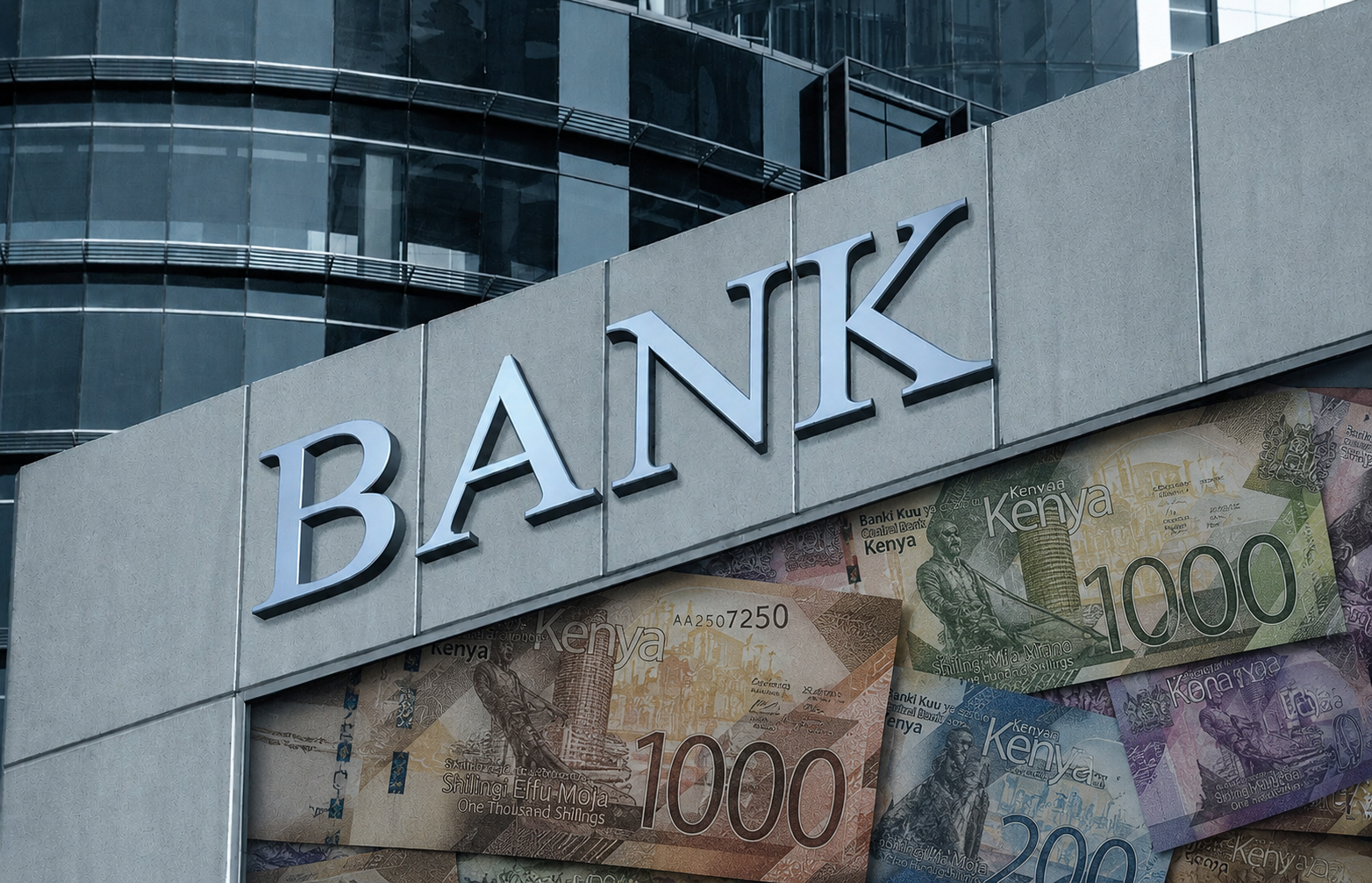
 The banking sector remained the dominant source, accounting for 70.4 per cent of total unclaimed assets.
The value of unclaimed financial assets rose to a record Sh5.182 billion in 2025, even as the number of claimants fell by 32.7 per cent, underscoring a widening gap between funds surrendered and those successfully reclaimed.
Data from the Unclaimed Financial Assets Authority (UFAA), as captured in the 2026 Economic Survey, shows the banking sector remained the dominant source, accounting for 70.4 per cent of total unclaimed assets.
The information and communication sector followed at 14.9 per cent. Unclaimed financial assets refer to intangible holdings such as dormant bank accounts, uncashed dividends, stocks, matured life insurance policies and death benefits that have remained inactive for a statutory period—typically between two and five years—without owner activity.
These assets are deemed abandoned and often remain unclaimed due to factors such as owner forgetfulness, death, poor record-keeping, failure to update contact details, or loss of accounts during corporate transitions such as mergers.
The total value of unclaimed financial assets rose from Sh4.268 billion in 2024 to Sh5.182 billion in 2025, with the banking sector submitting the largest portion at Sh3.648 billion.
Under the Unclaimed Financial Assets Act No. 40 of 2011, financial institutions are required to transfer funds from accounts that remain inactive for over five years to the UFAA.
Although still the second-largest contributor, the information and telecommunications sector recorded a slight decline, submitting Sh771 million in 2025 compared to Sh778 million the previous year.
These funds largely comprise balances held in inactive mobile money accounts. Listed companies accounted for Sh474 million in unclaimed assets, followed by insurance firms at Sh139 million.
Savings and credit co-operatives (saccos) submitted Sh40 million, pension schemes Sh1.9 million, while other financial management entities contributed a combined Sh106 million.
Despite the record inflows, the number of claimants dropped significantly from 7,445 in 2023–24 to 5,014 in 2025.
Over the same period, the total value of assets reunified with owners declined marginally by 1.2 per cent to Sh427 million, down from Sh432 million in 2024.
A five-year trend analysis shows the banking sector has consistently led in submissions.
The value stood at Sh2.6 billion in 2021, Sh2.4 billion in 2022, and Sh3.3 billion in both 2023 and 2024, before rising to Sh3.6 billion in 2025.
In terms of reunification, the highest payout was recorded in the 2021–22 financial year, when Sh604 million was returned to 8,111 claimants.
This was followed by 2022–23, when Sh467 million was paid out to 6,453 claimants.
In 2020–21, a total of Sh307 million was reunited with 5,844 claimants, while Sh432 million was paid to 7,445 claimants in 2024.
Part of the reason billions remain unclaimed is the complexity of accessing assets belonging to deceased account holders, a process marked by multiple bureaucratic steps.
Being listed as a “next of kin” does not confer automatic inheritance; it merely designates a contact person, not a legal heir.
To access such assets through the Unclaimed Financial Assets Authority (UFAA), claimants must meet strict legal requirements, including obtaining court-issued Letters of Administration or a Grant of Probate to prove entitlement.
This often entails identifying all beneficiaries, securing a death certificate and submitting certified documentation—steps that can be both time-consuming and costly.