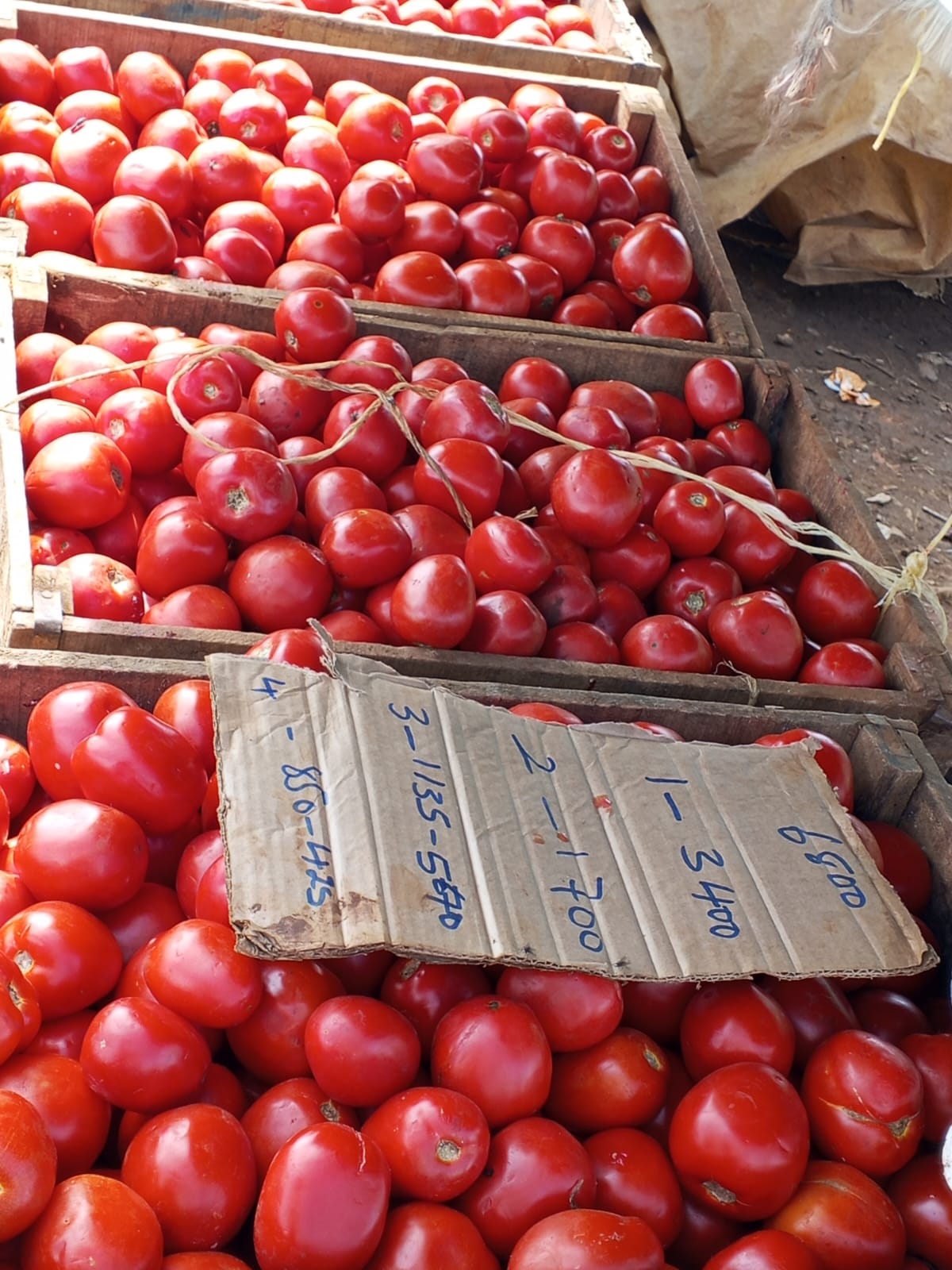
Tomato prices in Kisumu county have surged sharply following weeks of heavy rains, squeezing household budgets and pushing traders to the brink.
The supply of the commodity has since dwindled, triggering rising costs across the value chain.
A spot check at Kibuye Market showed tomatoes retailing at between Sh15 and Sh30 per piece, nearly doubling from recent months, even as reduced deliveries from farms triggered acute shortages in the lakeside city.
The spike reflects widespread disruption in supply to Kisumu, with traders reporting lower volumes, rising wholesale prices and slowing demand as consumers cut back on purchases.
At the wholesale level, a standard crate is now going for between Sh7,600 and Sh8,000, up from about Sh7,000–Sh7,500 previously.
Everline Akinyi, a trader at the Market, said the rains have severely affected supply routes into Kisumu, with farms in key producing areas experiencing heavy losses.
“Most of the tomatoes are destroyed before harvest because of too much rain, and what reaches us is very little,” she said.
To keep their stalls stocked, Kisumu traders are now sourcing tomatoes from distant tomato producing regions such as Oloitoktok, Kimana and Senete, with some crossing in from Tanzania and Uganda to fill the gap.
However, the longer supply chains have driven up costs. “Transport is expensive, and we have no option but to pass the cost to customers,” Akinyi said.
For small-scale traders, the situation is worsening. Judith Aoko, who runs a stall in Kisumu’s Polyview area, said the price of a small crate has jumped from Sh3,000–Sh3,500 to about Sh7,000, forcing her to hike retail prices.
She now sells a single tomato at between Sh15 and Sh20, but says many customers are walking away.
“People are complaining and buying less. When they don’t buy, the tomatoes spoil and we lose money,” she said.
Traders who previously shared the cost of a crate at about Sh200 each are now contributing up to Sh1,200, significantly raising the cost of stocking.
Transport within Kisumu, she said, has also gone up following an increase in fuel prices. “I used to spend Sh50 to bring my goods to the market, now it is Sh100,” Aoko said, adding, “Right now, we are just trying to survive.”
The strain is also being felt by transporters moving produce within and around Kisumu. Dickens Juma, a tuk-tuk driver operating between Kisumu and Ahero, said the number of crates he transports has dropped by half due to reduced supply and demand.
“Before, I would carry about 10 crates daily. Now I only manage around five,” he said He added that poor road conditions caused by rains are delaying deliveries and increasing spoilage.
“Sometimes it takes two to three days to move what used to take one day, and the tomatoes can go bad on the way,” he said.
With the new development, consumers in Kisumu are increasingly being forced to adjust.bn Everlyne Auma said the rising prices have made it difficult to afford tomatoes, a key ingredient in most meals.
“One tomato now costs about Sh25, and it is not enough, especially for a big family,” she said.
She has since turned to alternatives such as tomato paste and spices, and now buys tomatoes in small quantities on a daily basis.
“Before, Sh300 worth of tomatoes could last almost a week. Now it only lasts one or two days,” she said.
With rains continuing to pound key supply corridors and transport costs remaining high, traders warn that tomato prices in Kisumu could stay elevated in the coming weeks, prolonging the pressure on both businesses and households.