
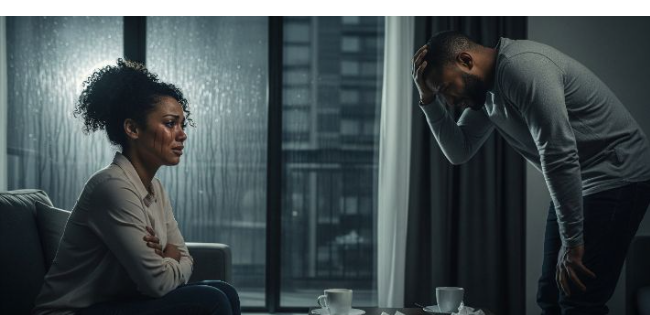
 A couple/AI-generated photo
Walking through the streets of Nairobi on weekends, it’s nearly impossible to take ten steps without spotting a couple. Whether they’re strolling hand in hand, locked in an affectionate embrace, or seated somewhere, lost in each other’s gaze, one thing is clear: love is unmistakably in the air.
If you happen to be one of the bitter singles, such sights may make you internally wince. There are moments when you might even quicken your pace, tempted to brusquely brush past the lovers. And should the couple protest, you swiftly cloak your frustration under the guise of indignation, claiming they're inconsiderate for hogging the sidewalk.
Still, when not clouded by cynicism, even the most jaded singles can grudgingly admit that being in love is an otherworldly experience. The world takes on a new glow, and inconveniences that would normally derail your day suddenly seem trivial.
Yet, as magical as love may feel, it can sour in an instant. The partner you once adored and trusted with your world can, in the blink of an eye, become a stranger.
The person whom you told all your secrets suddenly uses the same secrets as a weapon, ready to fire away when they want to jab back at you emotionally.
When things are too irreparable and a breakup is the solution that guarantees your survival, the abrupt fall from cloud nine of love is one that might scar you for life.
In Kenya, breakups are often handled with an array of emotional distress and coping mechanisms. According to a study done by Kenyatta University, many individuals, especially women, express their feelings openly and may withdraw or become angry during a breakup.
Some Kenyans turn to quiet reflection while others seek support from friends and family. In addition, the study indicated that at 84.68% intimacy intimacy-related factors were the leading cause of many relationship breakups.
If you had told Wesley Mutuma five years ago that he would be single, Mutuma would have hilariously shut your remark down as an ill-delivered April Fool’s joke. Love came knocking at Mutuma’s door at a wedding reception. He had never been the type of person to willingly attend a wedding. The hype behind weddings just seemed trivial to him.
However, when his mother insisted that she was under no circumstances going to prepare dinner that evening, Mutuma had no alternative but to attend that wedding. His goal was simple: devour all the delicacies at the wedding reception.
As he was standing in line for his second plate, he saw a female server who had not been there previously. Playfully, the female server asked Mutuma if that was his second time in the line. Dumbstruck by her beauty, Mutuma stammered an incomprehensible reply.
In an attempt to reduce Mutuma’s internal embarrassment, the female server gave him an extra piece of chicken, reiterating that the food was prepared to be ravished by guests like him. Mutuma stayed at the wedding reception late in the night, tenaciously battling mosquito bites, just to get the phone number of the female server.
After two months of the talking stage of asking mundane questions, they started dating. Their deep passion for each other held a promise of forever. However, as passionate as they were, they were also colossally toxic towards each other.
They were both young and immature, yet they always managed to find creative ways to wound each other. Their toxicity deepened over time, and when the relationship was hanging by a thread, they finally called it quits.
Mutuma recounts, “She was my dynamite. The month after our break-up was the worst for me because I felt like I was constantly in a dark abyss trying to make sense of my life."
Diana Nekesa saw her breakup from a mile away. Her relationship with a certain tall, dark and handsome fella started unconventionally. Nekesa had been buddies with this man for two years. She never tried to make a move, though she found him attractive, because she felt like he was out of her league.
On one night during a house party, this man’s ex-girlfriend came in with a new man. Seeing how bothered he was, Nekesa offered him a hug, which he obliged without hesitation.
A week later, this same man approached her and asked if she was willing to have a casual relationship with him. Thinking that this proposition was a dream come true was the first mistake she made.
Nekesa explains, “He knew the most lethal way to deplete my self-worth. Frequently, he would embarrass me in front of his friends by claiming that having any relationship with me was more of charity work.”
After Nekesa was finally able to break from the shackles of this relationship, she was determined not to wallow in misery. In an unhealthy way of coping, Nekesa ended up having more casual relationships for two years, where she was the one bringing the toxicity into the relationship.
All in all, not all Kenyans resort to unhealthy coping mechanisms in the face of a bad breakup. Speaking to The Star, Tamara Wanjiru explains that five years in the relationship had subtly built her muscles for dealing with the post-breakup blues.
At the age of 27, she was finally ready to commit to a romantic relationship. Everything up till that point had gone to plan; she had devoted years in her career to set herself up financially. All that remained was getting a husband.
When she met her now ex-boyfriend, Wanjiru made sure that he knew she was not into the cat and mouse game. She knew what she wanted out of a relationship, and marriage was the end goal.
Wanjiru laments, “When I started dating this man, I never had an inkling that he was a lion in sheep’s clothing. To date, I internally regret putting up with him after his round-the-clock cheating throughout the relationship."
The only silver lining for Wanjiru was that the blatant disrespect she endured throughout the relationship made her post-breakup journey a walk in the park. By the time she decided to leave, her boyfriend’s image had been permanently tainted to the point of no return.
According to Vincent Omondi, a relationship expert, people in relationships need to take their mental health seriously after a break-up. At that moment of vulnerability, you can either choose to rise from the ashes or fade from existence out of misery.
Healthy coping mechanisms are vital during post-breakups because without them, you might end up permanently changing the trajectory of your life for the worse.
Omondi emphasises, “Don’t be afraid to start over. It is a chance to build something better next time.”






