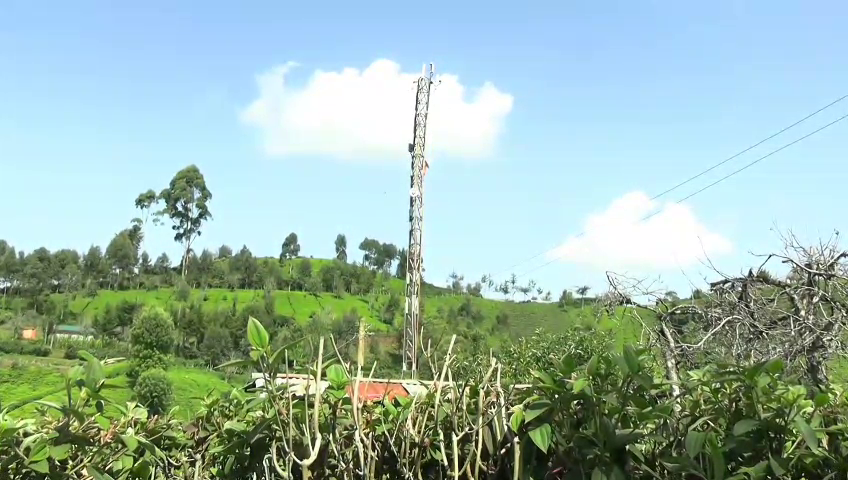
 A network booster made using old pipes, plastics and pieces of timber in Merere-ini village in Mathioya, Murang'a
John Mwangi, a 20-year-old from Merere-ini village in Mathioya, Murang'a, is the pride of his village.
Mwangi, who completed his secondary education last year, has established network-boosting equipment that has saved his village from perennial communication woes.
For years, villagers had to leave their homes and walk to Kairo or Gacharage-ini shopping centres to make phone calls, while others would walk up higher hills for their mobile phones to become usable.
This is because telecommunication companies did not provide networks strong enough for the villagers.
“I grew up watching my parents and neighbors struggling to communicate using their phones. This is what prompted this innovation. I wanted to make it easier for people to make phone calls,” Mwangi said.
When he started working on the project, Mwangi was in Form 4 and many locals thought he had lost his mind.
He was always collecting discarded items such as plastics and electric cables and they could not understand what he was working on.
That was, until the equipment became operational and the mobile phone network was boosted overnight. Suddenly, mobile phones were ringing and receiving messages, which had never been experienced.
Since then, Mwangi has upgraded the equipment – erected on a small network tower rising above the tea farms – to cover a radius diameter of 16 kilometres.
“I keep upgrading it to make it better and reach more people. I’m happy that people can now receive phone calls at the comfort of their homes,” he said.
The feedback from locals, he said, has been very positive and encouraging, as even the naysayers see the fruits of his hard work.
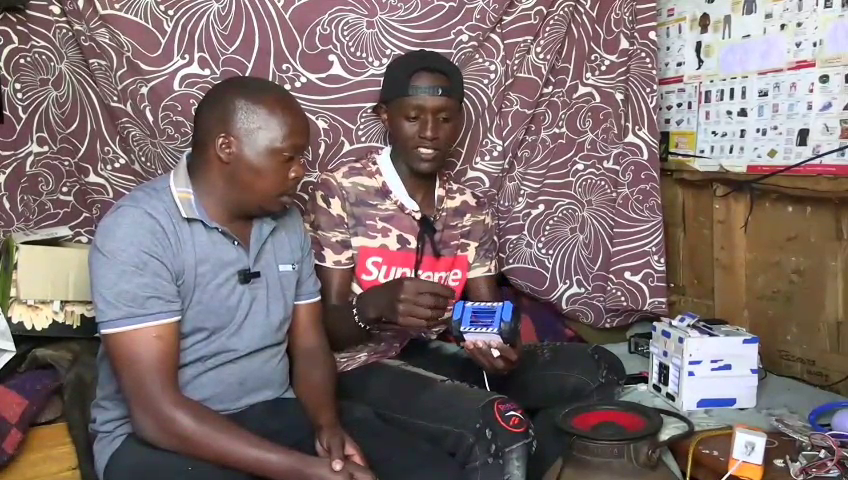 John Mwangi explains how his innovations work to a villager inside his cubicle in his parents' home in Mathioya.
He also established a mobile phone app connected to the network tower that allows him to establish the strength of the network and notifies him when it’s low.
This ensures residents can continue using their mobile phones without intermittent outages, making it a reliable booster.
Following the success of the project, Mwangi embarked on a second innovation and established a small portable fan that can be used by individuals when it’s hot.
The fan can be put in a bag and requires minimal energy to operate, with two small fans attached to each end.
Travellers can use it when it gets hot in a matatu and it is especially efficient in areas that experience hot weather, Mwangi explained.
“You plug it into your mobile phone and it blinks with a red light indicating that it’s been powered on and then switch it on,” he said.
The youth works from a small cubicle provided by his parents and which he has filled with equipment, turning it into a workshop.
A second fan he worked on is much bigger and can be used to cool the air in a large room as it uses one larger fan.
Mwangi explained that the fan is more advanced and only needs to be connected to a power source to operate.
He plans to establish a larger one with more power, which can cool air for a big group of people and can be operated using a mobile phone.
“This is labour and capital intensive work. It takes a long time to collect the material I need such as the old plastics and to prepare them for use.
“For the network booster, I use old pipes and pieces of timber to elongate it so the signal can cover a larger area,” he added.
Mwangi called for well-wishers to come in and support his innovations to enable him commercialise them and earn a living.
His aspiration is to study telecommunication engineering to equip him with the skills to support underserved communities.
“I did all this just from the physics I learnt in school. Had I gone through CBC, I am sure I’d have done this much earlier, maybe even better,” he said, urging parents to embrace the new curriculum.
Mwangi also called on youths to relentlessly hone their talents regardless of their challenges, with the faith that they will be successful.
Samuel Kaburi, Mwangi’s father, could not hide his pride as he listened to his son explain how the equipment works.
Kaburi has been supporting him with the funds needed to buy some materials, without giving up.
“When he started, he was in high school and kept asking for money to buy things while I was still struggling to pay his fees but I never turned him away. At times, he’d take the materials on credit because I did not have the money,” he said.
Kaburi said it was unbelievable that his son had brought an end to the village’s suffering due to the poor mobile phone network that locked them from the rest of the world.
Such initiatives, he added, can help create jobs while bettering the living standards of Kenyans.
Grace Wairimu, a neighbour, said those who discouraged Mwangi while he was working on the network booster were proven wrong.
“You should never discourage a young man going out of his way to do something. Had he given up, we would still be struggling,” she said, adding that he helps repair her household electronics.
“Let’s form a habit of encouraging the youth to explore their capabilities. That’s how a society grows,” she added.
Samuel Kabochi, another neighbour, said he previously missed out on important meetings because of being unreachable.
Their mobile phones stayed quiet all day and would only start working when they left the village. This hindered the flow of information.
The situation was worse when there were occurrences that needed urgent communication. People were forced to walk to each other’s home just to talk, he explained.
“Imagine a situation where someone urgently needs to talk to you, or requires your help, but you only realise it hours later when you leave your home. It was very difficult,” he said.
Kabochi said the village’s wish is for Mwangi to prosper and receive the support he requires to do even bigger things.
“If he did all this with old plastics and wires, I know he can do great things with the necessary resources.”
Instant Analysis
Mwangi, who completed his secondary education last year, has established network-boosting equipment that has saved his village from perennial communication issues. For years, villagers had to leave their homes and walk to Kairo or Gacharage-ini shopping centres to make phone calls, while others would walk up higher hills for their mobile phones to become usable. Mwangi has been able to upgrade the equipment erected on a small network tower rising above the tea farms to cover a radius diameter of 16 kilometres.
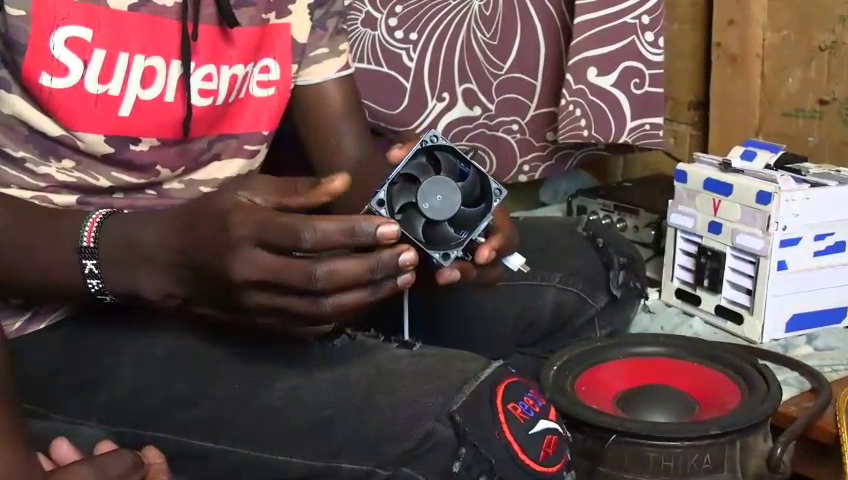 John Mwangi displays a small, portable fan that can be used by travelers or individuals.
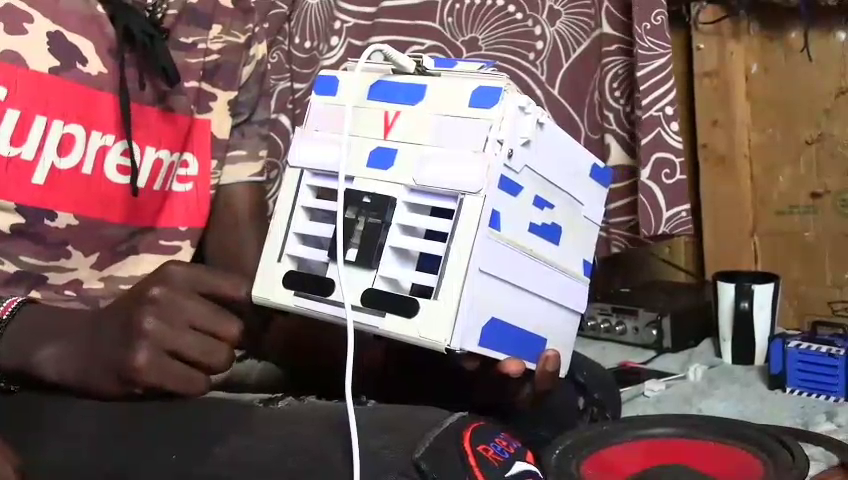 John Mwangi explains how one of his fans operates.
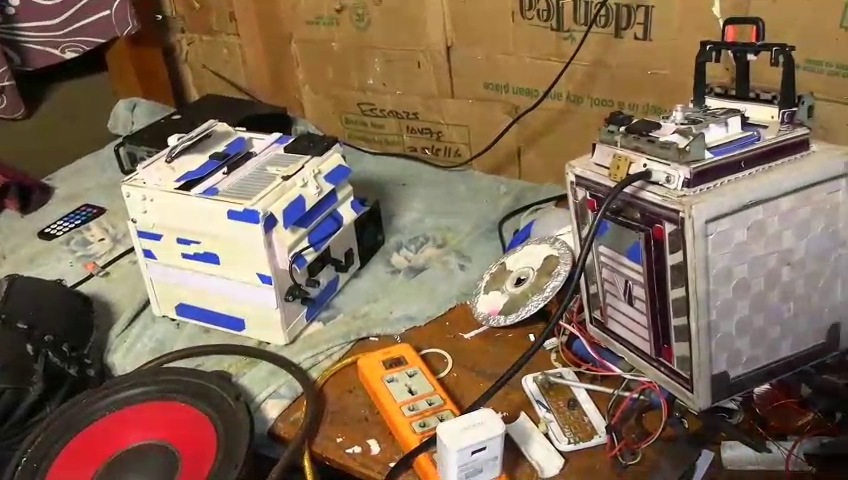 Fans established by 20 years old John Mwangi in his cubicle in his parents' home in Merere-ini village, Mathioya