

As he whiled away his afternoon after the morning’s work, Omar Kibulanga received a phone call.
A Chinese scholar had just landed in Lamu and wanted to meet him.
“Unfortunately, I am not in Lamu right now. I am in Mombasa,” he said.
Two hour later, he received another call. “I have now landed in Mombasa. Where can we meet,” the Chinese scholar told him.
She had come all the way to learn more about Swahili.
This intrigued him but at the same time made him frustrated that many Kenyans do not value Swahili as they should.
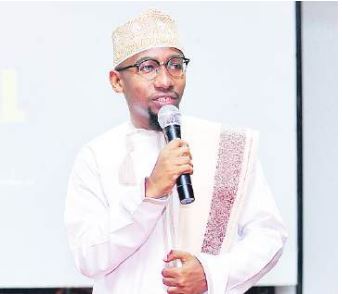
Kibulanga identifies himself as a Swahili citizen. You can drop him anywhere, from the Somalia coast to Lamu, Kilifi, Mombasa, and Vanga in the Kenyan coast, to Mozambique, or any other African coastline, and he will be comfortable.
Kibulanga is a self-appointed ambassador, having been invited across the globe to deliver speeches on the Swahili language, which is now spoken by over 200 million people globally.
He has created many documentaries about the Swahili language, culture and people. His maiden work, “Kiswahili Kitukuzwe”, has won numerous global and local awards.
Born in Lamu, some 35 years ago, and lived mostly in Mombasa, Kibulanga was naturally entrenched in his native Swahili culture, but he has gone an extra mile in promoting the language.
He has two master’s degrees, one in Media Leadership and Innovation from the Aga Khan University and another in Monitoring and Evaluation from Mount Kenya University. He got his first degree, Bachelor of Science in Information Sciences, from Moi University.
But why Swahili? “I am a Swahili. There are other ambassadorial positions that are not appointive but innate,” he says.
“I was born a Swahili, so I have no choice but to defend, protect and promote Swahili culture, the Swahili people and the Swahili language.”
Kibulanga believes Swahili is the best export from East Africa.
It is a language that has been accepted throughout Africa and outside, he says.
“Swahili is wealth. There are jobs that are available because of the Swahili language in media, in universities and many other places.”
In February, he was awarded by the Aga Khan University for the best capstone.
A capstone project is a culminating academic assignment, typically at the end of a study programme, where students apply their accumulated knowledge and skills to a real-world problem or research question.
“My topic was strategy to establish Swahili creative economy and innovation ecosystem in Lamu and Kenya generally. I believe Swahili can uplift Kenyans, especially those who have talent, and change their lives,” Kibulanga says.
“People say Swahili was born in Zanzibar, grew up in mainland Tanzania, died in Kenya and the ghosts are running to Uganda and Congo. But there are half-truths in that.
“Swahili was not born in Zanzibar. Swahili was born in Kenya, but the sad thing is that we ourselves do not value Swahili.”
He believes even the Swahili community itself and Kenyans do not realise the worth of the language.
This is because no one has taken the initiative, without selfishness, treachery, and lies, to show other people the value of Swahili.
“There are a few who benefit from Swahili. They know the value of Swahili but no one will show you the true value of the language.”
He says the colonizers used force to spread their languages. The Swahili language was never forced on people. It flowed naturally to distant lands, meaning it is an easily accepted language.
“Why would South Africa’s Julius Malema and Nkosazana Dlamini-Zuma stand and say they have dreams that one day children will run around the streets of Pretoria and Soweto speaking Swahili? “It is because Swahili is a peaceful language that spreads without force and it is a valuable language,” Kibulanga says.
He says no one in Kenya really explains the benefits of Swahili which is now so globally recognized that it has its own day of celebration.
July 7 each year is the day set aside by the United Nations Educational, Scientific and Cultural Organization to celebrate the World Kiswahili Language Day.
Unesco proclaimed it in 2021 to recognise the global importance of Swahili as a language of communication.
The University of Ghana invited Kibulanga last year to commemorate the Swahili Day, but he was unable to go.
This year he was invited to Abuja, Nigeria by the Kenya High Commission there to commemorate the Swahili Day.
For the second time, he could not go.
“It pains me that people outside Kenya see and realise the value that Swahili has but not we, Kenyans, where Swahili was born."
He says he fears one day foreigners will come to Kenya to teach the Swahili language.
A French professor, who teaches Swahili in French universities, calls him all the way from France just to ask for a single word in Swahili.
Such are the lengths people go to just to learn Swahili.
Rwanda, Botswana, Malawi, and Burundi have all incorporated Swahili in their curricular and are on their way to making it an official language, he says.
Kibulanga holds the title of the top public relations man in Kenya, given to him by the Public Relations Society of Kenya, for his efforts in promoting Swahili.
He says he needs only 10 minutes with President William Ruto to explain to him the importance of Swahili language so he could make policies that will better promote the language and have it generate more income in Kenya.
INSTANT ANALYSIS
Omar Kibulanga was invited by the University of London because of his work “The Biography of Habib Swaleh”, who lived in Lamu in the 1800s. His documentary led to the gazettement of the House of Swaleh as a national monument in Riyadha, Lamu, in Kenya in 2021. He is fortunate he got the authentic artifacts before they were taken away for preservation.







