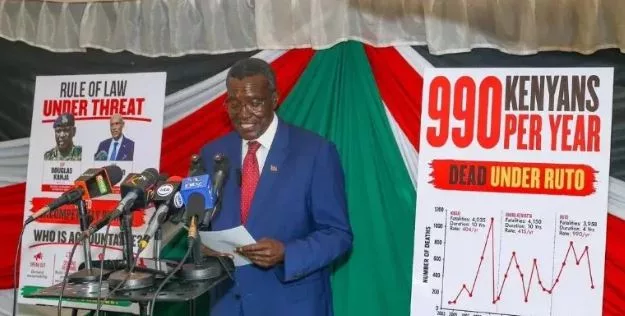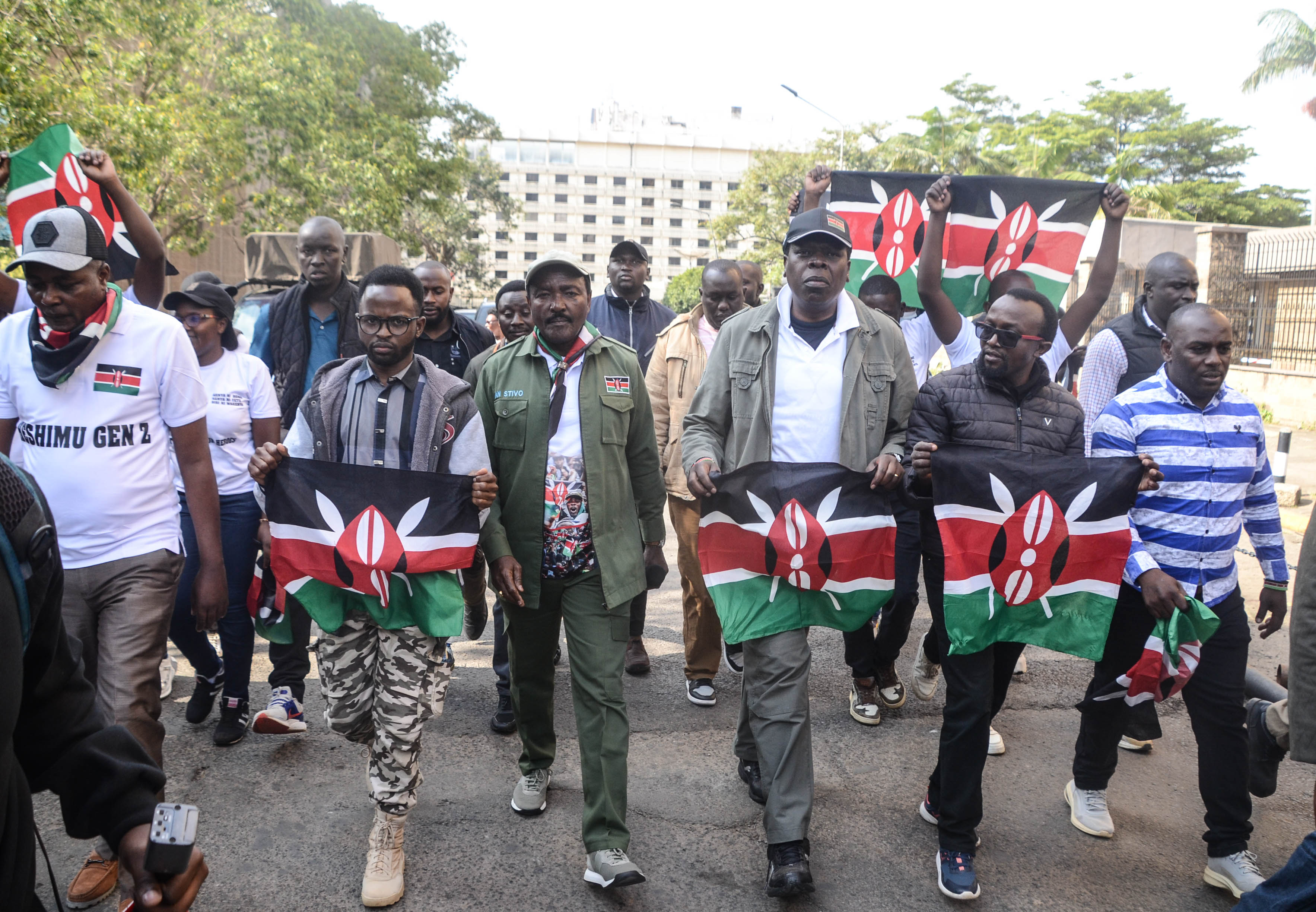
The opposition’s engagement with the Gen Z protest movement warrants closer scrutiny. Their alignment has not been sudden, but rather gradual, marked by a growing willingness to echo the sentiments and language of a movement that emerged independently of traditional political structures.
Statements have been made, appearances registered and supportive tones adopted. Yet it remains worth asking whether this posture reflects genuine solidarity, or whether it signals a more strategic effort for political advantage.
For decades, Kenya’s political sphere has been controlled by an elite class and old money, former ruling families and a handful of dynastic alliances. These are not new players. They are the same individuals whose fathers, uncles and benefactors held power in the post-Independence era.
Their influence did not fade with time. It merely shifted form. Today, they dominate boardrooms, own media conglomerates and shape public discourse from behind the scenes. It is from this shadowed power base that a great deal of opposition politics is now funded, packaged and promoted.
It is no coincidence that the opposition’s messages gain prominent coverage across key media platforms. Nor is it surprising that narratives hostile to the current government receive amplification disproportionate to their popular origins. Who controls the editorial line? Who funds the so-called public interest broadcasts? Who curates the outrage? The same networks of privilege that have, generation after generation, fought to preserve their grip on Kenya’s political and economic levers. And yet, they now present themselves as allies of a generation demanding radical change. Is it genuine conviction, or is it a masterstroke of reinvention by a political aristocracy that never truly left?
To accept their narrative at face value is to ignore history. These are the same figures who resisted progressive tax regimes when they protected corporate wealth, yet now decry taxation when it affects the masses. They were silent when state capture benefited their allies, yet now they roar against public mismanagement. What explains this sudden moral clarity? Could it be that the current administration has disrupted old patronage channels and challenged monopolistic privileges long considered untouchable?
This is not to say the government is above reproach. Far from it. The state must be held accountable for its policy decisions, public spending and social contract. But genuine accountability cannot be delivered by those whose deepest interest lies not in reform, but in restoration. Restoration of networks, of privileges, of influence.
The goal is not always national renewal. It is often the reinstallation of a class that sees power as inheritance, not responsibility.
This contradiction raises gentle but important questions when considering some of the individuals who have recently become prominent in the opposition's ambit.
Take, for instance, the political trajectory of Kalonzo Musyoka. Over the years, his political party has undergone several name changes from ODM-Kenya to the Wiper Democratic Movement and now Wiper Patriotic Front, apparently. Could these rebrandings be interpreted as part of a broader strategic evolution, a genuine shift in political ideology, or do they simply reflect the fluid and often personality-driven nature of Kenya’s political landscape?
Given his extensive experience in public service, including his time as a legislator and as Vice President, is it firmly reasonable to explore what form his contributions have taken in areas such as education, health and economic advancement within the Ukambani region? Might some constituents still be asking which specific programmes or projects most define his legacy? Or could it be that his role in national leadership has been more subtle and less tied to visible infrastructure or economic interventions? These are not accusations, but open reflections that arise naturally in moments of national introspection.
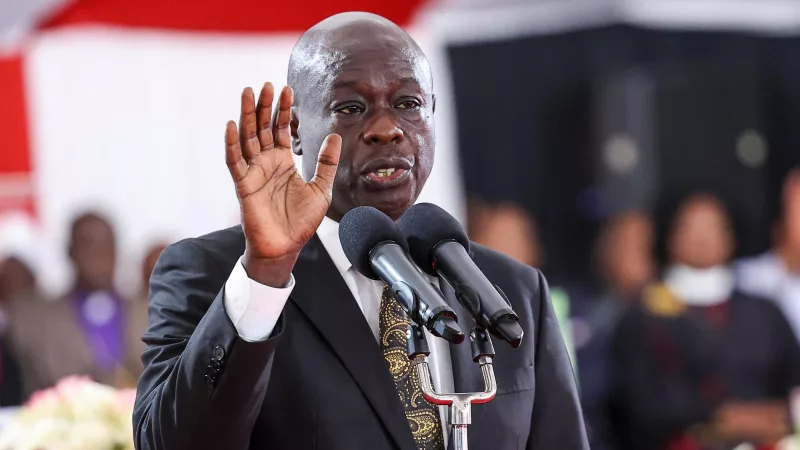
Or consider ex-Deputy President Rigathi Gachagua, whose recent political posture has appeared, to some, increasingly critical of the very administration in which he served. Observers might also ask what tangible developmental priorities were genuinely championed under his watch, particularly within the Mt Kenya region, where expectations were initially high.
Has the region seen the increased scale of investment, infrastructure and economic opportunity that many hoped would accompany such high-level representation? Or did the shifting political interests take precedence over structured delivery? These are questions that some members of the public continue to ponder, especially as sentiments of disappointment or perceived marginalisation quietly surface in certain quarters.
Might these developments reflect a broader leadership struggle for Kenyan communities where individuals continue to take advantage of regional loyalty at the expense of the people?
More broadly, why has the opposition remained silent on the pervasive looting that continues to plague public institutions? Why are they not leading calls for forensic audits, for lifestyle checks, for prosecution of economic crimes? Could it be because such inquiries might implicate members of their own extended networks like themselves, friends, funders or even family? Members of the opposition are people who have been in the government before, some from over four decades.
Does the pattern of selective outrage raise important questions about the underlying motivations of certain political actors? When opposition voices speak out forcefully on some issues yet remain noticeably quiet on others, particularly those involving allegations of mismanagement or corruption within familiar circles, might the public begin to wonder whether this is a principled stance or a tactical one? Could it be that grievances are amplified only when they serve to weaken rivals, while issues that risk unsettling long-standing networks are carefully avoided?
In such instances, is it still fair to describe this as opposition in the traditional democratic sense, or are we witnessing the careful manoeuvring of a political class preparing for a return to influence?
And if so, should Kenyans ask themselves whether this is a genuine alternative, or merely a different face of the same entrenched elite?
Could one of the greatest challenges confronting Gen Z be the possibility that some of those claiming to support them may not be driven entirely by genuine solidarity?
Is it possible that instead of walking beside them, certain actors are standing behind them, encouraging their momentum not necessarily to empower them, but perhaps to unsettle incumbents and recover privileges once held? Might some of these voices be less concerned with the future of Kenya’s youth and more focused on regaining political ground?
Are they truly affected by the pain of young people who suffer injuries during protests? Do they empathise with families who lose loved ones in moments of unrest? Are they aware of, or concerned by, the despair of traders whose entire livelihoods are destroyed by looting? Or are such human costs too easily ignored in the broader pursuit of political opportunity?