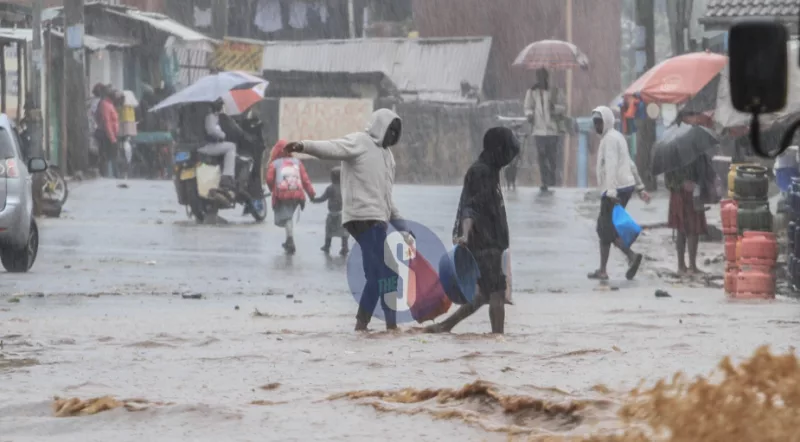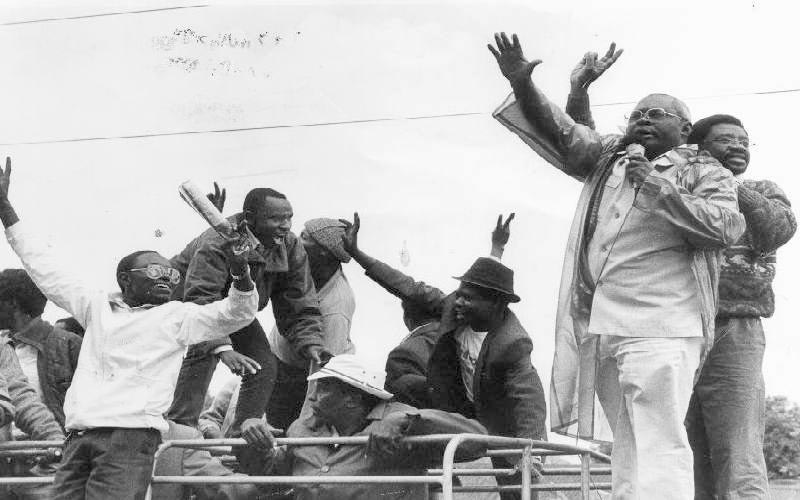
On Monday, youths thronged the streets of Nairobi ostensibly to celebrate the Saba Saba day. The celebration was organised as protests against what the organisers have termed as oppressive regime.
The demonstrations turned violent as was predicted leaving 31 people dead. Most of the deaths have been of youths and in major towns. In the last incident, the riots appear to be receding to the central Kenya region and spilling into nearby capital city.
On July 7, political leaders in the opposition side mobilised the public to hold street protests in commemoration of the onset of the second liberation movement. The movement begun in 1990. Kenneth Matiba had fallen out with his erstwhile boss and ally, president Daniel Moi. He pulled together around himself some Kikuyu disgruntled leaders as Charles Rubia and Philip Gachoka to join the resistance movement under Raila Odinga. The resistance movement was largely underground since the constitution allowed only Kanu to operate as a political party.
It brought together professionals in law and academia. Raila, Matiba and Rubia addressed a press conference in which they announced a public rally at the historic Kamkunji grounds. The meeting to be held on July 7, 1990, was to discuss and resolve to return Kenya to multiparty democracy. The choice of July 7 was not accidental nor unique. In 1954, Julius Nyerere had used it as the day to launch the Tanganyika African National Union, TANU. This marked the grand march to uhuru by the East African largest state. The day is celebrated annually even after the nation joined with Zanzibar in 1967 to form Tanzania and CCM as the ruling party. The Tanzanians use the day to remember the gains they have made since they gained independence. It is from this that the 1990 group took cue.
After 1982, Moi sought to increase his hold onto power. The attempted coup shook him and his government to the core. He no longer brooked dissent and moved to purge the national leadership of any critical minds. He used the law that allowed detention without trial to immobilise those politicians and social critics. Kanu became more restrictive and revised its rules to control participation. The government became subservient to the ruling and only political party. Once one was locked out of Kanu your political obituary was written. This is the conundrum that faced Jaramogi Oginga Odinga, his son Raila and many leftist academics.
Matiba and Rubia were victims of their own machinations. Sitting in the Kanu governing council in 1987, they sanctioned the use of queue voting for the following general elections in February 1988. Matiba struggled to win the Kiharu parliamentary seat and was appointed Minister for Transport and Communication. But the party elections the following year, 1989 saw him unceremoniously lose the branch chairmanship which was then domiciled at the district. Kibaki underwent through similar tribulations. He would later famously remark that even rigging required some intelligence.
It is therefore the frustrations of the Kanu cleaning exercise that forced Matiba and Rubia to resign from the party and join the opposition and resistance movement. It helped the movement that the duo had at their disposal vast resources which went along way to support the logistics of the movement. This posed real and direct threat to Moi’s administration. The Saba Saba rally could thus not be ignored by the government.
The two were arrested and detained. Shortly after and on the same day Raila was also picked up and detained. Saba Saba was more a clarion call for the movement than the organisation itself. The movement was established to restore multiparty democracy and allow other political parties to be formed and participate in elections. It also sought to review the constitution to enhance and secure the democratic space.
There was special attention paid to the bill of rights and electoral justice. It was disturbing that the Judiciary and Parliament acted as appendages of the executive arm of government. The president acted and operated as an imperial head of state. The champions of the movement were deliberate to realise the dream of the founding fathers by establishing a republic that respected the sovereign will of the citizens.
With the collapse of the Berlin Wall and the control of the White House by the republicans, Moi and Kanu had no choice but accede. In late 1991, the party’s national delegates conference at Kasarani resolved to repeal section 2A of the constitution. Parliament under the new Attorney General Amos Wako moved with speed to legislate the same. Ford under the leadership of Jaramogi was registered as the first political party within this new framework.
At the end of December of the same year, health minister Mwai Kibaki resigned and launched the Democratic Party. When Matiba came back from hospitalisation in London, things got thicker for the opposition movement. He arrived to a rousing welcome by ecstatic followers.
The Uhuru Park grounds was full to the seams. He declared that only the people would decide the presidential candidate for the opposition. This promptly led to the split of the mammoth Ford into Ford-Kenya and Ford-Asili. Matiba went with the Asili to Muthithi House as Jaramogi retained the Kenya bit at Agip House. Even though Kanu got a breather and proceeded to win the December general election, Saba Saba scored its first goal. Multiparty democracy was restored. The Westminster model of governance resumed where official opposition was recognised.
The opposition forces soon realised that urgent legal reforms were required to secure the gains of multiparty democracy. While the political parties were struggling to stay afloat, the leaders all the same remained steadfast in pushing for reforms. The 1997 Saba Saba remains the bloodiest of all. The civil society actively joined the movement and Moi was facing his last election with a stronger opposition force.
The agitation led to the formation of the Inter-Parties Parliamentary Group chaired by the venerable George Anyona. At the beginning of 1997 the opposition parties remained as divided as they had been over the previous four years. Numerous attempts to unite the opposition had failed dismally. The elusive search for a single opposition candidate against the incumbent President Moi, remained a political challenge. The exercise that had occupied the opposition over the entire period of the opening of the democratic space, had yet to produce any tangible result. At the time, therefore, Moi appeared to be cruising comfortably to a fifth and supposedly final term.
By midyear, however, the entry of the reform movement, the amalgam of civil society groups under the leadership of the National Convention Executive Council into the political ring under the slogan No Reforms No Election began to change the balance of forces. These reforms would continue after the elections and culminate into the Constitution of Kenya Review Commission under Raila as parliamentary chair and Prof Yash Pal Guy as commission chair.
Under Kibaki as president in 2003 the commission developed the Bomas draft of the new constitution. It is this draft that was refined by the Committee of Eminent Persons under Nzamba Kitonga and promulgated as the Constitution of Kenya 2010. Therefore, Saba Saba in 2025 should have been celebrating these gallant achievements. Instead the organisers allowed the day to be hijacked by political buccaneers and reactionary forces of the time. The current challenges of the nation and being agitated for by the Gen Z are not of Saba Saba. Raila and team achieved their objectives albeit not all. Political leaders should not seek to rewrite our history.
The writer is a political and policy analyst