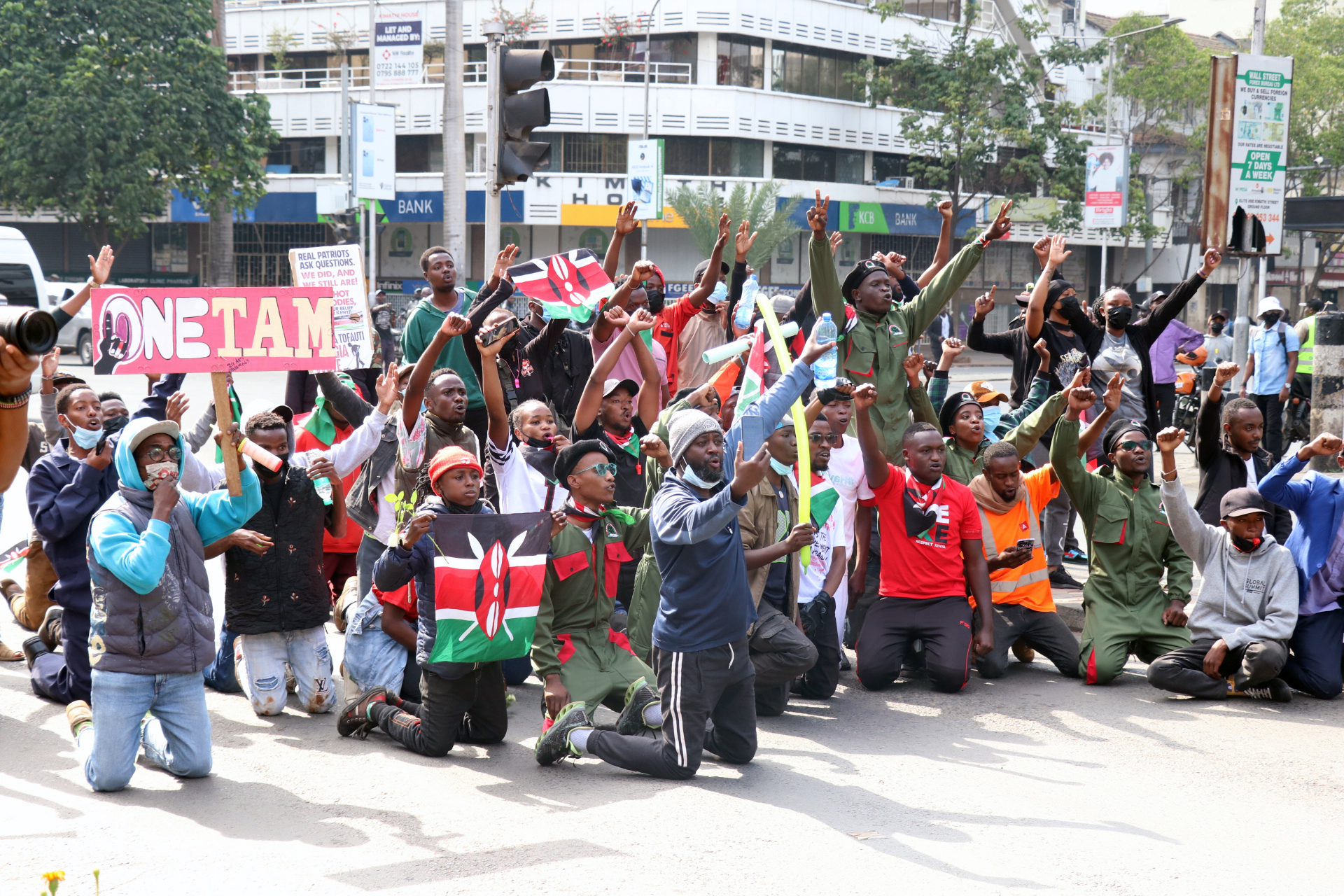
The clamour for good governance and accountability in Kenya has reached a crescendo, largely propelled by the audacious spirit of Generation Z. Yet, in this crucial moment, questions arise about the role of other generations, particularly millennials and Generation X. Are millennials the "weak link" in this quest, as some suggest? While the assertion holds some truth, a deeper understanding of generational communication styles and societal conditioning is necessary.
To comprehend the apparent aversion of Gen X and millennials to the more aggressive Gen Z approach, we must first delve into the fundamental differences between cyclic and linear communication. These distinct communication styles have shaped the way generations interact with authority, resolve conflict and approach dissent.
For millennials and the generations preceding them, communication was predominantly cyclic. This style, prevalent in many African, Latino and Japanese societies, prioritises harmony, maintaining relationships and "saving face" over direct confrontation or immediate resolution of an issue. Information often circulates indirectly, with unspoken cues, context and shared understanding playing a significant role. The emphasis is on preserving social cohesion, even if it means deferring or subtly avoiding uncomfortable truths.
In contrast, linear communication, more common in Caucasian societies, is direct, explicit and task-oriented. Information flows in a straightforward manner from sender to receiver, with clarity, precision, and logical progression being paramount. The goal is to convey information efficiently and achieve a resolution. Dissent is often expressed openly and challenging authority is not necessarily seen as disrespectful but rather as a means to reach a better outcome. This style prioritises individual expression and the pursuit of truth, even if it leads to uncomfortable confrontations.
These contrasting communication styles have profoundly influenced how different generations perceive and react to authority. Millennials and older generations were raised in environments where questioning adults or those in positions of power was discouraged, if not outright forbidden. Dissent was frequently viewed as disrespectful or a sign of insubordination. Their educational curricula, designed for an industrial age, largely focused on employability and compliance, teaching them to be diligent workers who follow instructions rather than independent thinkers who challenge the status quo. This conditioning fostered a sense of submission, where anything outside of prescribed norms was considered defiant or even subservient.
The current political landscape is populated by a mix of 'Boomers' (those born roughly between 1946 and 1964), Gen X (1965-1980) and a smaller proportion of millennials (1981-1996). This explains why the aggressive, direct and often confrontational approach of Gen Z (1997-2012) in demanding accountability has been met with discomfort and opposition from older generations.
It is no coincidence that a significant number of those advocating for peace and an end to Gen Z protests are Gen X and millennials. While we cannot entirely exonerate non-Gen Z individuals for choosing a less "messy" path, their actions are often rooted in deeply ingrained behavioural patterns shaped by their upbringing. They were taught to navigate systems through diplomacy, compromise and behind-the-scenes negotiations, rather than through public, confrontational activism. This is not to say they lack a desire for good governance, but their methods for achieving it differ significantly.
The challenge now is to bridge this generational chasm. While the distinct approaches are understandable given their historical contexts, the current moment demands unity.
The youthful vigour and directness of Gen Z would be complemented by the experience, strategic thinking and institutional knowledge of older generations.
Gen X and millennials, despite their ingrained preferences for less confrontational methods, cannot afford to remain silent. It is time for ‘Gen Zote’ to rise in solidarity.
Harnessing these differences is not about one generation capitulating to another, but about leveraging unique strengths. Intergenerational dialogue is worth considering. Gen Z brings an unshakeable conviction, a masterful command of digital tools for mobilisation and an unflinching willingness to challenge power directly. Their fearlessness in the face of authority is a breath of fresh air.
Gen X and millennials, on the other hand, possess valuable insights into political processes, a nuanced understanding of economic realities and established networks that can be crucial for sustaining momentum and translating protests into tangible policy changes.
We must acknowledge and appreciate the different communication styles and values that each generation brings to the table. Older generations must recognise the legitimacy of Gen Z's directness, while Gen Z can benefit from understanding the strategic implications of more nuanced approaches.
The writer is a sub editor at the Star