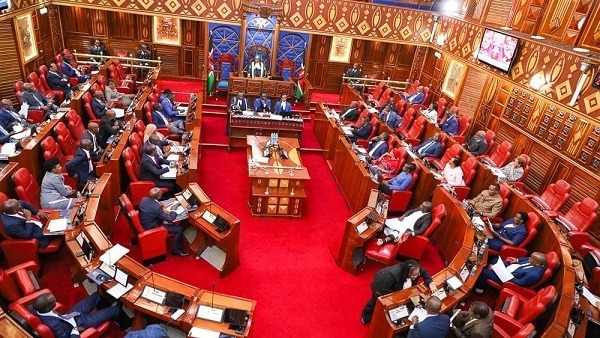
Governors could soon lose the discretion to appoint unlimited numbers of chief officers if a new proposal by a parliamentary committee is adopted and enacted into law.
The Senate Devolution and Intergovernmental Relations Committee has proposed amendments to the County Governments Act, 2012, to cap the number of chief officers that can be hired by county governments.
This is aimed at curbing over-hiring and bloated wage bills that threaten fiscal sustainability at the county level.
“The committee recommends an amendment of the County Governments Act, 2012, to clearly provide for the maximum and the minimum number of county chief officers to be appointed in any county government,” the panel states in a report recently tabled in the Senate.
Chaired by Wajir Senator Mohamed Abass, the committee proposes the number of chief officers per county be limited to a minimum of 14 and a maximum of 22.
Chief officers serve as the accounting officers of county departments and are the devolved units’ equivalent of Principal secretaries in the national government.
The recommendation follows alarming revelations that some governors are exploiting legal loopholes to appoint as many as 30 chief officers, significantly inflating county wage bills.
The lack of clear legal limits has reportedly led to unchecked expansion of county bureaucracies, draining public resources at the expense of service delivery.
The committee also wants the law amended to introduce clear timelines for the nomination and appointment of County Executive Committee members and chief officers whenever a vacancy arises.
This is to address the persistent leadership gaps in county departments, which often hinder effective service delivery and financial accountability.
Section 45(1) of the County Governments Act requires a governor to nominate a qualified chief officer within 14 days of a vacancy, based on candidates competitively sourced and recommended by the County Public Service Board, with the approval of the county assembly. However, enforcement of this provision has been inconsistent, with some governors failing to act promptly, leaving key departments without leadership for months.
The committee’s recommendations are part of a broader report on governance challenges in Garissa county, following an inquiry into alleged mismanagement, including a failure to appoint substantive chief officers to oversee crucial financial functions in the devolved units.
According to the report, Garissa Governor Nathif Jama appointed 30 chief officers, a record number, even as the Senate committee was conducting its investigation.
“The county government has since appointed a total of 30 chief officers, while the county executive committee members are 10 in number,” the report notes.
The panel warns that such excessive appointments place an unsustainable burden on the devolved units’ budgets, especially in counties already grappling with limited revenue streams and mounting debts.
“The huge number of county chief officers places an unsustainable burden on the county’s wage bill,” the committee observed.
The proposed reforms are expected to spark debate among governors, many of whom have argued for flexibility in structuring their governments.
However, with increasing concerns about runaway wage bills, poor fiscal discipline and low development spending, the Senate is pushing for stricter controls and accountability measures in county staffing practices.
If enacted, the amendments could significantly streamline county administrations, reduce duplication of roles and free up more funds for development and essential public services.