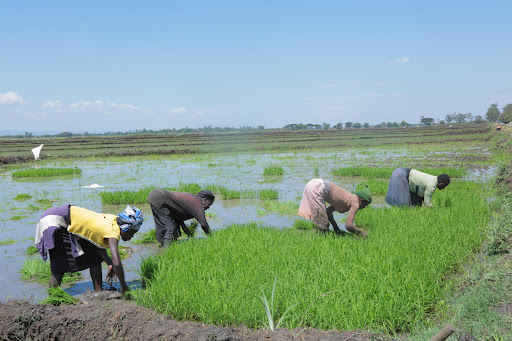
More farmers in Kenya are avoiding agricultural loans, citing high interest rates and the fear of losing their land and assets through auction, according to a new Central Bank of Kenya report.
This has led to a general decline in the number of farmers seeking credit facilities for agriculture, according to CBK's May 2025 agricultural sector credit survey.
Findings show that less than 40 percent of sampled farmers had accessed credit for farming purposes.
The proportion stood at 34 per cent in May, slightly down from 36 per cent in March.
Despite the continued drop in base lending rates over the months, Kenyans farmers seem not to enjoy the benefits as volatile nature of agriculture investments expose them to high interests under the risk-based lending model.
High borrowing costs emerged as the leading deterrent, with 54 percent of farmers citing interest rates as a major barrier — an increase from 38 percent in March.
While this is a slight drop from 58 percent recorded in November 2024, the report attributes the decline to a gradual easing of monetary policy during the period.
“The percentage of sampled farmers not requiring credit decreased to 25 percent in May 2025 from 37 percent in March 2025, with some farmers reporting that they would not want to expose their farms to the risk of auction given that farming is highly susciptible to rain failure,” reads the report by CBK.
This fear has made many hesitant to take up loans, especially in a sector highly vulnerable to weather-related shocks such as droughts and floods.
Banks, SACCOs, family and friends, produce buyers, and digital lenders remain the main sources of credit for farmers.
However, most credit is still used to buy inputs like seeds and fertilizer.
CBK further said that the proportion of farmers using loans for input purchases fell to 84 per cent in May from 94 per cent in March.
Credit use for labor costs also dropped to 57 per cent, down from 62 per cent over the same period.
However, despite the cautious approach to investments in agriculture, most farmers sampled in the survey expected to increase the acreage and output of their crops.
According to CBK most sampled farmers in the May 2025 survey were optimistic that output of most food crops was generally expected to increase.
This, largely driven by favourable March-May 2025 rainfall outcomes in most regions and expected continuation of government measures geared towards improving agricultural productivity.
“Particularly those targeting farm inputs such as the subsidised fertiliser programme. Some farmers underscored the adoption of smart agriculture farming methods which, despite being limited in scope, was gaining traction and a potential source of farm income,” reads the survey.
The proportion expecting to increase area under crop was also generally higher compared to March.
Optimism among Kenyan farmers about the future of the agriculture sector is on the rise, buoyed by favourable weather conditions and continued government support,
A higher proportion expect to increase acreage of cabbages, tomatoes, onions, maize, beans, wheat, millet and rice.
An estimated 86 percent of farmers expect the performance of the sector to improve over the next three months — up from 83 percent in March.
Looking further ahead, 89 percent of respondents anticipate an improvement in the sector over the next year, a significant increase from 80 percent in the previous quarter.