In February 2025, an influx of cheaper eggs from Uganda flooded the Kenyan market, causing local farmers to incur losses and potentially triggering a trade war between the two East African countries.
This led to an uproar among local farmers, who decried the lack of safety controls to safeguard their businesses. However, the government intervened to impose taxes on eggs from Uganda, thereby protecting local farmers.
With the push to open up the African countries for trade under the African Continental Free Trade Area (AfCFTA), concerns are now arising that such trade wars will be on the rise if proper structures are not set.
The International Trade Union Confederation says that massive job losses and a sharp decline in manufacturing job creation could loom if Kenya and other African countries fail to harmonise their laws before fully opening their markets under the AfCFTA framework.
As Kenya and its peers push forward with fresh trade liberalisation initiatives, analysts are urging a tempered sense of optimism, drawing lessons from the continent’s past experiences.
“Historically, efforts to open up trade across the region have not always delivered the promised economic transformation. Instead, they have often coincided with widespread deindustrialisation, significant job losses, and a surge in informal employment,” said ITUC General Secretary Joel Akhator Odigie.
While the promise of expanded markets and increased investment remains attractive, experts stress the need for robust safeguards and strategic planning to ensure that liberalisation efforts contribute to sustainable development rather than deepen economic vulnerabilities.
ITUC-Africa and its affiliates recognise that the AfCFTA is a significant milestone in Africa’s economic integration, which envisions a single continental market comprising about 1.3 billion people and a combined GDP of around $3.4 trillion (Sh438.85 trillion).
However, structural and different trade policies are now emerging as the new threat to local businesses enjoying the expanded market.
Trade unions across Africa are now calling on governments to implement the African Continental Free Trade Area (AfCFTA) in a manner that ensures inclusivity, decent work, and equitable growth.
“African governments must ensure the free movement of people across the continent, mindful that there cannot be free trade without free movement of persons,” said Odigie.
Africa Kiiza, a trade policy analyst and author of the report "Assessing Five Years of the African Continental Free Trade Area (AfCFTA): Proposals on Potential Amendments," argues that the AfCFTA rests on an overly simplistic premise.
"The idea that liberalisation and tariff removal will automatically boost trade is flawed," he says. "We must first address the production-related challenges that hinder meaningful exchange."
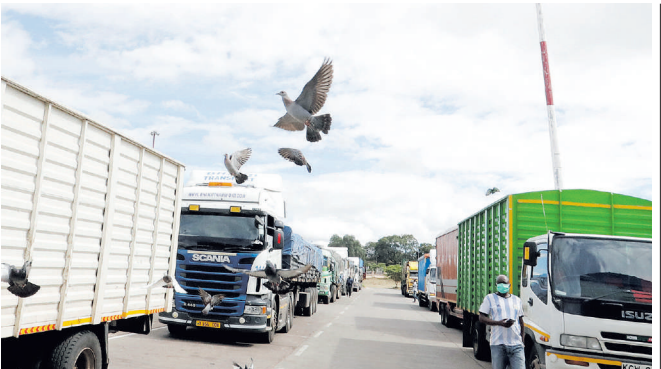
Even when goods are available, moving them across the continent remains a significant obstacle.
"Only 0.1 per cent of intra-African trade is supported by rail connections," Kiiza notes. "Without adequate infrastructure, efficient trade across Africa remains out of reach."
Kiiza estimates that developing the necessary infrastructure will take "at least ten years."
However, he stresses that this timeline is only achievable if African governments commit to significantly increasing investment.
"This must be treated as a political priority and backed by allocations from national budgets as well as dedicated financing," he said.
The Central Organisation of Trade Unions (COTU-K), the African Regional Organisation of the ITUC-Africa, and the Labour Research Service warn that without deliberate safeguards, the agreement could worsen informalisation, deindustrialisation, and job losses across the continent.
The unions are urging AfCFTA member states to include trade unions in their National Implementation Committees to ensure that policies are informed by social dialogue.
They also called for simplified trade regimes that support informal cross-border traders, the majority of whom are women, so they are not excluded from the benefits of continental trade.
They also stressed the need to incorporate enforceable labour provisions into the AfCFTA framework.
These provisions, they said, should be based on the International Labour Organisation's core conventions, the decent work agenda, the ILO Declarations on Rights at Work and Social Justice, and the African Union’s Agenda 2063.
Additionally, the unions called on Africa’s larger and more advanced economies to support the development of regional value chains, so that smaller and less developed countries are not left behind in the new trade regime.
The statement urged all AfCFTA member states and social partners to collaborate in ensuring that the agreement delivers on its promise of inclusive growth, decent work, and sustainable development.