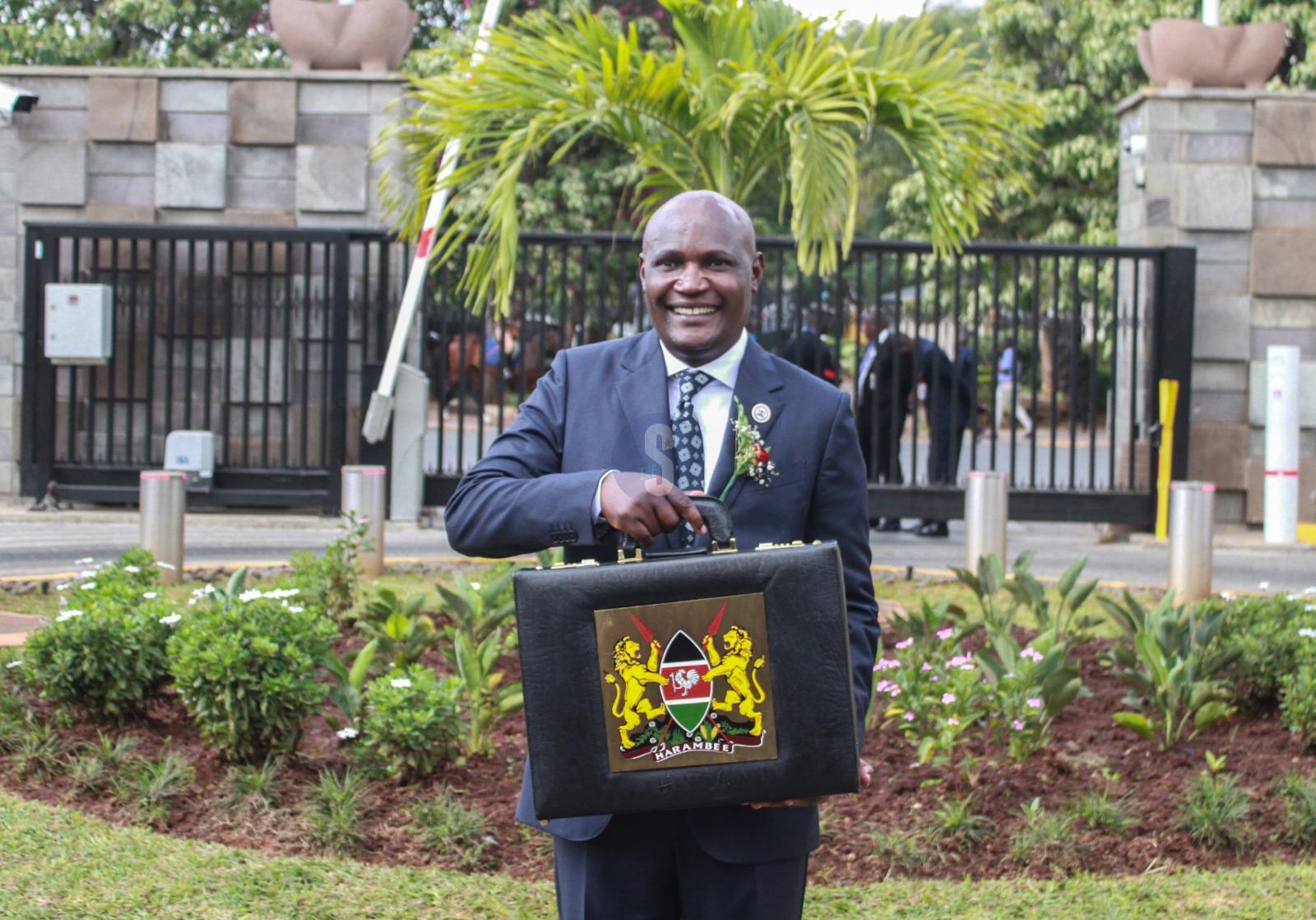
RISING public debt is the top concern for Kenyans, with many believing the Sh4.2 trillion budget presented in Parliament on Thursday by Treasury CS John Mbadi aggravates the situation.
This verdict played out right before the country’s exchequer boss during a post-budget analysis hosted by audit firm Deloitte Touche Tohmatsu Limited Kenya, with more than 40 per cent of the participants in an online Slido feedback disapproving of the high public debt.
The survey further indicated 45 per cent of the participants were concerned about the budget, while 30 per cent were cautiously optimistic. A quarter of those who participated were very worried, five per cent were neutral while five per cent optimistic.
Starting July 1, the country will spend Sh1.1 trillion of the Sh4.2 trillion to clear debt interest, with plans to borrow Sh923.1 billion to fund the budget deficit, largely from the domestic market.
This means Kenya plans to spend 26 per cent of its total budget in the coming financial year to pay interest on debt, with domestic debt gobbling up at least 75 per cent of the sum.
The ratio of interest payment on loans against the budget has been rising in the past 20 years, from 18 per cent since 2005.
Although there is no fixed recommended percentage for interest payments on loans as a proportion of the total budget, the International Monetary Fund and the World Bank emphasise the importance of debt sustainability, which is heavily influenced by the ability to manage debt service obligations, including interest payments, relative to a country's revenues and the gross domestic product.
The latest weekly bulletin by the Central Bank of Kenya shows the country’s total debt hit Sh11.4 trillion in March, up from Sh10.9 trillion in December last year.
Kenya’s public debt, as a percentage of GDP, is projected to average 70.2 per cent in 2025 and will remain a concern, with debt servicing expenses consuming over 60 per cent of tax revenue in 2025.
Deloitte’s budget analysis themed, 'On the edge: Navigating Kenya's fiscal tightrope’, shows Kenya faces the risk of crowding out spending on development if the trend persists into the medium term. Furthermore, a higher debt burden could impact Foreign Direct Investment and expose the country to foreign currency exchange danger.
In his post-budget briefing, Mbadi painted a grim picture of the debt scenario, warning taxpayers to tighten their belts for a debt repayment marathon, with almost 80 per cent of the country’s loans falling due in the next 10 years.
He, however, assured that the government is working on a framework to lessen the burden through intervations, including restructuring the debt.
Another key concern in Mbadi’s budget is the plan to borrow close to 77 per cent of the budget deficit locally, a fact the private sector fears will crowd it out from the credit market, hurting business growth and job creation.
Deloitte East Africa CEO Ann Muraya said the move was likely to stifle loans to the private sector, a key driver of new jobs, because banks will loan to government instead of private business.
“The private sector creates 80 per cent of new jobs. Risk-averse commercial banks prefer lending to the state rather than businesses. The exchequer must walk a delicate balance of sourcing stable debt and driving economic growth,” Muraya said.
She warned that local debt is expensive, with yields on local bonds currently at a low of 10-13.5 per cent against an average of 6.6 per cent for external commercial loans and as low as two per cent for bilateral alternatives.
Her sentiments were echoed by Joshua Oigara, CEO Stanbic Bank of Kenya and South Sudan, who implored Mbadi to consider reviewing the deficit financing model.
During the forum, it was established that at least a third of the planned budget is likely to waste away especially through corruption and duplication of roles as the recurrent expenditure consumes the lion’s share of the projected budget at Sh3.1 trillion (73 per cent), while development expenditure is projected at Sh693.2 (16 per cent). Allocations to county governments are projected at Sh474.9 billion.
While Fred Omondi, tax and legal team lead at Deloitte, commended the budget for presenting sound tax administration and collection plans as opposed to inflicting more pain on taxpayers, he asked President William Ruto’s government to walk the talk on curbing spillage and wastage.
His concern comes at a time organisations, including the Ethics and Anti-Corruption Commission and Transparency International, have raised a red flag with reports an estimated Sh600 billion of taxes is looted through graft-inspired purchases.
Even so, Mbadi clarified the budget will ensure accountability and resources will be channeled into productive growth improving initiatives.
Experts have also asked the government to come up with a predictable tax system, warning frequent changes scare way investors by creating an atmosphere of unpredictability.
Although the broad-based government of Ruto and Raila Odinga, top critic turned ally, intends to collect less than Sh40 billion in new taxes in the financial year starting July 1 against Sh346 billion it had intended in the Finance Bill, 2024, private sector players are calling for a stable policy.
“While the Finance Bill 2025 offers some relief by avoiding new taxes, it raises valid concerns about the government’s commitment to its stated policy direction. The mixed signals not only undermine the credibility of key tax reform instruments like the Medium Term Revenue Strategy (MTRS) and National Tax Policy, but also cast doubt on the readiness to offer a predictable and investor-friendly fiscal environment,’’ said Fredrick Kimotho, Deloitte East Africa tax and legal associate director.
He added that for tax reform to be truly effective, alignment between policy intent and legislative action is not optional - it is imperative.
Some of the new proposals in the Finance Bill, 2025, include the implementation of tax measures aimed at expanding the tax base, minimising tax expenditures, and enhancing compliance.
Some of the measures geared towards tax base expansion include the expansion of the scope of significant economic presence tax (SEPT) and value added tax (VAT) on digital marketplace supplies as well as excise duty on supplies by non-residents.
To minimise tax expenditures, the government plans to limit the period to carry forward tax losses to five years, to repeal accelerated investment allowances and preferential tax rates, and to rationalise the exemption and zero-rating of goods and services for VAT.
It also proposes measures, including empowering the commissioner of KRA, to issue agency notices to agents of non-resident persons subject to tax in Kenya.
As Parliament awaits to approve or disapprove the budget presented by Mbadi last Thursday, small traders and hard-pressed households are pessimistic in the belief nothing will change.
Salome Kitiezo, a vegetable vendor in Kangemi, expected the budget to lower the cost of basic commodities and ease taxes for employees like her husband.
"Nothing has changed, save for a different minister presenting the budget."
But the private sector, led by the Federation of Kenya Employers, has hailed the budget as progressive.