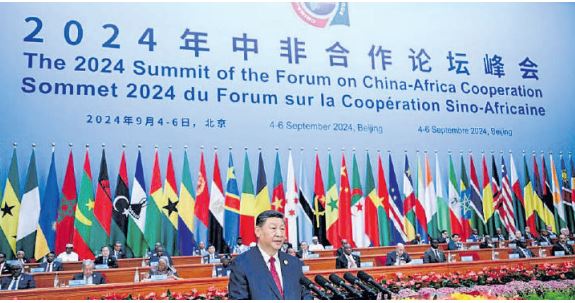
As the Forum on China-Africa Cooperation celebrates its 25th anniversary, it stands as a powerful testament to how genuine partnership and sustained commitment can foster development, progress and solidarity especially among countries of the Global South. Since its establishment, Focac has played a pivotal role in transforming China-Africa relations into a comprehensive and strategic collaboration. What began as a diplomatic platform has evolved into a dynamic engine for collective growth and a model for equitable international cooperation.
The momentum generated by the recent Focac Beijing Summit marks a new and promising chapter in this journey. At the summit, African leaders and the Chinese government reached consensus on deepening cooperation across the "six modernisation fields" and implementing the "Ten Partnership Actions." These initiatives are not merely aspirational, they represent a robust, action-oriented vision supported by concrete policy and economic commitments. Together, they aim to elevate China-Africa relations into what is now being described as an “all-weather community with a shared future.”
Among the most impactful measures proposed is China’s commitment to implement zero-tariff treatment for 100 per cent of tariff lines on goods imported from all 53 African countries that maintain diplomatic ties with Beijing. This bold policy aims to dismantle trade barriers and significantly enhance Africa’s integration into global markets. For the continent’s least developed countries, the initiative could be transformative—opening up opportunities for industries, agriculture and small businesses to grow by gaining access to one of the world’s largest consumer markets.
Yet trade alone does not define the depth of this partnership. What makes the China-Africa relationship particularly forward-looking is its focus on transformative, future-oriented sectors. The five designated areas—green industries, e-commerce and digital payments, science and technology, artificial intelligence and deeper cooperation in security, finance and the rule of law—are central to achieving long-term sustainable development. These sectors offer Africa the chance to leapfrog traditional development stages, and China's technological capacity and development experience can serve as a valuable catalyst.
For example, investment in green industries aligns with global efforts to address climate change and achieve environmental sustainability. African countries, many of which are highly vulnerable to climate-related risks, urgently need support in renewable energy, sustainable agriculture and circular economies. Partnerships in these areas could significantly improve resilience while creating green jobs and promoting inclusive growth.
Similarly, strengthening digital infrastructure—especially in e-commerce and mobile payments—holds the potential to transform how African businesses operate and connect to consumers. In regions where traditional banking systems remain underdeveloped, digital solutions can improve access to financial services and empower small enterprises, particularly those led by youth and women.
Science, technology, and AI represent perhaps the most exciting and disruptive frontiers of this cooperation. As these domains redefine global competitiveness, Africa’s young, dynamic and increasingly tech-savvy population positions the continent as a future innovation hub. With China’s support through technology transfer, capacity building and joint research initiatives, Africa can play a greater role in shaping the Fourth Industrial Revolution rather than being left on the sidelines.
Importantly, the partnership extends beyond economics and technology. The upcoming "China-Africa Year of People-to-People and Cultural Exchanges" in 2026 underscores the human dimension of this collaboration. By promoting cultural understanding, educational exchange and grassroots connectivity, both sides are ensuring that cooperation is not confined to state-level engagement but also benefits ordinary citizens. This people-centered approach reinforces the shared values of mutual respect, learning, and coexistence.
What distinguishes China’s commitment is its resolve to move forward in the face of significant external and internal challenges. Despite the pressures of trade wars and technological containment, Beijing has prioritised its relationship with Africa—not as a gesture of charity, but out of a strategic, economic and moral recognition of inclusive development. In a world increasingly characterised by unilateralism and transactional diplomacy, China’s steady support for Africa sends a powerful message about the nature of true partnership.
The broader significance of this cooperation is global. As the international order faces growing polarisation, economic fragmentation and inequality, the China-Africa model offers an alternative—one built on shared growth, mutual benefit and long-term vision. It exemplifies the potential of South-South cooperation and shows that countries can rise together by leveraging their unique strengths and complementary goals.
Looking ahead, the greatest challenge will be ensuring the full and effective implementation of the commitments made at the Beijing Summit. This requires more than goodwill; it demands strong political will, practical coordination mechanisms and clear accountability frameworks. Both sides must remain focused on thoughtful planning and institutional strengthening to ensure the enduring success of their shared vision.
Ultimately, the China-Africa partnership demonstrates that open, inclusive cooperation is not only the right path for humanity, but also a pragmatic and powerful strategy for creating a more peaceful, equitable and prosperous world. It offers a compelling vision of global development—one where no region is left behind, and where solidarity, not domination, shapes the future of international relations.