The ban on Kenyan tea exports to Sudan, which came into place in March, has caught up with traders and farmers in the country, as both auction and green leaf prices drop.
Processed tea for export has seen its prices at the weekly Mombasa auction remain depressed for the third straight month following the ban, signalling low earnings for farmers and traders.
The average price of Kenyan tea at the Mombasa auction has slightly declined to $2.20 (Sh284.33) per kilogramme, down from $2.26 (Sh 292.08) during the same period last year, amid a fall in volumes sold as a result of reduced demand and uptake.
This, as traders fear that prices could drop below the 2-dollar mark if the current trend continues.
Before the ban in March, the weighted average monthly auction price for Kenya tea was slightly higher at $2.30 (Sh297.25) to $2.50 (Sh323.10), market data by the East African Tea Trade Association (EATTA) indicates.
At the time, absorption of teas on offer was higher at 78 per cent, according to Tea Board of Kenya, with prices during the month hitting a high of $3 (Sh388.50) for high-quality teas.
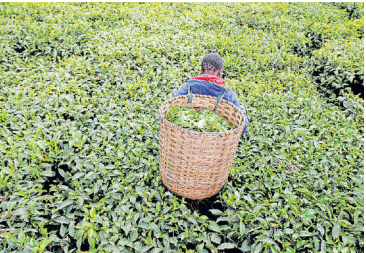
A spot check by the Star has also noted that green leaf prices at buying centres-factory level has also dropped in some regions, mainly private factories which have cut the amount they are buying tea from farmers from an average Sh25 per kilo to Sh17.
KTDA, which manages over 60 tea factories, serving over 560,000 smallholder tea growers cultivating about 130,000 hectares of tea, is however yet to make any price adjustments.
Maina Gathua, a director from Njunu Tea Factory in Murang'a county, said KTDA-affiliated companies have not been affected by any changes and that most farmers have been receiving a steady Sh25 per kilo.
“The only changes in prices have affected private factories mainly from the west of Rift Valley region,” Gathua said.
He noted that the private factories have been affected by the fluctuation of prices at the Mombasa auction with some reducing the prices to as low as Sh17 per kilo.
KTDA affiliated factories last reviewed their monthly payments in January last year from between Sh20 and Sh21, to Sh25 per kilo.
The review saw factories from Murang'a, Embu, Nyeri and Kirinyaga raise the payments by Sh4 from Sh21 to Sh25.
In Kericho and Bomet, factories raised the prices by Sh3 from Sh20 while in Nyamira and Kisii, farmers received an extra Sh4 from Sh20, same as at Chebut factory in Nandi.
The review saw farmers earn Sh9 more than they did between 2012 and 2016 when green leaf tea fetched Sh14 per kilo.
According to the East African Tea Trade Association (EATTA), tea produced by factories from the West of Rift region which encompasses areas such as Nandi and Kericho moves slower in the auction, due to lower quality as compared to produce from the East of Rift region.
The latest decline in both auction and green leaf prices is however pegged on Sudan’s sweeping suspension of all Kenyan imports, a retaliatory move over what is seen as Kenya’s support for the Rapid Support Forces (RSF) in Sudan’s ongoing civil conflict.
The fallout between Kenya and Sudan stems from a meeting in Nairobi that brought together Sudan’s RSF and allied political groups on February 23.
Sudan has been among the top five buyers of Kenyan tea after Pakistan, Egypt and UK. Other major buyers are UAE, Russia, Yemen, Afghanistan and Poland.
“The ban by Sudan has affected auction prices. They have traditionally been big buyers of Kenya tea taking between 30 million and 35 million kilos annually. As at now, there are no imports on Kenyan tea which is really affecting the market,” EATTA managing director George Omuga told the Star on the telephone yesterday.
He noted that other countries from the region using the Mombasa auction are however accessing the Sundanese market.
“We are hoping that this situation can be resolved, it is at the high end of the executive so there is no much we can do but remain hopeful that things go back to normal,” Omuga said.
There was a reprieve last Tuesday after Sudan agreed to clear 207 containers of Kenyan tea that was stuck at Port Sudan following the March ban.
The ban on new imports however remains in place, continuing to impact Kenyan tea exporters and farmers dependent on the Sudanese market.
The government and tea industry players have in recent months intensified campaigns to secure alternative markets and increase exports to existing markets following Sudan's ban, particularly focusing on the West African market under the African Continental Free Trade Area (AfCFTA) framework, Europe and Asia.