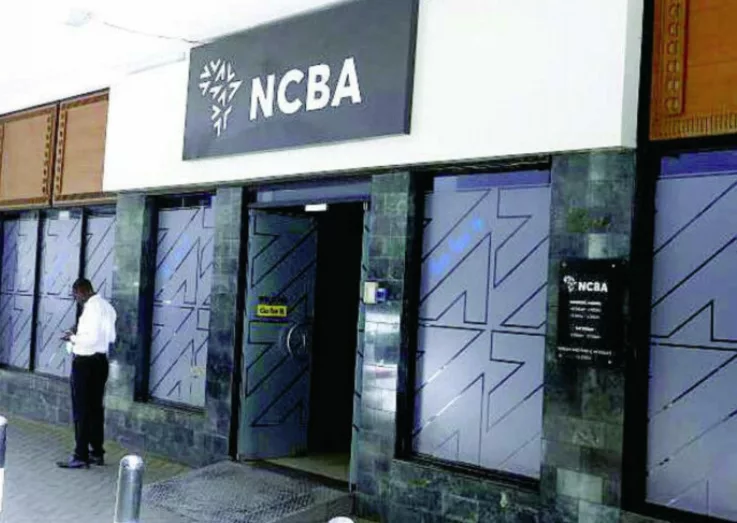
Harsh economic times in the country has made borrowers lag on their loan repayments with the banki9ng sector reporting the highest default rate in 20 years.
Data from the central bank of Kenya shows that non-performing loans surged by 0.2 per cent in two months to June 2025, to hit 17.6 per cent up from 17.4 per cent in April.
A non-performing loan (NPL) is a loan that has not been repaid for 90 days or more. It shows that the borrower is struggling and may not be able to repay the money.
The latest data shows that the banks disbursed Sh4.045 trillion as of December 2024.
This therefore means that banks could be struggling to collect in excess of Sh712 billion in non-performing loans.
Harsh economic times, job losses and stagnant incomes has seen many Kenyans grapple with a severe economic crisis, leading to a sharp rise in loan defaults as households and businesses struggle with soaring living costs and high-interest rates occasioned by the risk-based pricing.
The surge in non-performing loans (NPLs) signaling growing distress among borrowers in the country.
“The ratio of gross non-performing loans (NPLs) to gross loans stood at 17.6 per cent in April 2025 compared to 17.2 percent in February. Increases in NPLs were noted in trade, personal and household, tourism and hotels, and building and construction,” said Central Bank governor Kamau Thugge.
Despite the rise, the apex bank maintains that that the banking sector remains stable and resilient, with strong liquidity and capital adequacy ratios.
“Increases in NPLs were noted in trade, personal and household, tourism and hotels, and building and construction. Banks have continued to make adequate provisions for the NPLs,” said Thugge.
The long-term trend on non-performing loans is equally concerning. From 6.8 per cent in 2015 to 17.4 per cent in 2025, the NPL ratio has more than doubled, signaling structural repayment challenges in the economy.
The Credit Survey report for the first quarter of 2025, shows that Personal and household loans now stand out as the most problematic area in the country’s credit market, with nearly 40 Per cent of banks expecting defaults in this category to worsen.
Other sectors that rank highly on the default list include, manufacturing, building and construction, real estate and financial services.
The rise in NPLs comes despite the commercial banks in April announcing plans to increase their efforts to recover unpaid loans following concerns of an increasing number of defaulters.
Central Bank of Kenya Credit Officer Survey says that, although most business sectors are expected to keep non-performing loans (NPL) stable or even reduce them, banks are worried about individuals.
Moreover, 33 per cent of the 39 banks surveyed by CBK said they expect personal and household NPLs to rise between April and June 2025.
However, the continuous reduction in interest rates since January 2025 has led to a growth in commercial bank lending to the private sector to 2.0 per cent in May 2025 compared to 0.4 per cent in April, and -2.9 percent in January 2025.
“This reflects improved demand in line with the declining lending interest rates, and dissipation of exchange rate valuation effects on foreign currency denominated loans following the appreciation of the Shilling,” said Thugge.
Average commercial banks’ lending rates declined to 15.4 percent in May 2025, from 15.7 percent in April and 17.2 percent in November 2024.
CBK also announced that it had reduced the base lending rate by 25 basis points to 9.75 per cent from 10.00 per cent.