As the September 2025 expiration of the African Growth and Opportunity Act approaches, African countries stand at a critical juncture in their economic history.
For more than two decades, Agoa has been a cornerstone of Africa’s trade relationship with the United States, providing eligible nations with duty-free access to the US market.
This
preferential access has stimulated
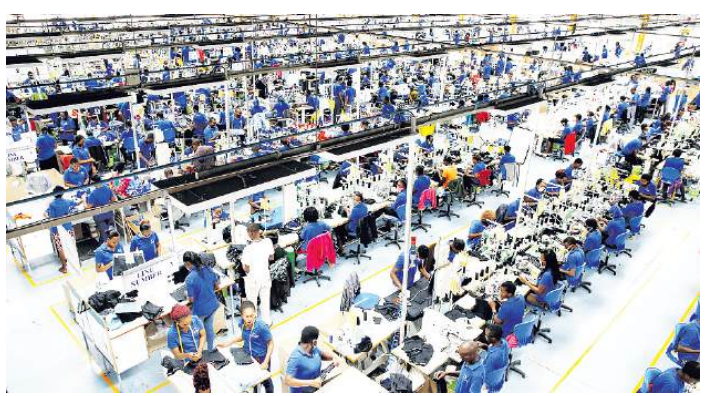
growth in key sectors such as textiles, agriculture and automotive
manufacturing, offering African
exporters a valuable foothold in
one of the world’s largest consumer markets.
However, Agoa's future is far from certain. Discussions around its renewal remain stalled amid changing US political priorities, economic protectionism and evolving global trade dynamics.
This uncertainty highlights a broader reality: African countries cannot continue to rely on external trade preferences as the backbone of their development strategies. Instead, this moment should be viewed not as a crisis but as a profound opportunity—one that demands a decisive pivot toward self-reliance, regional integration and strengthened South-South cooperation.
At the heart of this opportunity lies the African Continental Free Trade Area, a transformative initiative designed to create a unified African market encompassing 1.4 billion people and a combined GDP exceeding $3.4 trillion.
AfCFTA aims to dramatically increase intra-African trade, which currently accounts for only about 15 per cent of total African trade—significantly lower than intra-regional trade levels in Europe or Asia.
By reducing tariffs, harmonising regulations and improving cross-border infrastructure, AfCFTA provides the essential framework for building integrated supply chains that can reduce Africa’s dependency on external markets.
Yet, regional integration alone is not sufficient. Africa must also reorient its global economic partnerships to reflect a rapidly evolving multipolar world.
The longstanding dominance of Western-led trade frameworks and financial institutions is being challenged by new actors and alliances, and Africa stands to gain significantly by engaging more deeply with these emerging networks.
Foremost among these new partnerships is the Forum on China-Africa Cooperation. Since its inception, Focac has served as a vital platform for promoting infrastructure development, trade and investment between China and African countries.
China’s Belt and Road Initiative, a flagship component of this partnership, has funded transformative projects—from railways and ports to industrial parks and energy facilities. These investments extend beyond mere infrastructure; they possess the potential to catalyse industrialisation, create jobs and spur technological transfer.
Critics in the West often label these engagements as “debt traps” or “neo-colonial,” but such narratives oversimplify a complex relationship.
The real test lies in Africa’s ability to negotiate terms that genuinely prioritise local benefits—such as robust local content requirements, fostering skills development and ensuring long-term sustainable growth.
When managed with strategic foresight, partnerships under Focac and BRI can support Africa’s industrial ambitions far more effectively than diminishing preference schemes like Agoa.
Complementing these efforts is the increasing relevance of Brics (Brazil, Russia, India, China, and South Africa), a coalition that is expanding to include additional African members like Egypt and Ethiopia.
Brics offers Africa a stronger voice on the global stage, enabling the continent to advocate for reforms in international financial institutions, promote fairer trade rules, and gain access to patient, development-focused capital.
In a world where the Western economic order is increasingly contested, Brics represents a crucial avenue for African countries to diversify their partnerships, reduce dependence on the West and co-create new models of development finance and cooperation.
A key element in all these efforts must be a shift from Africa’s historical role as a supplier of raw materials toward value addition and industrialisation. While Agoa has helped open some doors, much of Africa’s trade remains concentrated in low-value commodities rather than finished goods.
The future demands policies and investments that enable African countries to process cocoa into chocolate, lithium into batteries and cotton into garments domestically.
This shift not only adds economic value but also stabilises export earnings, creates skilled jobs and embeds African economies more firmly into global value chains.
China’s experience with special economic zones and a strong state-led approach to industrial policy offers valuable lessons, though not necessarily templates, for Africa.
Adapted to local contexts, such strategies can spur manufacturing hubs and innovation clusters across the continent, leveraging partnerships under Focac and BRI.
Digital transformation also offers a promising frontier for growth. Africa’s digital economy is vibrant and rapidly expanding—from fintech innovation in Lagos to e-commerce booms in Nairobi.
To fully harness this potential, African countries should pursue South-South collaborations focused on digital infrastructure, broadband expansion, cloud services and digital governance.
Partners like China, India, and ASEAN countries bring valuable expertise in building digital public infrastructure that can foster inclusive growth, enable cross-border digital trade, and reduce reliance on Western tech monopolies.
Finally, Africa’s relationship with the United States must evolve beyond Agoa’s preferential trade model. Rather than seeking mere extensions of preferential treatment, African leaders should advocate for reciprocal, climate-conscious trade frameworks aligned with Africa’s development priorities. Such frameworks should reflect a mature diplomatic stance rooted in confidence and regional consensus, befitting Africa’s emergence as a sovereign actor in a multipolar world.
In conclusion, the potential expiration of Agoa is not a setback but a decisive call to action for African countries to chart their own trade and development path.
By embracing Focac, leveraging the opportunities of BRI, engaging robustly with Brics and deepening regional integration through AfCFTA, Africa can reduce dependency on Western preferences and build resilient, inclusive economies.
This future must be shaped in African capitals—Nairobi, Addis Ababa, Pretoria and Abuja—not dictated by external powers. In a rapidly shifting global order, Africa’s rise hinges on its ability to act as a sovereign leader, forging partnerships that advance sustainable development, industrial transformation and digital innovation.
The time has come for Africa to transcend dependency and fully claim its place as a co-architect of global economic governance and growth.
Journalist and
communications
consultant