Hospitals that delay treatment for patients in urgent need, act negligently, or fail to ensure patient safety could soon face tough penalties, including fines of up to Sh50 million and deregistration.
The government has proposed a stringent law to curb malpractices in healthcare institutions, following growing concerns over facilities whose actions—or lack thereof—have led to preventable loss of lives.
The Quality Healthcare and Patient Safety Bill, 2025, currently undergoing public participation, is spearheaded by the Ministry of Health.
The proposed legislation outlines tough penalties for healthcare providers who breach safety standards, including a 10-year jail term for serious violations.
The state is also pushing for stringent requirements for registration of health facilities, proof of qualified health personnel and regulatory inspections to ensure compliance with the set standards.
“The principal object of this bill is to establish a comprehensive legal framework to promote the improvement of the quality of healthcare in Kenya by establishing standards, accreditation mechanisms, and ensuring the protection and promotion of patient rights,” the draft states.
If passed, the law would introduce far-reaching reforms to hold health facilities accountable and raise the standard of care across the country.
The bill comes amid mounting public concern over recurring cases of preventable deaths in hospitals.
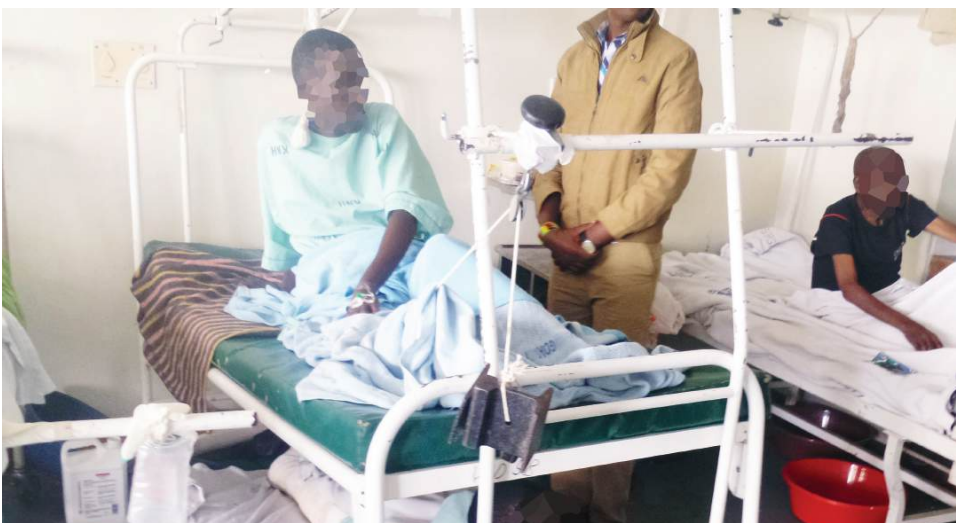
One such incident involved a male patient who was murdered by unknown individuals while admitted in a ward at the Kenyatta National Hospital.
To address such failures, the bill explicitly affirms that every patient has the right to timely and effective healthcare, regardless of their ability to pay.
“A patient has the right to prompt access to healthcare to prevent harm... and timely referral where necessary,” it reads.
Cases of patients being denied care for failing to make advance payments—often with fatal consequences—are common in both public and private hospitals.
The bill states that a health facility shall implement measures to ensure patient safety and quality of healthcare.
“A person who fails to comply with the provisions of this section commits an offence and shall be liable, on conviction, to a fine not exceeding Sh50 million or to imprisonment for a term not exceeding 10 years, or to both,” the draft bill states.
In a bid to end the trend where facilities fail to attend to patients in urgent need of treatment, probably for lacking money, the bill states that every patient has the right to timely and effective healthcare services.
“Without prejudice to the generality of subsection [...], a patient has the right to prompt access to healthcare to prevent harm……. and timely referral where necessary,” the bill states.
The bill provides several rights of patients seeking services in health facilities.
A patient has the right to safe clinical processes that ensure safety and efficiency, the right to safe and quality health products and technologies and the right to access quality healthcare services.
The bill specifically targets hospitals that deny treatment to patients due to inability to pay, an issue that has contributed to preventable deaths.
“Every patient has the right to quality healthcare provided by a qualified and licensed healthcare professional,” the bill states.
Every patient has the right to clear, comprehensive, and accessible information about their care to enable them to make informed decisions on their health.
Every patient has the right to report concerns regarding the safety and quality of healthcare arising out of the services offered by a health facility, as well as the right to dignity and equitable care.
A patient who is dissatisfied with services has the right to file a complaint with the Quality Health Care and Patient Safety Authority established under the bill.
“The authority shall be a body corporate with perpetual succession and a common seal."
The authority shall register, license and accredit health facilities and regulate the conduct of the facilities in a bid to weed out rogue and fake ones.
In addition, the authority shall inspect health facilities for compliance with quality of healthcare standards and undertake regular inspections, monitoring and evaluation of the facilities to ensure compliance.
“The authority shall accredit health facilities for purposes of empanelment and contracting under sections 33 and 34 of the Social Health Insurance Act,” it states.
The bill provides that a person who intends to operate – including construction, operation and decommissioning – a health facility shall obtain approval, upon application and clearance, from the authority
“The Cabinet Secretary for Health shall develop standards for the construction, operation and decommissioning of a health facility,” the bill says.
In the application for registration of a facility, a person shall state the type of healthcare services that are to be offered.
The applicant will also provide the number, qualifications and competence of the healthcare providers at the health facility, layout designs and specifications of available infrastructure and equipment and a statement of financial ability and fees to be charged by the health facility.
They also must provide evidence that the health facility is to be operated or managed by a healthcare professional registered by a relevant regulatory body.
“The authority shall, before issuing a certificate of registration under this Act, undertake an inspection of the health facility.
Certificates may be suspended or revoked if any false or misleading information is submitted or if compliance is breached.
The authority is required to give at least 21 days' notice before suspending a license and must observe fair administrative procedures.
Operating a facility without a license will attract a fine of up to Sh10 million, imprisonment of up to five years, or both.
“Where the authority intends to suspend a certificate of registration under this section…. notify the health facility of such intention, specifying the reasons thereof, and shall take every precaution to ensure fair administrative action in the exercise of this power,” it states.
“A licence issued to a health facility shall specify the nature of the healthcare services that may be provided by the health facility based on the category of the health facility,” the bill says.
In a bid to ensure quality of health care, every facility shall be required to keep records of its quality improvement activities and develop a quality improvement program and budget in line with the identified quality improvement priorities.
“A health facility shall keep records of healthcare services offered, recommendations from inspections and mitigation measures, if any,” the bill says.
They include issuance of warnings, imposing fines or penalties, suspending or revoking accreditation or close the health facility in cases where noncompliance poses an immediate risk to patient safety or health outcomes.
The Authority will appoint inspectors to evaluate facilities for registration, licensing, or accreditation.
Obstructing an inspector or defying their lawful instructions will be punishable by a fine of up to Sh2 million or two years in prison, or both.
To handle complaints and disputes, the Bill establishes a Health Care Tribunal tasked with resolving issues related to healthcare service delivery and facility conduct.