Governors have bagged a landmark victory after the High Court on Thursday declared their exclusion from the Sh60 billion annual Road Maintenance Levy Fund unconstitutional.
But beneath the legal win lies a harsh reality: counties will not access a single shilling of the contested Sh10.5 billion road cash anytime soon.
The court’s conservatory orders of August 2024 froze Sh10.5 billion in RMLF funds – the exact amount counties demand. Yet Justice Lawrence Mugambi’s declaratory judgements did not order its release.
Article 206(3) bars withdrawals from national funds without parliamentary approval. No law currently authorises RMLF transfers to counties.
The court refused to "appropriate funds" – which is a parliamentary function, therefore, leaving the governors’ victory as only on paper but empty coffers in the end.
MPs have been handed a full year to amend the Kenya Roads Act, the Kenya Roads Board Act and the Road Maintenance Levy Fund Act.
Parliament ignored a similar 2020 court order to reform RMLF allocations, leading to the current crisis.
The County Governments Additional Allocation Bill, 2024 – intended to channel RMLF to counties – collapsed when court orders froze its funding.
The High Court declined a prayer for the release of the roads billions directly to the counties. Justice Mugambi declined to issue the said prayer as sought by the petitioners, including the Council of Governors, who had sued the National Assembly and seven others over the fund.
The judge, however, granted an order on the unconstitutionality of a section of the Kenya Roads Board Act, relating to the criteria for disbursement of the fund.
The decision was albeit stayed for 14 days to allow the National Assembly and the other respondents to file their appeal against the judgement.
CoG, alongside Issa Chamao, Patrick Ekirapa, Paul Kirui and the International Legal Consultancy Group Limited, had accused the National Assembly of unilaterally removing county governments as beneficiaries of the levy in the Financial Year 2024/2025.
Consequently, the petitioners asked the High Court to declare Section 6 of the Kenya Roads Board Act, which lists the criteria for allocation of the RMLF as unconstitutional.
The Act provides that the funds are disbursed to Kenya National Highways Authority, the Kenya Urban Roads Authority, the Kenya Rural Roads Authority and the Kenya Wildlife Service.
A portion is to go to operations of the Kenya Roads Board.
The ruling means the Roads Board can proceed with its operations in the interim as currently provided for in the law.
The National Assembly is seeking to appeal the judgment at the Court of Appeal. Even so, some MPs argued that the county chiefs cannot access the funds yet, even with the ruling in their favour, making things worse for wananchi in general.
Article 206(3) of the constitution bars withdrawals from national funds like RMLF without parliamentary approval, meaning the court would effectively be overriding the legislature’s role in budget allocation.
“Therefore, granting such an order would have effectively amounted to the court taking over the role of Parliament in allocating public funds, in breach of Articles 95(4)(a) and 206(3) of the constitution. It would amount to unlawful appropriation, leading to a constitutional crisis of monumental proportions.”
“In outlawing funding for Kura, KeRRA, as counties have demanded, the consequences would be dire,” a member told the Star in confidence.
The member, a lawyer, argued that ongoing infrastructure projects would have stalled and unpaid bills made worse.
It would have meant contractors left unpaid, despite having entered into legally binding agreements with the road authorities.
Had the prayers been granted, MPs further argue that the country would have been left without any institution to oversee the management of rural and urban roads.
Parliament further holds that in the court declaring the existence of the road authorities and their funding from the RMLF unconstitutional, the consequences shall be severe.
“The country shall be left without any institution to oversee the management, development, rehabilitation and maintenance of both rural and urban roads,” the lawmakers quipped.
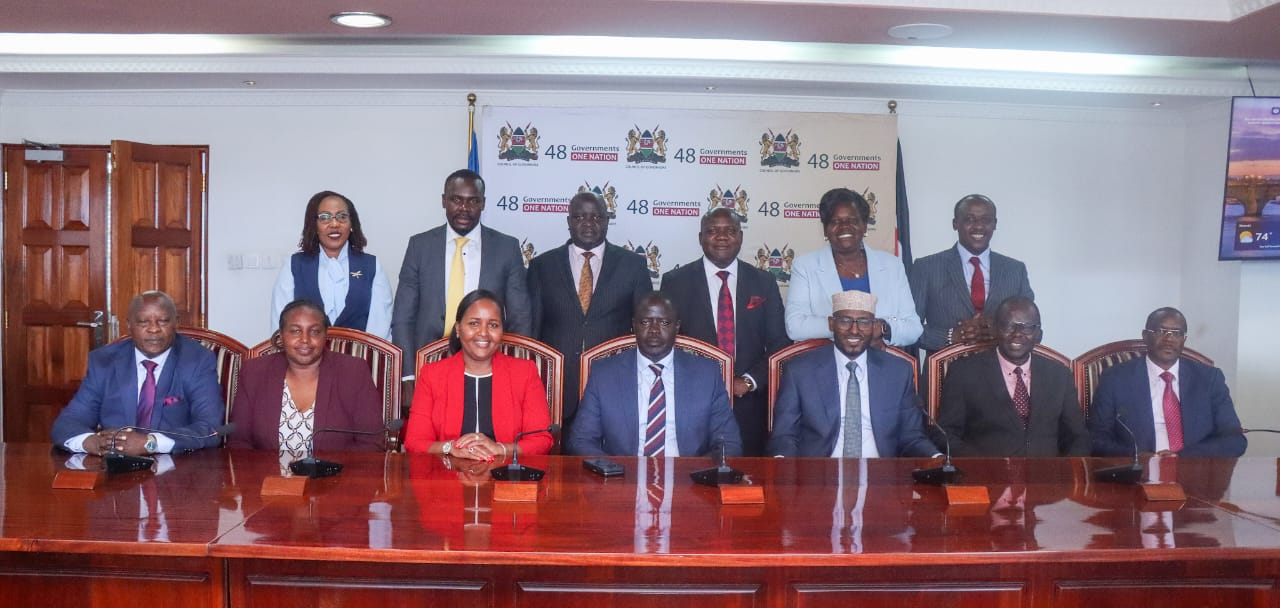
The ruling came a day after a negotiation panel consisting of six governors and six MPs failed to reach an out-of-court settlement on the matter.