The National Treasury has firmly rejected a proposal to grant the Office of the Auditor General a consolidated one-line budget.
The stance sets the stage for a constitutional showdown over financial autonomy and accountability in the country’s governance system.
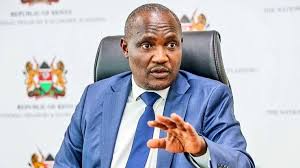
In a submission to Parliament, Treasury CS John Mbadi, represented by PS Chris Kiptoo, argued that maintaining an itemised budget for the OAG was crucial for transparency.
“The current budget structure, where expenditures are clearly delineated, enhances accountability in the use of public resources,” Kiptoo said.
“The proposal for a single-line budget is unnecessary as there are no confidential expenditures in the OAG that would warrant such treatment.”
The Treasury’s position directly contradicts a March 2023 resolution by Parliament’s Budget and Appropriations Committee, which had unanimously directed the Treasury to implement a one-line budget for the OAG in the 2025-26 fiscal year.
Auditor General Nancy Gathungu, who has been championing for an independent budget, citing an expanded audit scope, immediately expressed dismay at the Treasury’s defiance.
“This office has consistently demonstrated fiscal responsibility,” Gathungu countered, while emphasising that the office would be best served by its funds owing to its oversight role.
The auditor general lamented that the current arrangement, where funds are released from the National Treasury, limited her flexibility to respond to urgent audit calls.
Special audits called by Parliament are the most affected as they require resources, sometimes outside what the targeted agencies pay as audit fees.
“A single-line budget would allow us to swiftly reallocate resources for emerging audits. It will give the office some degree of financial independence and facilitate effective responses in addressing emerging audit issues. Currently, we must seek approval for every reallocation, which delays critical oversight work.”
The controversy comes amid heightened scrutiny of public spending, with the OAG’s recent reports exposing billions in questionable expenditures across national and county governments.
The office of the auditor general's expanding audit scope has left some quarters unsettled, with full budget autonomy likely to escalate the fears.
As such, the auditor general could become unstoppable in pursuing sensitive audits when handed its own resources.
Article 229 of the constitution guarantees the auditor general’s independence. But for the OAG, relying on Treasury defeats the essence of autonomy.
She recently told MPs that persistent delays in the release of funds from the exchequer equally affect her office, much as it does MDAs and county governments.
This year, the office has been allocated Sh8.69 billion, being a Sh36 million rise. It is to cover the office’s growing scope, especially audits of secondary schools and TVETs.
Lawyers have, over time, opined that financial control by the Treasury violates constitutional safeguards.
Civil society organisations have protested the lack of independence. Lobby group Africa Centre for Open Governance (Africog), in a recent report, decried the situation.
It decried how the job of independent institutions intended to support Parliament’s debt oversight has become increasingly difficult, particularly for the Auditor General and the Controller of Budget.
“These institutions have become targets for budget reduction, harassment and reprisals for courageous exposures of national government and county-level misappropriation and mismanagement of funds,” the Gladwell Otieno-led organisation said.
Africog, in the report co-authored with The Institute of Social Accountability (Tisa), said as a result, “audit processes are often incomplete or thwarted so that they fail to yield complete or reliable information.