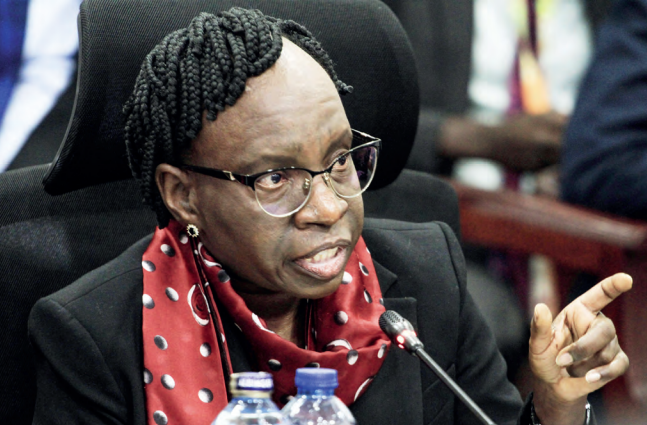
The findings, part of Auditor General Nancy Gathungu’s review of government spending for the period ending June 30, 2024, paint a troubling picture of systemic mismanagement.
The report details how taxpayers have been left vulnerable to potential losses due to poor record-keeping and oversight failures.
The report, seen by the Star, scrutinised fixed asset registers across multiple institutions, uncovering glaring discrepancies between reported figures and actual documentation.
While the audited entities collectively declared fixed assets valued at a staggering Sh413.25 billion, Gathungu’s team found that many of these records were either incomplete, outdated, or simply nonexistent, raising serious doubts about the accuracy of the stated figures.
Among the most high-profile institutions flagged in the audit is the National Treasury, which reported Sh82 billion in assets but failed to provide critical details such as costs or net book values.
Similarly, the Department of Economic Planning listed Sh1.5 billion in assets, but auditors discovered most entries lacked updated valuations, rendering the records useless for accountability purposes.
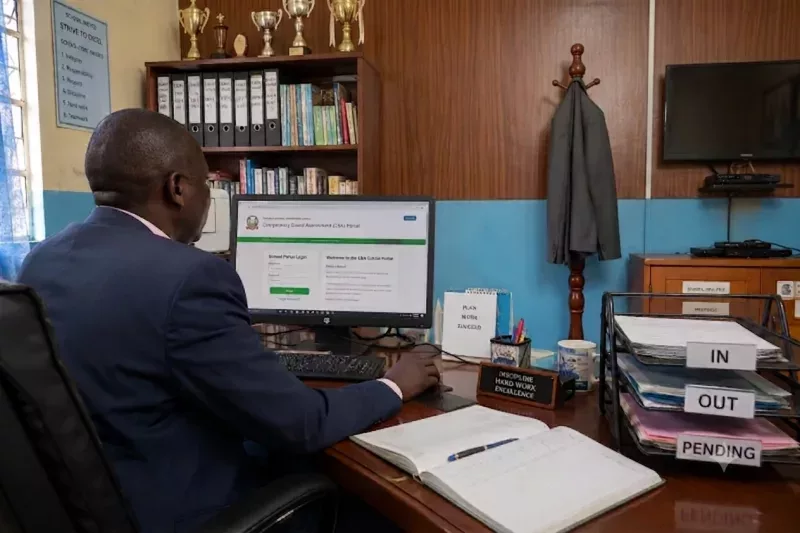
The situation was dire in public secondary schools, where a special audit found that no fixed asset registers existed at all, leaving land, buildings and equipment untracked.
Regulations 143 of the Public Finance Management (National Government) Regulations, 2015, require accounting officers to provide a register to support the value of assets stated in financial reports.
Accounting officers are also required by law to take full responsibility and ensure proper control systems exist for assets.
They should also ensure that preventive mechanisms are in place to eliminate theft, security threats, losses, waste, and misuse, and that the movement and conditions of assets can be tracked.
Registers should have details of the asset name, tag number and location, but this was, however, not the case for the highlighted agencies.
Important information such as date acquired, cost of the asset, serial number, tag number, asset condition and current value are supposed to be included in the register.
Among the most alarming revelations was the widespread failure to account for government vehicles, a recurring issue across multiple agencies.
The Office of the Director of Public Prosecutions, for instance, had 146 motor vehicles and seven motorcycles missing from its asset register.
At the Public Health Department, the values of 14 vehicles were listed as "not applicable," while serial numbers for digital telephone headsets were omitted.
The Irrigation Department was caught in an even more bizarre discrepancy: two Toyota Prado SUVs had been logged as a single vehicle, with no explanation as to how one entry could have two different registration numbers.
Additionally, some assets in the department’s register were assigned values of zero, one, or marked "unknown."
The audit also uncovered a troubling pattern of untagged assets, making it difficult to verify their existence or condition.
The Gender Department, for example, failed to record the value of three motor vehicles.
At the same time, the Public Service Department excluded assets housed at the Huduma Kenya Secretariat Headquarters from its register.
“Most assets had not been labelled for identification, control, traceability and for ease of verification,” the auditor general said.
Worse, auditors found that 17 Huduma Centres had no asset registers at all, while 14 maintained incomplete records.
Even critical institutions like the Independent Electoral and Boundaries Commission and the Parliamentary Service Commission were not spared.
“In addition, the assets were not tagged with unique identification numbers,” Gathungu said.
The IEBC had no updated register for land, buildings, vehicles, or intangible assets, while Parliament – both the National Assembly and Parliamentary Joint Services – did not maintain an asset register for the year under review.
The Judiciary raised eyebrows after it emerged that the institution had disposed of 26 motor vehicles without recording the transactions in its fixed asset register.
Similarly, the Labour Department owns eight parcels of land but lacks ownership documents, meaning these properties have been excluded from the register.At the State Law Office, auditors found that assets at headquarters and regional offices were not tagged for identification, while the Energy Department had multiple untagged assets as of November 2024.
In her report, Gathungu warned that incomplete and inaccurate asset records pose a major obstacle to Kenya’s planned transition from cash-based to accrual accounting, a system that requires precise tracking of assets and liabilities.
She directed accounting officers to conduct a full inventory of all assets, establish their correct values using government-approved valuers and update registers to reflect true holdings.
"All assets must be properly recorded, labelled and disclosed in financial statements to prevent loss and mismanagement," Gathungu stated.
For MPs at the Public Accounts Committee, “an asset register is a basic document that an accounting officer ought to maintain”.
The findings underscore a broader crisis in public financial management, where weak oversight and poor record-keeping leave billions in public resources vulnerable to misuse, theft, or disappearance.
With multiple agencies failing to maintain even basic asset registers, the audit raises urgent questions about who is safeguarding taxpayer-funded property – and whether billions could already be lost without detection.
The committee report points to laxity by officers and late submission of the reviews to the auditor general on demand during the audit cycle.
For Gathungu, no asset registers means the “effectiveness of controls on management of the fixed assets cannot be confirmed”.
As pressure mounts for corrective action, Gathungu’s report serves as a stark reminder: without accurate records, accountability is impossible and the country's public assets remain at risk.