A drop in revenue from fees, commissions, and trading income and a tough operating environment in South Sudan saw Equity Group’s profits for the first three months of the year fall marginally by four percent compared to the same period last year.
The lender’s financial results released on Thursday show net earnings dropping to Sh15.4 billion from Sh16 billion, resulting in a four-percent decrease in total income to Sh48.2 billion from Sh50 billion.
The drop in non-funded income suggests challenges such as lower transaction volumes or reduced fee income, potentially intensified by economic conditions in Kenya.
Even so, customer deposits grew by seven per cent, to Sh1.32 trillion from Sh1.24 trillion, illustrating the bank’s ability to attract and retain depositors.
This fuelled a strategic expansion of net loans by three per cent year-on-year to Sh804.7 billion from Sh779.2 billion.
The bank stamped its authority as the second biggest financial institution in East Africa, achieving strong results and growth of its diversified business across the region, becoming a systemic financial services provider in position two in three of the six markets it operates in: Kenya, DRC, and Rwanda.
Total assets grew by four per cent to Sh1.75 trillion from Sh1.69 trillion, achieving a Return on Equity (ROAE) of 23. Per cent and A return on Assets (ROA) of 3.5 per cent.
Excluding South Sudan non-operational inflation accounting, profit before tax reflected an eight per cent growth from Sh17.3 billion to Sh18.8 billion.
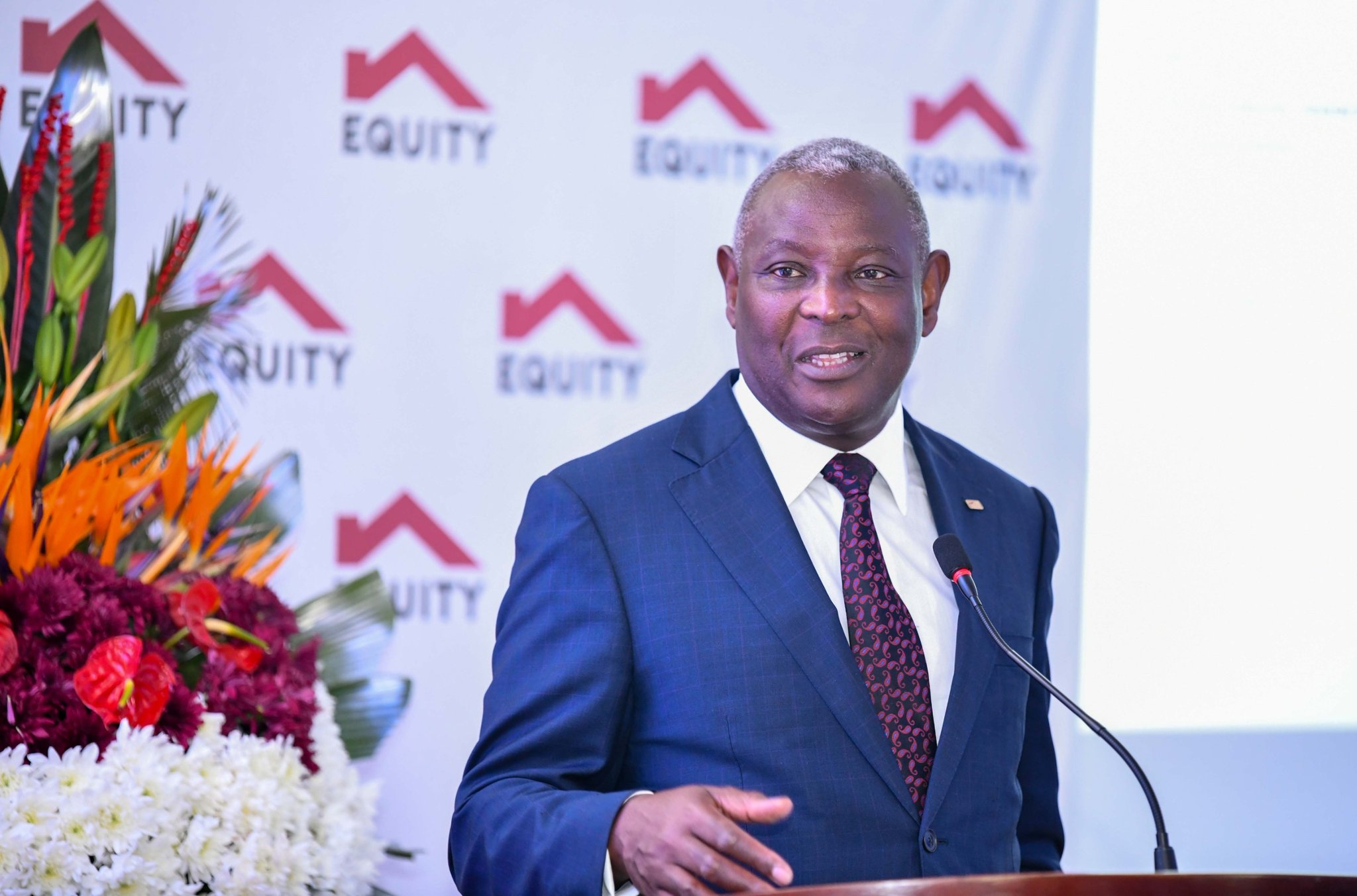
According to Equity Group CEO James Mwangi, the bank has adopted a tri-engine approach, integrating commercial, social, and sustainability priorities to foster sustainable economic growth and create meaningful societal impact.
“The Group continues to build on its legacy of resilience, strong governance, long track record of execution, self-disruption, agility, and scalability of its business model to thrive in the different markets it operates in. It has continued to grow the value it creates for its customers and stakeholders,’’ Mwangi said.
The Kenya subsidiary has shown recovery, registering a seven per cent growth in deposits to Sh792.7 billion, total revenue up 19 per cent, non-funded income increased by 23 per cent to Sh7.57 billion which resulting in a 50 per cent increase in profit before tax.
Kenya’s return on assets and equity improved to 3.4 per cent and 26 respectively. The Kenyan banking subsidiary, while still a major contributor, accounted for 51 per cent of total revenue.
Equity Bank Tanzania's recovery momentum continues to manifest itself with deposits increasing by 14 per cent and loans by nine per cent year on year. Its gross earnings increased by 540 per cent, with return on assets and return on equity at 3.2 per cent and 22.6 per cent, respectively.
Equity’s DRC subsidiary anchored the Africa Recovery and Resilience Plan (ARRP), with customer loans rising by nine per cent YoY growth in customer loans to Sh252.1 billion and eight per cent in deposits to Sh468.4 billion.
Collectively, regional subsidiaries accounted for 47 per cent of total assets, 48 per cent of net loans, and 45 per cent of profit before tax, with key markets including DRC, Tanzania and Rwanda, showing growth in deposits and loans.
“This regional performance reinforces Equity’s strategic positioning as a cross-border financial powerhouse and underpins its growing footprint across East and Central Africa,’’ Mwangi said.
He said that the strength of regional and non-banking subsidiaries positions it to continue delivering sustainable growth and creating long-term value for our customers, communities, and shareholders, supported by strong liquidity and total capital positions of 58.5 and 18.3 per cent, respectively.
Net interest income increased by three from Sh27.8 billion to Sh28.6 billion while total expenses decreased by a percentage to Sh29.5 billion, resulting in a profit before tax of Sh18.7 billion.
The Non-Performing Loan (NPL) ratio remained below the industry average at 14 per cent, significantly lower than the 17.2 per cent published industry average. NPL coverage stands at 67 per cent, reinforcing the Group's strong asset quality
The Group’s non-banking subsidiaries, including investment banking, fintech, and insurance, have continued with their stellar performance.
For instance, the insurance business continues to deliver good results, with gross earnings rising 27 per cent to Sh414 million from Sh321 million.
Since its inception in March 2022, the Group has issued 15.3 million policies, with 80 per cent distributed through digital channels, enhancing financial protection and deepening customer relationships.
The investment bank and technology businesses registered a strong performance, with profitability growing by 142 and 10 per cent respectively, reinforcing the Group’s diversification strategy.