Kenya's economic growth has not sufficiently reduced poverty, with the World Bank now worried that rising debt levels, constrained public finances, and declining household welfare could worsen the situation.
According to the global lender, Kenya’s robust economic growth, marked by a 40 per cent increase in per capita GDP between 2005 and 2022, was accompanied by an incommensurate seven-percentage-point reduction in the poverty rate, underscoring the uneven distribution of the benefits of growth.
"Since attaining lower-middle-income status in 2014, the economy has expanded, yet poverty has become less responsive to growth. Between 2005 and 2019, poverty fell from 46.7 per cent to 33.6 per cent, with most gains occurring between 2005 and 2015, partly due to favorable agricultural conditions,'' World Bank says in its report released Tuesday.
The report shows that between 2005 and 2019, poverty fell from 46.7 per cent to 33.6 per cent, with most gains occurring between 2005 and 2015, partly due to favorable agricultural conditions.
It further shows that the Covid-19 pandemic reversed many gains, pushing poverty to 42.9 percent in 2020, with urban areas hit hardest.
While there was a partial recovery to 38.6 per cent in 2021, poverty stagnated at 39.8 per cent in 202223, reflecting the compounded effects of drought and global inflation.
An increase in both the poverty rate and population growth saw the number of poor people grow from 15.8 million in 2019 to 19.1 million in 2022.
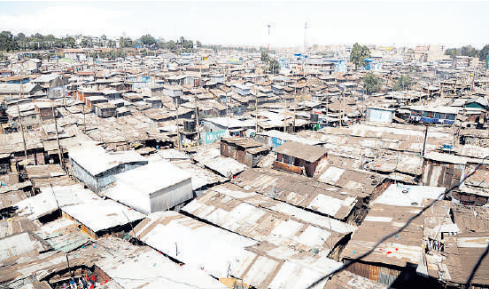
“Regional disparities remain stark, with rural and arid areas, especially the arid and semi-arid lands (ASALs), bearing the highest poverty levels. These gaps reflect structural inequalities and uneven access to services, underscoring the need for more inclusive growth.”
Although some progress has been made in reducing inequality, the World Bank says it remains relatively high, weakening the connection between growth and poverty reduction.
Kenya’s Gini index24 fell from 47 in 2005/06 to 35.8 in 2020 but rose to 38.9 in 2021 due to the pandemic, easing slightly to 38.4 in 2022. Inequality is closely linked to geography, with access to healthcare, education, electricity, and clean water still uneven.
According to the report, Kenya’s fiscal system reduces inequality, but its impact on poverty remains limited.
In 2022, the country’s tax and transfer system reduced income inequality, measured by the Gini index, by 4.6 points, largely due to in-kind benefits in health and education.
However, the system’s effect on poverty is less favorable: the net impact of taxes, subsidies, and transfers increases poverty by 2.7 percentage points.
This is primarily because the limited coverage and value of cash transfers fail to offset the tax burden borne by poor and vulnerable households.
The World Bank says that expanding the coverage and adequacy of cash transfers is essential to strengthening the poverty and inequality-reducing impact of Kenya’s fiscal policy.
Reducing untargeted and inefficient subsidies, which disproportionately benefit wealthier households, can help create fiscal space for this expansion.
“At the same time, strategic value-added tax (VAT) reforms, when paired with complementary social protection measures, can raise additional revenue without harming the welfare of the poor.”
It adds that continued investment in health and education remains essential to support long-term equity and economic mobility.
“When combined with inclusive growth, these reforms can transform fiscal policy into a powerful instrument for reducing poverty, lowering inequality, and building a fairer and more resilient Kenyan economy.”
Even so, the bank warns that the country now faces a challenge to make growth more inclusive.
“Fiscal policy must be reimagined—not just as a tool for macroeconomic management, but as a lever for equity and shared prosperity.”
The lender is worried that the government's ability to fund public spending without risking financial stability is shrinking due to rising public debt, increasing spending needs, and slow revenue growth.
“Debt has risen because of heavy borrowing for infrastructure and social programmes, which has increased debt servicing costs and limited budget flexibility. At the same time, demands for spending on health, education, and social protection are growing, while tax collection inefficiencies and economic challenges make it harder to increase revenue.”