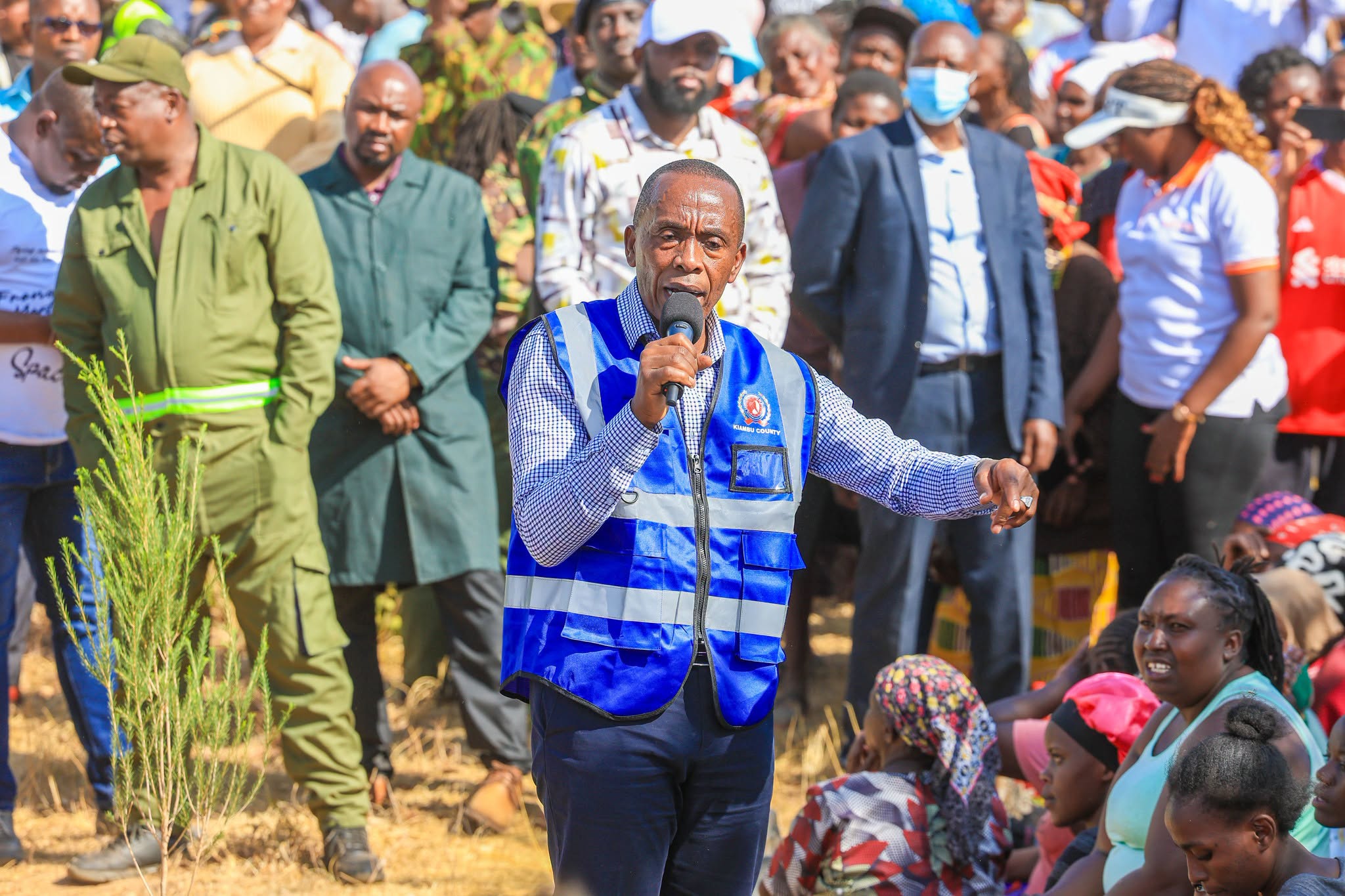
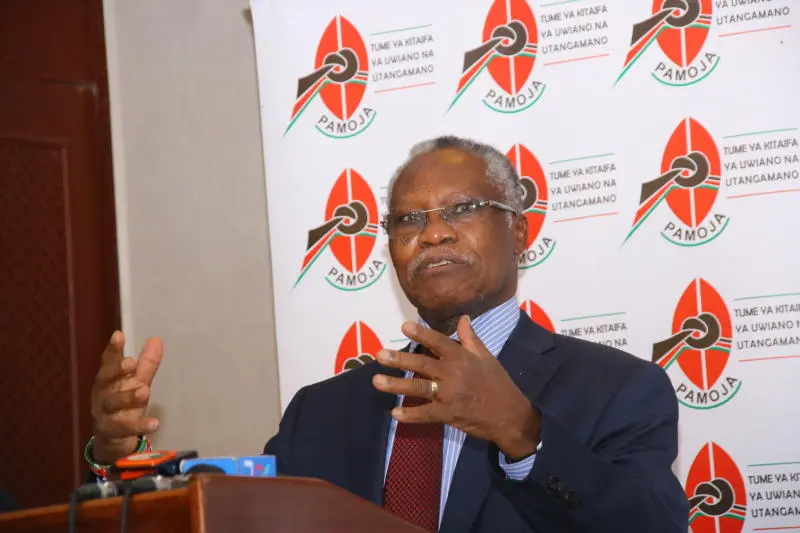
 NCIC chairperson Samuel Kobia during a past event/FILE
The National Cohesion and Integration Commission (NCIC) has come under increasing scrutiny over its effectiveness in curbing hate speech, incitement, and ethnic tensions in Kenya.
Although its formation was hailed as a crucial step toward fostering national unity after the 2007-08 post-election violence, critics argue that the commission has fallen short of its promise.
Despite receiving public funding, the NCIC is often accused of being more reactive than proactive, issuing warnings and vowing to investigate, yet rarely delivering tangible outcomes.
“The creation of the NCIC was the greatest mistake Kenya ever made,” said political analyst Joel Onyango.
“The Commission is a waste of resources if its current performance is anything to go by.”
In February 2025, frustrations boiled over online as Kenyans flooded social media platforms calling for the defunding of the NCIC.
They accused it of turning a blind eye to rising tribalism and hate speech-particularly among political leaders.
The commission has, however, rejected these claims, attributing its limited impact to resource constraints.
In a previous address, commission’s chairperson Samuel Kobia appealed to parliament to expand the commission’s prosecutorial powers to more effectively go after hate speech offenders.
He also denied accusations that the NCIC takes orders from the executive, particularly in cases involving high-profile politicians.
“We do not discriminate in the execution of our mandate, whether on ethnic or political grounds. For us, the National Cohesion and Integration Act is the guiding principle. Every Kenyan, apart from the president, is within our scope,” Kobia said.
Its latest summoning of the former Deputy President Rigathi Gachagua over controversial 2027 remarks, has now sparked fresh interest in the body’s mandate, powers, and history.
Here’s what you need to know.
NCIC is an independent government body established to promote national unity, mitigate ethnic tensions, and eliminate discrimination on the basis of ethnicity or race in Kenya.
It is best known for monitoring hate speech and fostering peaceful coexistence among Kenya’s diverse communities.
It was established in 2008 through the National Cohesion and Integration Act following the devastating 2007-08 post-election violence that left over 1,000 people dead and hundreds of thousands displaced.
The violence, widely attributed to ethnic and political divisions, exposed deep fissures in the country’s social fabric and prompted both national and international calls for institutional reforms.
The NCIC was part of Agenda Four of the Kenya National Dialogue and Reconciliation (KNDR) process.
The process aimed to address long-term issues such as inequality, historical injustices, and ethnic discrimination that were believed to fuel recurring cycles of violence.
NCIC powers
The NCIC has both preventive and enforcement powers.
These include investigating and recommending prosecution for hate speech, incitement, and ethnic discrimination and monitoring political statements and media for divisive rhetoric.
Others are promoting civic education and policy dialogue on national cohesion and advising the government on issues related to integration and ethnic relations.
While the commission does not have prosecutorial powers, it works closely with the Office of the Director of Public Prosecutions (ODPP) to pursue legal action where necessary.
Gachagua summons Former Deputy President Rigathi Gachagua was last week summoned by the commission over inflammatory or ethnically divisive remarks.
Gachagua warned that any attempts to rig the 2027 elections could result in unrest surpassing the 2007 violence, stating, “2007 would look like a Christmas party” if the Independent Electoral and Boundaries Commission (IEBC) mishandles the polls.
He spoke when he appeared for an interview.
The Commission is seeking clarification and accountability in line with its mandate to curb hate speech and promote national unity, especially given the DCP leader’s influential position.
“Following the former Deputy President’s remarks, we have issued summons. This is not harassment—it is a legal process well within our mandate,” commissioner Danvas Makori told the Star.
Makori said Gachagua had already been issued a “yellow card” by the commission for previous comments on political “shareholding.”
The latest remarks, he said, amount to a second offence.
“He is supposed to appear this week. We give someone a week to respond. If we determine he has a case to answer, we will take further action,” Makori said.
“If you are given a yellow card, the second one is a red card. People say we’re taking sides, but in his case, this is the second yellow-which means a red card,” he added.
“If I warn you and you don’t listen, I don’t think I should be gentle next time. We have to be firm. He must serve as an example.”
Makori emphasised that the commission’s actions are not politically motivated and that the crackdown targets politicians across the political spectrum.
“If we allow politicians to keep pushing boundaries and getting away with dangerous rhetoric, we won’t have a country,” he said.
“We want to nip it in the bud, and this includes leaders from both sides of the political divide.”