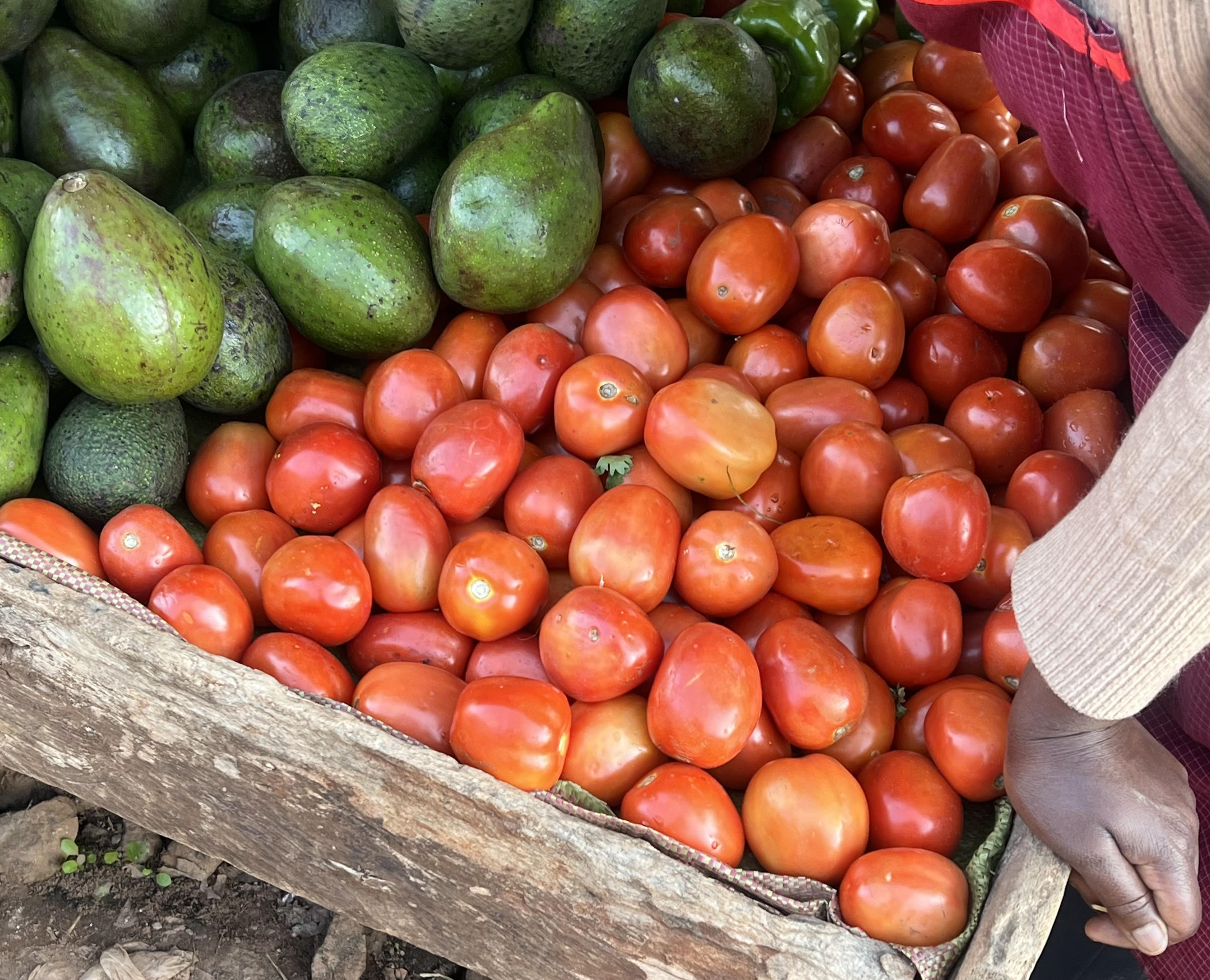
 Tomatoes displayed at Kinoo market / PERPETUA ETYANG
At dusk in many Kenyan homes, the familiar rhythm of cooking still fills the air, oil sizzling, onions browning, spices releasing their aroma. But something is missing.
The rich, tangy base that once brought dishes to life has quietly vanished from many pots, leaving meals tasting different and families feeling the absence in more ways than one.
A spot check in Kangemi and Kinoo shows how sharply things have changed. Tomatoes that once sold for Sh5 are now going for between Sh15 and Sh20 each, pushing them out of reach for many families.
For generations, tomatoes have been more than just an ingredient; they are the heart of Kenyan cooking, binding together flavours in stews, sukuma wiki and sauces.
Today, however, that tradition is being tested. What was once taken for granted is now carefully rationed, substituted, or left out entirely as households grapple with rising costs.
Across Nairobi’s residents and estates, conversations around food have shifted. It is no longer just about what to cook but what can be afforded.
Parents are reworking recipes on the fly, stretching ingredients and making compromises that, while necessary, chip away at the comfort and familiarity of everyday meals.
In the markets, the story is just as stark; the vibrant red piles that once drew customers from afar have thinned out, replaced by cautious traders and empty spaces.
Behind every missing crate of tomatoes is a vendor weighing losses against survival, and a customer walking away, unable or unwilling to pay the new price.
Mama Mary, a long-time grocery vendor in Kangemi, says the decision to stop stocking tomatoes was not easy, but it became inevitable as losses mounted.
“At first, my customers were just complaining, telling me ‘Mama Mary, hii bei ni juu sana,’ but they would still buy one or two. Then slowly, they stopped completely. I found myself throwing away spoiled tomatoes because no one was buying,” she said.
“I sat down and asked myself, ' Why am I stressing over something that is not helping me? I stopped, because inaleta hasara sana. Right now, I would rather focus on avocados, bananas and other fruits that people can still afford. At least there, I am sure I will sell and not lose my money.”
In Kinoo, James Kimani describes a similar experience, saying the change in customer behaviour has been both sudden and unsettling.
“You know, tomatoes used to sell very fast, especially in the evening when people are preparing dinner. But these days, customers come, ask for the price, and just shake their heads and walk away,” he said.
“Even when someone buys, they only take one tomato, not like before when they would take several. I tried reducing my stock, bringing just a small crate, but still, it stays for days. By the time you sell, some have already gone bad. It has become a loss-making business.”
For Beatrice Wanjiku, who runs a roadside stall at Kinoo market, the situation has forced her to rethink her entire business model.
“Tomatoes have become a risk I am not willing to take anymore. If I sell at the current high price, customers complain and avoid my stall. If I reduce the price, then I am the one making losses because I bought them expensively. It reached a point where I was just working for nothing. So, I decided it is better to stop completely and focus on items that move,” she added.
Maureen Muthoni, a trader at Kinoo, had a similar story, saying that the impact is not just on traders, but also on how families are eating.
“With tomatoes, you can buy today at a very high price, hoping to make a profit, then tomorrow the demand is zero. Customers simply don’t have the money. For many families, tomatoes are now considered a luxury, not a basic item,” she said.
“My customers tell me they are now cooking without tomatoes or using alternatives. Some say they boil vegetables without the usual stew, others say they use very little just for colour. It is not the same food we are used to, but people are adjusting because they have no choice. Even for me, at home, I cannot afford to cook the way I used to.”
The absence of tomatoes tells a deeper story, of strained incomes, shifting habits, and the quiet resilience of families and traders adapting to difficult times.