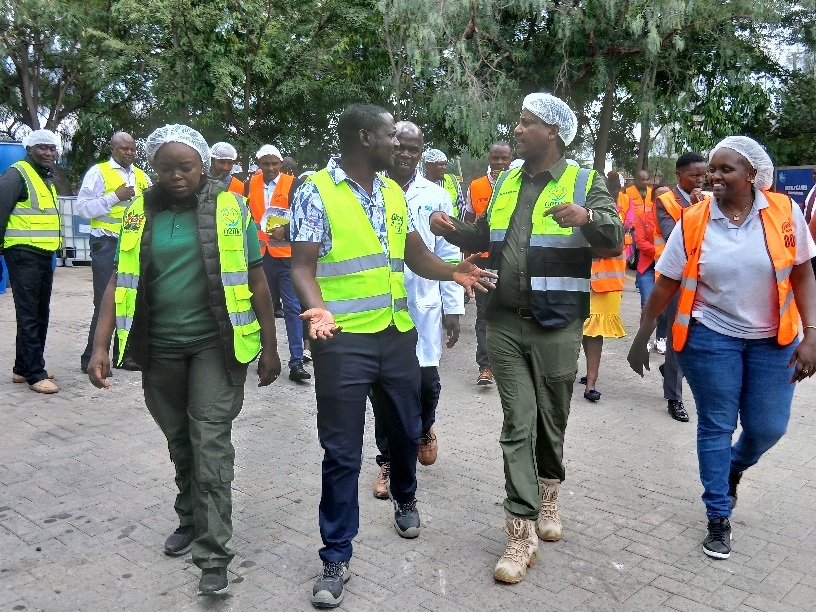
The Authority, led by Director General Dr. Mamo Mamo, conducted a sting operation on non-compliant companies in Athi River, Machakos County.
The operations overseen by Environment CS Deborah Barasa led to an arrest and closure of one of the companies located within Mlolongo Township over what the officials termed as non-compliance to various environmental laws. Environmental laws in Kenya are the rules that protect air, water, land, forests, and wildlife.
“Today, we move far from acknowledgment to enforcement. I have directed NEMA to undertake immediate, coordinated and comprehensive inspections of all facilities discharging wastes into our rivers and their tributaries,” Barasa said.
She addressed the press shortly after they concluded the operations in Mlolongo. Two industrial companies were visited during the swoop.
Mamu said the closed facility had been identified as non-compliant. He said the factory managers had earlier blocked Nema's environmental inspectors from accessing it which is an offence.
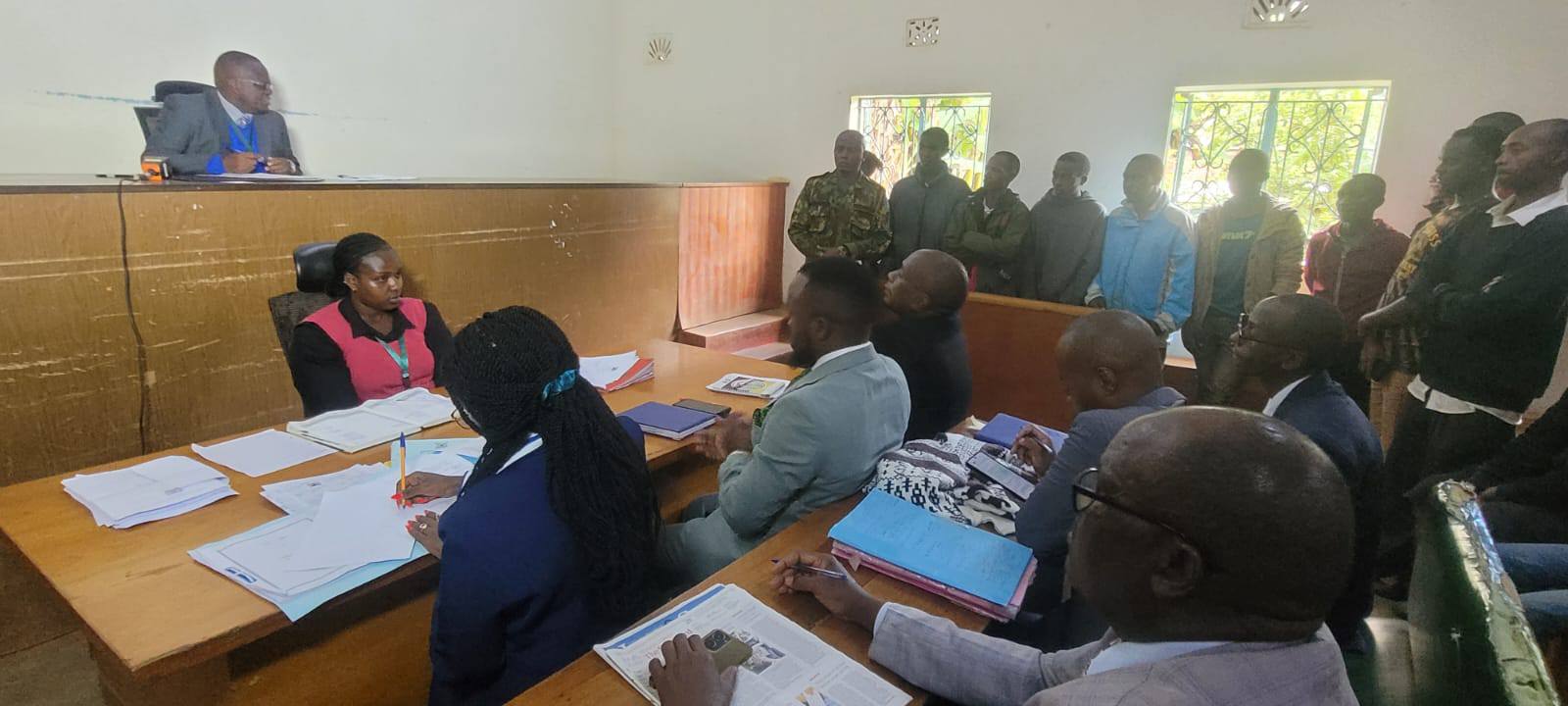
"We have given directions that this facility ceases all operations and our officers will ensure that we arrest and prosecute its managers. This facility is closed. We have arrested one person," Mamu said.
Barasa said the ongoing inspections would be vigorous, transparent, and uncompromising.
She said she had dedicated her time and would be accompanying NEMA in the operations on a monthly basis.
“I’m glad to join NEMA today to undertake inspection of industries likely to discharge effluent into the Nairobi urban River or Nairobi River systems. The condition in Nairobi River is no longer an environmental concern but a measurable challenge,” she said.
The river, according to the CS, is a channel of contamination and river system that is overwhelmed with pollution.
She said there was a lot of discharge, release of chemicals, effluent in informal settlements who contribute raw sewerage and storm water run-offs carrying plastic, and heavy metals into our rivers.
Barasa said over 70 percent of waste water generated in Nairobi is discharged into our urban rivers as untreated effluent.
She said it was against this scientific reality that they were taking decisive action together with Nema noting that for too long, our rivers have borne the cost of industrial negligence and systematic failure.
The CS said over 100 facilities were inspected last year and there was improvement in the quality of discharge into rivers.
She said increased inspections would ensure gradual reduction of effluent discharge into rivers thereby making water clean, safe, and healthy for our environment.
Barasa said facilities which would be found to be non-compliant will face enforcement actions that include immediate closure.
She said facilities operating without functional effluent treatment plants or with systems that don’t meet discharge standards would be shut down.
“We will also take firm actions against those facilities engaging in the open burning of wastes, a practice prohibited under Air Quality Regulations 2024 and associated with harmful emissions,” Barasa said.
The CS said it was unacceptable or a failure for those unable to segregate waste at source. All companies should adhere to the Sustainable Waste Management Act 2022 and the Global based practices on waste management.
She said without proper segregation, recycle materials are lost as waste is mishandled and entire waste management chain becomes ineffective.
Barasa noted that absence of color coded bins for waste separation was also a challenge.
She said facilities must demonstrate structural systems for separating organic, recyclable and hazardous with general waste systems in line with the Waste Management Regulation Act 2024.
Barasa called for recognition and well payments of garbage collectors in the country.
She said they would enforce strict requirements on waste tracking and documentation.
“As we conduct analysis, what we are seeing is a challenge on waste tracking. Once waste leaves the industries, manufacturing sites, where does it go? We see it ultimately ending up in our urban rivers.”
The CS said any facility that fails to maintain proper waste tracking records clearly showing how waste is generated, transported and disposed of will be considered non-compliant.




Comments 0
Sign in to join the conversation
Sign In Create AccountNo comments yet. Be the first to share your thoughts!