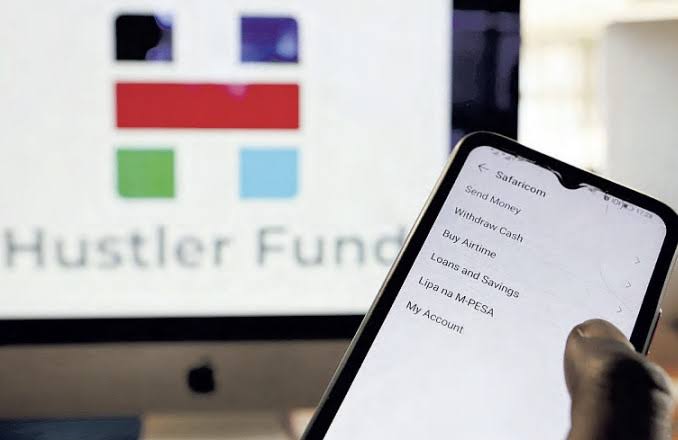
The government’s decision to write off Sh6 billion in defaulted Hustler Fund loans has caused debate, spotlighting the rationale behind loan write-offs.
While the move aims to salvage this flagship initiative that has extended credit to millions of small-scale entrepreneurs, it also raises concerns about fiscal responsibility and the sustainability of taxpayer-funded programs.
When she appeared before the National Assembly’s Committee on Trade, Industry, and Cooperatives, MSMEs Development on Wednesday, May 21, 2025, Principal Secretary Susan Mang’eni sought for an additional Sh5 billion to sustain the initiative.
She revealed that 10 million borrowers who took loans in 2022 have failed to repay.
"They never repaid, and that is what we will be seeking to write off, so the portfolio that is totally at risk and is in default is about between Sh5 billion and Sh6 billion,” she said.
Despite this, she defended the fund’s performance, noting that 9 million borrowers remain active and continue to repay their loans.
Mang’eni urged MPs to approve the additional funding, arguing that it would help increase loan limits for reliable borrowers and accommodate new applicants.
She said so far they have disbursed Sh65.7 billion, with repayments standing at Sh53.2 billion
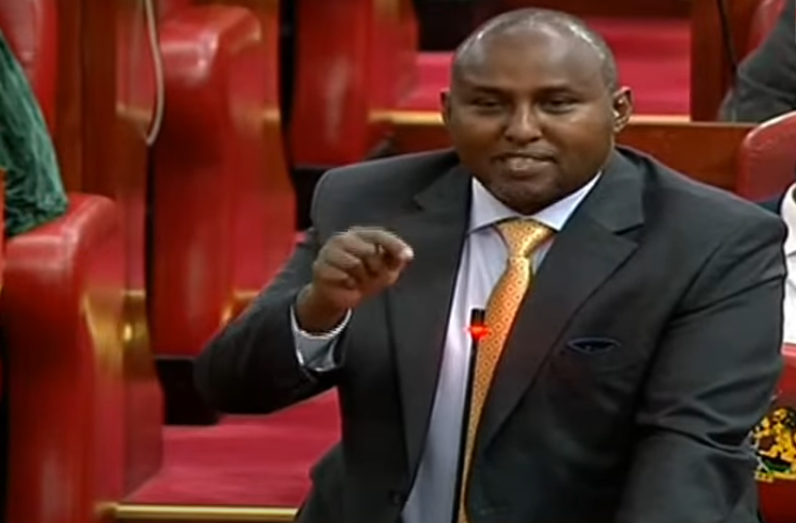
However, lawmakers expressed concerns over the fund’s sustainability, questioning whether injecting more taxpayer money into a struggling program was wise.
"At this rate, I think you're going to dive into something else. We cannot afford to be writing Ksh.6 billion for you,” said Starehe MP Amos Mwago.
So, what is a write-off?
In banking, writing off a loan does not mean erasing the debt entirely.
It is an accounting decision that acknowledges a borrower's inability or unwillingness to repay after exhaustive recovery efforts.
Typically, loans are written off when they are classified as non-performing for a sustained period, and legal or economic realities make recovery unlikely.
In public finance, such decisions are bound by strict procedures, including audits, legislative approval, and often, a demonstration that further pursuit would cost more than the expected recovery.
The Hustler Fund, launched as a flagship project under President William Ruto, was designed to provide affordable credit to small-scale entrepreneurs.
Since its inception, Sh65.7 billion has been disbursed, with Sh53.2 billion repaid.
Before reaching this stage to write off a loan, a bank must first classify the loan as non-performing, which signals a higher risk of default.
Once classified, the bank sets aside provisions, essentially reserving capital to cover the expected loss.
Meanwhile, efforts to recover the loan continue.
These can involve restructuring the repayment terms, reaching out to guarantors, involving debt collection agencies, or pursuing legal action.
If all these efforts fail and recovery appears unlikely or would cost more than the loan is worth, the institution may proceed with writing off the debt.
Such a move often requires internal approval and, in many cases, regulatory or board-level sign-off, especially for large amounts.
Even after a loan is written off, the borrower’s obligation to repay remains.
Financial institutions may still continue recovery attempts, including legal proceedings or listing the default with credit bureaus, ensuring that the write-off is not mistaken for forgiveness.
In 2022, the Central Bank approved a Credit Repair Framework (the Framework) to be offered to eligible borrowers by commercial banks, mortgage finance companies, and microfinance banks (institutions) for mobile phone digital loans.
The Framework sought to improve the credit standing of the mobile phone digital borrowers whose loans are non-performing and have been reported as such to the Credit Reference Bureaus (CRBs).
Under the Framework, institutions will update the status of these borrowers from non-performing to performing in the CRBs after providing a discount of at least 50 percent of the amount outstanding (principal and interest).
"The institutions will then work with the borrowers on a repayment plan for the balance of the loan after the discount, for a maximum period of 6 months (180 days), applying up to May 31, 2023," read a circular issued to commercial banks.
Recovery Plan
When he appeared before the Senate, Cooperatives Cabinet Secretary Wycliffe Oparanya said the government is developing a system to track Kenyans who have defaulted on hustler fund loans.
“I urge Kenyans who borrowed this money to repay it. This initiative is well-intentioned and meant to benefit many,” he said.
The CS said the fund, launched shortly after the 2022 elections, was misunderstood by some borrowers as a government giveaway.
He assured the public the new tracking system will help recover the funds and ensure more Kenyans benefit.