President William Ruto’s recent move to acquire a new Sh3 billion e-procurement system has sparked concerns in Parliament, with lawmakers raising alarm over what they see as wasteful spending.
MPs have questioned the rationale of spending money on a new e-procurement system, yet the Integrated Financial Management Information System (Ifmis) is up and running.
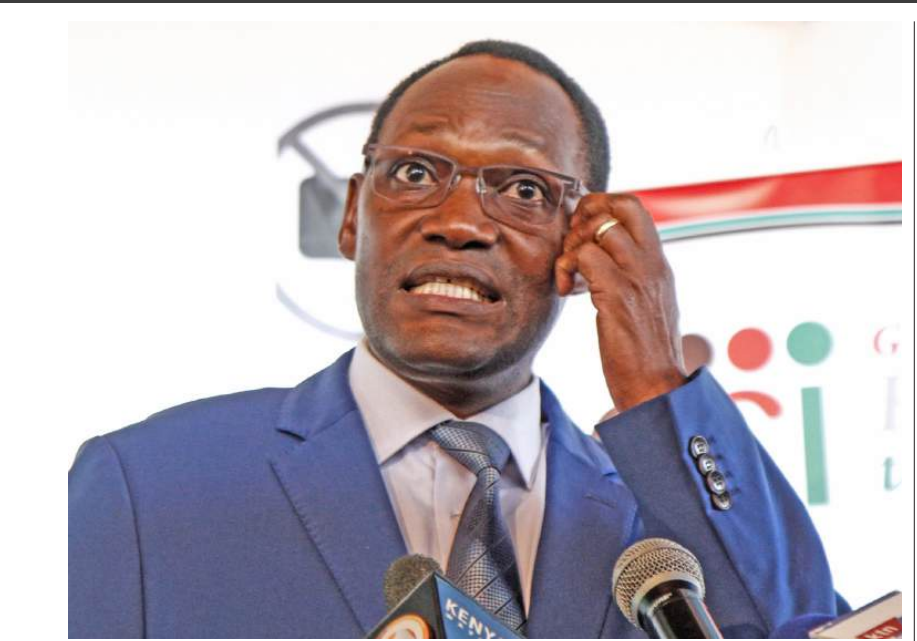
The concerns erupted after Treasury PS Chris Kiptoo revealed the new system, currently piloted in 10 state agencies, would replace components of the existing Ifmis.
The PS said more entities are set to be onboarded in the government procurement system from July.
In submissions before the National Assembly Finance Committee, the PS said the government opted for the system since Ifmis has limited functionality when it comes to e-procurement.
The financial management system cost taxpayers Sh1.2 billion annually in maintenance fees despite its “limited functionality” for procurement.
"We aim to streamline procurement having realised it is where we have a problem. The long-term impact outweighs the initial cost," the PS said, justifying the new acquisition.
But a section of members of the committee, led by Molo MP Kuria Kimani, poked holes on the purchase, questioning its viability at a time the country is facing cash flow hitches.
Kesses MP Julius Ruto led the onslaught, asking why the government was rolling out a new system.
"Why do we procure a new system when we have spent a lot of money on Ifmis? Isn't this an expensive venture? Isn't the customisation expensive?" the lawmaker asked.
MP Kimani asked what the hundreds of millions of shillings that have gone into updating Ifmis have been doing.
"The amounts that have gone into this system are colossal. I hope we are not getting into another challenging one," the MP said.
While Kiptoo defended the investment as necessary to streamline procurement, usually prone to corruption, MPs across party lines demanded answers.
Only Kitui Central MP David Mboni, a former Treasury official, supported the investment, saying it was long overdue.
The queries came amid heightened concerns about why the government continues to sign tech contracts that cede control of public systems to private entities.
Multiple platforms, including the e-visa system, e-Citizen, and the Social Health Authority (SHA) have been brought under sharp scrutiny.
Critics argue that flawed agreements have left the government hostage to vendors who dictate terms, collect billions in fees and retain ownership of systems funded by public money.
Auditor General Nancy Gathungu has repeatedly flagged these deals, warning that the lack of government oversight exposes the country to fraud, data breaches and service disruptions.
During a heated session in the National Assembly Finance Committee, MP Kimani challenged the Treasury’s justification for the new system, noting that hundreds of millions had already been spent upgrading Ifmis.
“The amounts that have gone into this system are colossal. I hope we’re not getting into another problematic venture,” he said.
PS Kiptoo countered that Ifmis lacked specialised e-procurement features and that the long-term benefits of the new system justified the cost.
But sceptics argue the move exemplifies a cycle of waste where instead of fixing existing systems, the government keeps layering new ones, each with its own budget-draining maintenance fees.
The controversy extends far beyond procurement.
Days earlier, the Education ministry announced plans to replace the National Education Management Information System (Nemis)—which manages billions in school funds—with a new Kenya Education Management Information System (Kemis).
Education PS Julius Bitok framed it as an upgrade to unify student data across primary, secondary and tertiary levels.
Yet, auditors have long criticised Nemis for operating without clear government ownership, copyright documentation or administrative control.
Officials have complained that during school fund disbursements, discrepancies emerge that can’t be resolved without vendor intervention.
Gathungu recently exposed how private contractors behind platforms like e-Citizen, SHA and the e-visa system control access, updates, and even data ownership.
For instance, the SHA’s Sh104 billion healthcare IT system—which holds sensitive patient records—is managed by private actors who earn Sh11 billion annually through levies on contributions and claims.
The contract bars the government from developing alternative systems, effectively creating a monopoly.
Similarly, the e-visa platform, introduced in 2023, routes millions in revenue to a Swiss bank account, while its contractual terms remain shrouded in secrecy.
President Ruto’s flagship e-Citizen platform, hailed for centralising more than 5,000 government services, has also faced criticism.
Though it processes billions in revenue, its vendors—Webmasters Kenya Limited, PesaFlow and Olive Tree Media—retain control over critical functions.
Insiders reveal that even minor adjustments to the platform require vendor approval, creating bureaucratic bottlenecks.
The contractors earned Sh1.5 billion in service fees last year, and Immigration PS Belio Kipsang’s admission that the e-visa contract runs until 2026, with annual maintenance costs hitting Sh1 billion, has fuelled suspicions of sweetheart deals.
For Ifmis, auditor general’s reports detail how the system, intended to curb graft in public finance, has been manipulated to create unauthorised accounts and obscure transactions.
Discrepancies between Ifmis records and official statements suggest deliberate tampering, yet the government cannot audit the system independently.
The Hustler Fund, a popular digital loan initiative, faces similar risks of private vendors controlling disbursements and repayments, raising fears of data manipulation or fund diversion.
It remains to be seen whether PS Kiptoo’s assurance that the new e-procurement system’s “long-term impact outweighs the initial cost” would assuage the concerns.
With Kenya’s public debt exceeding Sh11 trillion, MPs argue that pouring funds into parallel systems is reckless.