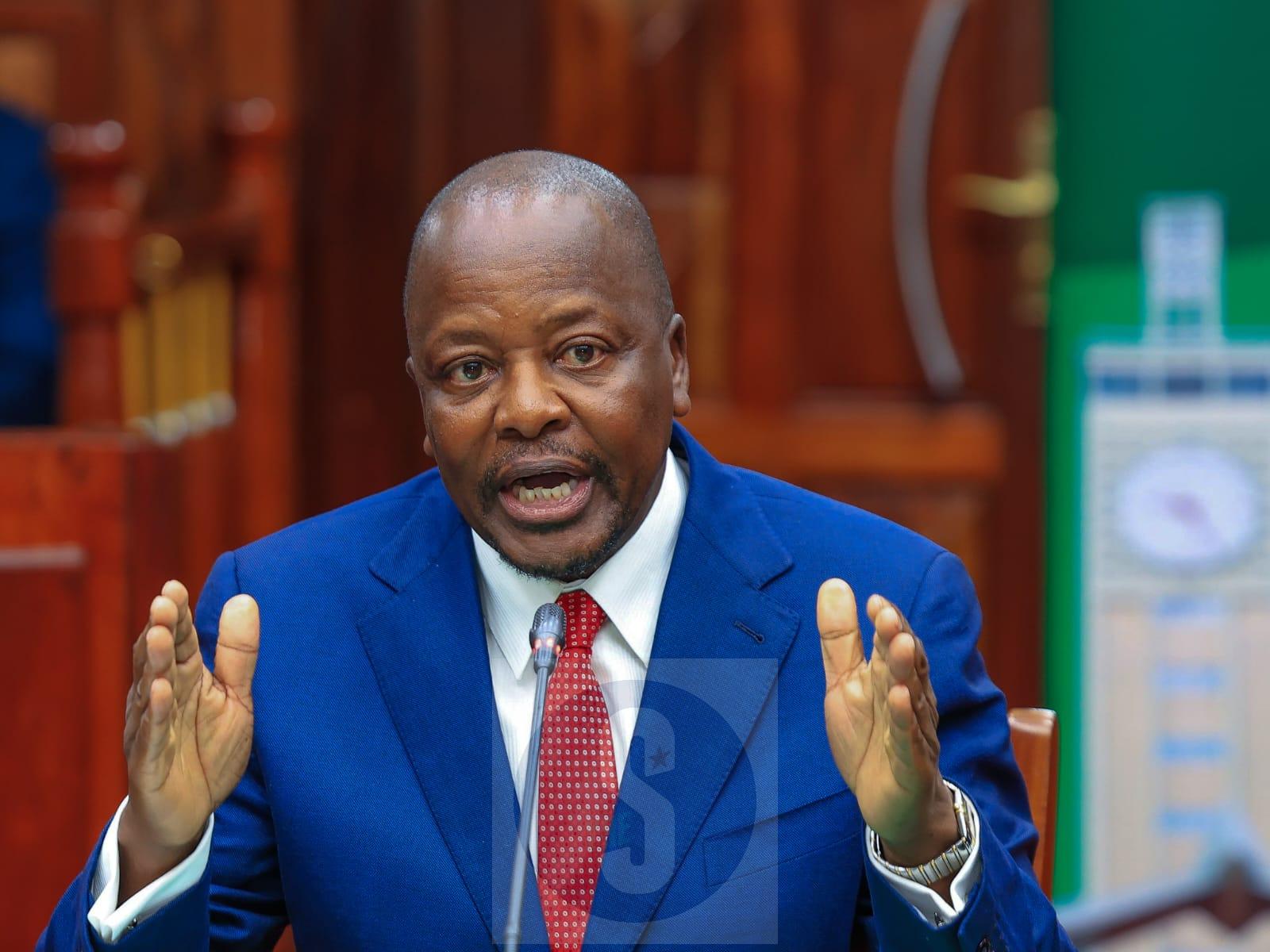
Parliament has summoned Agriculture CS Mutahi Kagwe amid a growing uproar over the leasing of four state-owned sugar companies to private millers.
Kagwe is expected to appear before the Senate’s Trade, Tourism and Industrialisation Committee next Tuesday to provide clarity on the leasing programme, which has drawn widespread criticism from lawmakers and local communities.
The committee is demanding several key documents.
These include the approved privatisation programme, a list of all submitted bids, the lease agreement between the public mills and the private companies and a detailed list of mill assets and debts.
“Provide proof of stakeholder engagement and public participation during the process of privatisation of the public sugar mills,” the Senate’s letter to Kagwe reads.
The committee also wants to understand the role played by the Privatisation Commission in the process.
Last week, the Ministry of Agriculture finalised 30-year lease agreements for the four public sugar factories – Nzoia, Chemelil, Sony and Muhoroni.
The mills were leased to West Kenya Sugar Company, Kibos Sugar and Allied Industries, Busia Sugar Industry and West Valley Sugar Company, respectively.
However, the move has triggered fierce protests from both Houses of Parliament and leaders from sugar belt regions, who claim the process lacked transparency, ignored stakeholder input and violated court orders.
At a press briefing, Kabuchai MP Majimbo Kalasinga condemned the ministry’s actions, accusing it of defying an interim court order that barred the leasing process.
“The court gave clear orders barring the Ministry and the State Law Office from proceeding. The Attorney General was served, yet the ministry went ahead. Who is advising the government?” Kalasinga asked.
Lawmakers expressed concern over unresolved debts owed to farmers and workers, fearing a repeat of the “Pan Paper betrayal,” where the Rai family took over the collapsed paper mill in 2016 under promises that remain unfulfilled.
“We’ll organise demonstrations both on the ground and in the air until farmers are paid and the leasing process is made transparent,” Kalasinga declared.
Vihiga Senator Godfrey Osotsi criticised the lack of public engagement, particularly in the case of Nzoia Sugar Company, saying the process was conducted without transparency.
“Even if the government has good intentions, they must involve local leaders and communities instead of making unilateral decisions,” Osotsi said.
Kakamega Senator Boni Khalwale warned that the leasing programme will directly impact the livelihoods of over eight million Kenyans who depend on the sugar sector.
“The only ‘public participation’ that took place on Nzoia Sugar was consultation with the Bungoma governor and the Speaker of the National Assembly,” Khalwale claimed.
As pressure mounts, the Senate session with CS Kagwe is expected to shed light on the legality, transparency and future implications of the leasing programme that continues to stir political and public tension.
Busia Senator Okiya Omtatah criticised the logic behind leasing public factories to other sugar firms, saying the move is not aimed at sugar sector revival but control of the market.
“You have drug barons and you have sugar barons. You don’t have coffee barons, you don’t have tea barons,” he said.
“There’s no common sense in leasing a sugar company to another. It eliminates competition. Leasing out 24,000 acres of public land to West Kenya is a direct threat to farmers,” he said.
He accused the ministry of bypassing the international tender process, saying the awarding was skewed to benefit the West Kenya sugar firm for personal gain.
“An international tender was issued to close on March 21. But the minister’s statement doesn’t mention it. The law says international tenders need 60 to 150 days. What happened to that tender?” Omtatah posed.
Nairobi Senator Edwin Sifuna vowed to challenge the lease in court and through public action, warning that the sugar sector was under siege from individuals with connections.
“This is daylight robbery. If this lease lasts 30 years, most of us won’t be around to explain it to future generations. Our leaders must account for it now,” Sifuna stated.
The leasing process ignored regional stakeholders, he said, alluding that the lease was a plot to seize community land owned by sugarcane farmers in Bungoma.
“Western Kenya exports nothing except sugar. This is our only economic lifeline. Yet, we weren’t consulted. And now they want to take even our land. This is land grabbing disguised as leasing,” he noted.