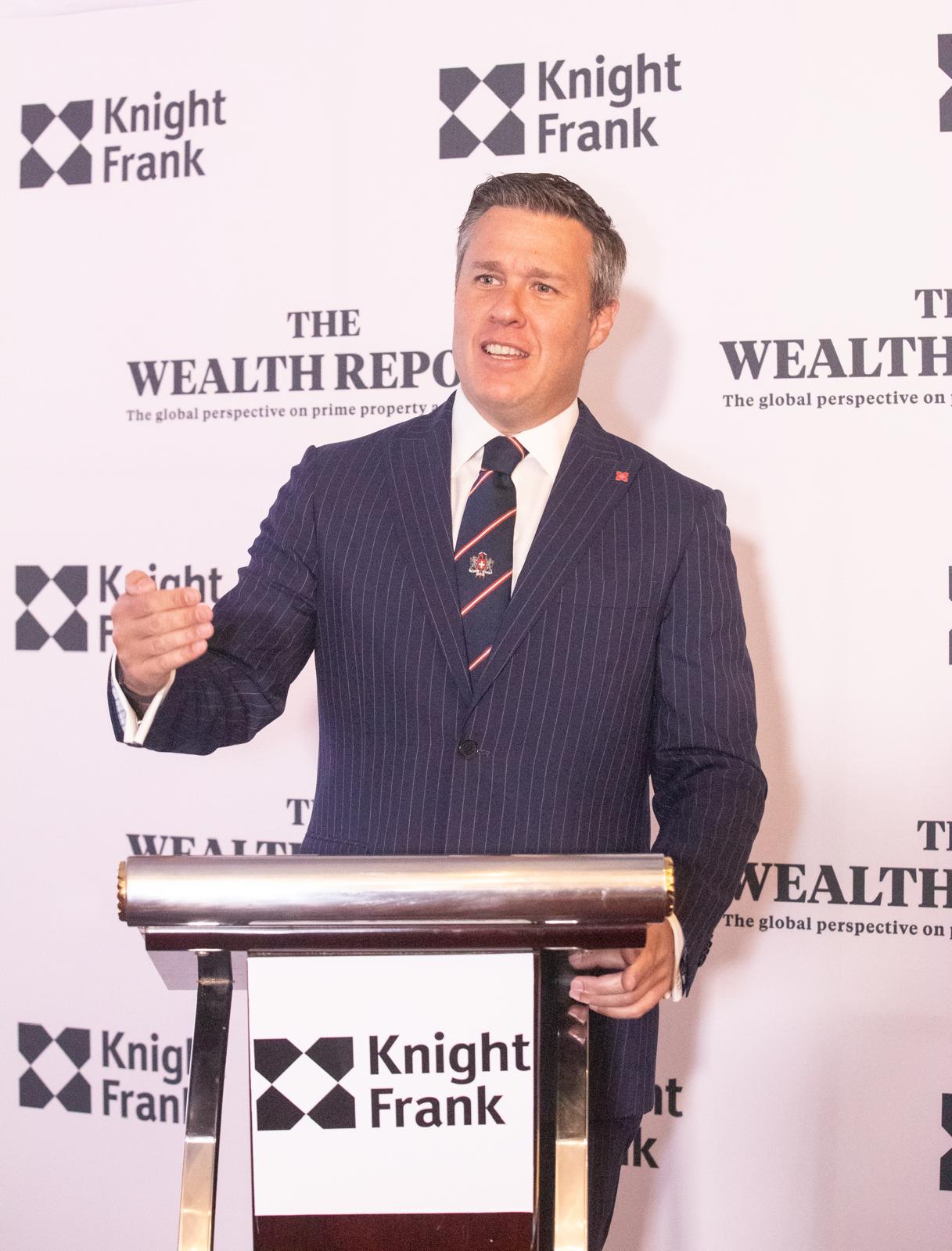
The number of wealthy individuals in Kenya has dropped by at least 10 per cent in the past 12 months, attributed to economic slowdown worsened by fiscal challenges, harsh climatic conditions and social unrest.
Even so, the latest Knight Frank’s Wealth Report released on Tuesday shows that technology, agriculture, and real estate are breeding a new crop of self-made high net individuals, with majority accumulated rather than inherited.
According to the global property consultant's report, 28 per cent of wealth managers reported overseeing portfolios valued at less than $5 million.
“This trend highlights the predominance of emerging affluent and middle-class clients, reflecting Kenya’s broader economic landscape where wealth is gradually being accumulated rather than inherited,’’ the report reads in part.
It adds that Kenya’s growing middle class and dynamic entrepreneurial ecosystem contribute to this trend, with many of these portfolios driven by individuals and small to medium-sized enterprises (SMEs) engaged in wealth-building activities.
The report also highlights a notable decline in the influence of inherited wealth, which now constitutes a minority share of HNWI portfolios. Half of the fund managers surveyed indicated that inheritance accounts for less than 30 per cent of their client’s wealth, while 77 per cent said it represents less than 40 per cent.
This is way lower than an average of 60 per cent of respondents who linked wealth in the country in 2023 and 2024 to inheritance.
Boniface Abudho, Research Analyst at Knight Frank, noted that most of Kenya’s wealthy tend to inherit assets, but they typically hold these in relatively conservative portfolios while focusing their efforts on generating new wealth through more productive and venturesome investments.
In terms of allocation, fund managers reported that over half of inherited wealth is held in property, primarily in private rented residential real estate and real estate debt. Smaller allocations are directed towards the development of land and education.
In contrast, current investment preferences among HNWIs reflect a shift towards more entrepreneurial and growth-oriented sectors such as data centers, healthcare, hospitality, and industrial or commercial assets.
Notably, there is significantly reduced interest in private residential rentals and education compared to inherited wealth holdings.
Mark Dunford, CEO Knight Frank Kenya, observed that in Kenya, inherited wealth typically takes the form of transferred real estate assets such as residential and land, with the younger generation being less sentimentally attached to legacy assets.
Further, Knight Frank notes that the trend of leveraging inherited wealth as a foundation for progressive expansion into more venturesome investments is reflected in the relatively modest scale of new capital allocations. According to fund managers, nearly half (44 per cent) of the investments planned by HNWIs for 2025 are valued at under $5 million.
“Overall, the data points to a pattern of landlord millionaires building on their existing wealth through targeted, smaller-scale investments across a broad range of commercial sectors. There is a clear emphasis on addressing emerging needs as a strategy for driving growth and sustained wealth creation, ’Dunford said.
A smaller but notable segment of the market comprises more established high-net-worth individuals (HNWIs), with 17 per cent the respondents indicating that they manage portfolios valued between $21 million (Sh2.7 billion) and $50 million (Sh6.5 billion).
A paltry 5.6 per cent of manager interviewed reported managing portfolios worth over $1 billion with none handling wealth valued between $500 million to $1 billion during the period under review.
“This highlights the limited number of ultra-high-net-worth individuals (UHNWIs) in Kenya, a common pattern in emerging markets where extreme wealth remains concentrated among a select few.”
These UHNWIs are likely to possess globally diversified investment portfolios and substantial holdings in major Kenyan corporations.
There is cautious optimism for the growth of wealth individuals in the country this year, with almost half (48 per cent) of respondents expecting only a marginal increase in wealth, partly because heavy taxes and fiscal pressures have been weighing on business confidence.
’’This environment of fiscal tightening and uncertainty limits the scope for significant profit increases among clients. Moreover, despite ongoing growth forecasts, the country faces challenges such as a persistent budget deficit and high external debt. These issues force the government to adopt conservative fiscal measures, which can slow down the pace at which wealth expands.”