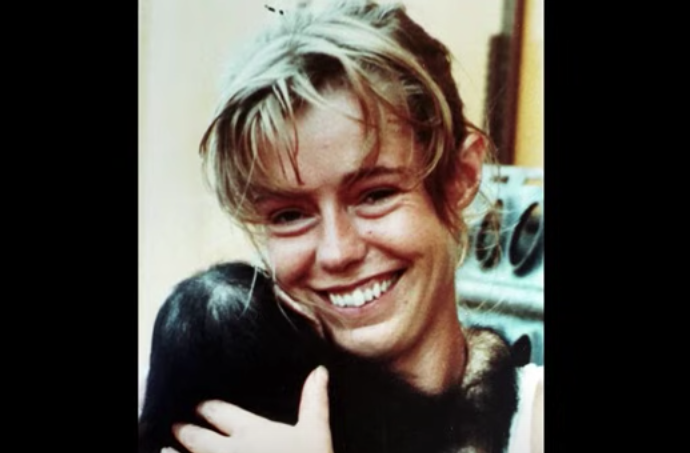
 Julie Ward during happier times. /HANDOUT
Fresh new evidence that could help detectives unravel the 37-year-old murder case of Briton Julie Ward in Maasai Mara has emerged, pointing to her likely killer.
The Daily Mail reports that it has obtained a witness statement recorded back in 2011 - but which remained locked in a safe by the Scotland Yard - until now.
Julie Ward's murder case remains unresolved to date, but the witness statement presents what could possibily be the most critical evidence that contradicts the key suspect's alibi and places him near the scene of crime.
The suspect, a son to a prominent Kenyan politician (both now deceased), told police in his statement recorded in 1997 that he had never been to Maasai Mara Game Reserve.
"However, I heard that a lady tourist went missing within the Maasai Mara," he said.
The witness statement, however, says the man, accompanied by his henchmen, was at the park on the day the Briton went missing, suggesting he lied about his whereabouts.
A police officer who obtained the statement said, "it would blow the case wide open."
"I remember that him (the suspect) and his party arrived very late one evening. It was dark and sometime around 10pm. I remember that they arrived in two or three jeeps and (I) think that they drove overland from Nairobi," the statement says in part.
"I definitely know that he arrived that night as I greeted him and spoke with him," it adds.
The witness was a trusted official at a tourist camp, not far from where Julie vanished.
Julie, described by her family as an animal lover, was on a six-month safari trip-of-a-lifetime to photograph wildlife when she disappeared in 1988.
Her last reported sighting was at the Sand River Campsite in the Masai Mara game reserve on September 6, 1988.
She was due to fly home in within days when she went missing.
Her father organised five aircraft to conduct a grid search of the area where Julie was last seen.
Her Suzuki jeep was found in a gully, and her remains were later discovered in a remote spot, some 16kms from her abandoned vehicle.
A police pathologist originally said Julie had been murdered citing ‘sharp clean cuts’ caused by a heavy blade, but later changed report, stating blunt ‘torn’ injuries on her body could have been caused by wild animals.
Kenyan police and the Scotland Yard worked to unravel the mystery surrounding her brutal murder.
But sensing a cover-up, her father John Ward worked tirelessly to find the truth, making nearly 200 trips to Kenya and spending £2million (Sh344 million) in unrelenting quest to find answers.
Police told him his daughter had been mauled by lions, struck by lightning, or could even have taken her own life.
He refused to accept this conclusion and, for 35 years, worked to find her daughter's killer.
He died in 2023 aged 90, two weeks after his wife's death, without knowing who killed his daughter.
"Dad realised early on that something sinister was going on with the investigation,’ his son Bob is uoted by the Daily Mail as saying.
Evidence obtained in the 90s explained how Julie possibly met her death.
That her killers came across her when she had stopped to photograph wildlife, kidnapped and repeatedly raped her over a few days.
That the idea to kill her cropped up after her disappearance became national news.
The key evidence, which the Scotland Yard obtained in 2011, remained locked away in a safe by the Metropolitan Police in Lewisham, south London, the Daily Mail report states.
Desire to safeguard diplomatic relations between Kenya and the UK was cited as a possible motivation for authorities wanting the case to go cold.
"It was obvious that...there was interference being orchestrated from a high level. They had thrown everything at proving she had committed suicide or been eaten by animals," Bob, Julie's younger brother, told the Daily Mail.
The paper said Bob, 61, is now spearheading the quest for truth.
His family has lodged a formal complaint against the Metropolitan Police, it added.
"Why was this vital piece of evidence left under lock and key for so long? Their failure to act on it – and indeed to bury it – conveniently until after the prime suspect had died is as scandalous as it is upsetting. It’s a real betrayal of justice," Bob is quoted as having told the Daily Mail.