President William Ruto’s grand vision for Kenya is teetering on the edge as the crushing weight of the country’s public debt threatens to derail his most ambitious promises.
Fresh budget disclosures reveal that Kenya is set to spend Sh1.901 trillion in the next financial year solely on debt repayments, translating to about 57 per cent of the projected revenue of Sh3.31 trillion.
This technically means that for every Sh100 that Kenya Revenue Authority would collect from July 1, Sh57 would go towards debt repayment.
This leaves Ruto with Sh43 to balance between mandatory expenditures, county governments and run government on a day-to-day basis.
The repayment, which is a first charge on the consolidated fund services, has eclipsed entire sectors of government spending, leaving little room for the transformative projects Ruto campaigned on.
The numbers paint a dire picture with Sh1.1 trillion going towards interest payments alone. The amount is enough to cover the annual salaries of all civil servants.
Sh803 billion has been earmarked for principal repayments – split between foreign lenders (Sh851 billion) and domestic creditors (Sh246 billion).
With debt servicing consuming such a massive portion of revenue, Ruto’s administration is effectively running a broke government and would be forced to borrow even more just to keep the wheels running.
Next year’s total expenditure is projected at Sh4.24 trillion. However, Sh876 billion of that remains unfunded.
This means the National Treasury will have to take on additional debt to plug the gap, of which it already plans to get Sh284 billion from external sources and Sh592 billion from domestic borrowing.
Economists and policymakers have sounded the alarm in the wake of the vicious cycle of borrowing, warning that without drastic intervention, Kenya risks sliding deeper into financial distress.
“The reality is our debt repayment amount is too high. It is high time we started discussing debt restructuring,” said Abraham Rugo, executive director of International Budget Partnerships-Kenya
The strain is not just theoretical, indicating that it was already manifesting in delayed payments to counties, unpaid contractors and a growing pile of pending bills.
Rugo said when consolidated fund services—debt, pensions and salaries—swallow Sh2.1 trillion, leaving nothing for development.
The situation portends the risk of the government getting to where it can barely meet its obligations, let alone deliver on the “bottom-up” economic transformation Ruto promised.
With two and a half years left before the next election, Ruto’s legacy is in limbo.
His flagship projects including affordable housing, universal healthcare and agricultural revitalisation, are all at risk of stalling as budget cuts bite deeper.
Experts warn that slashing spending on critical services will only worsen the situation and would reduce economic activities, creating a ripple effect of discontent.
“The solution is to release more cash into the pockets of Kenyans, say by honouring pending bills. It will boost economic activities and eventually improve cash flows,” said Kitui Central MP Makali Mulu, who is also an economist by profession.
The opposition has seized on the debt crisis as proof of failed leadership, with calls for a comprehensive audit of how Kenya accumulated such unsustainable liabilities.
Former UDA secretary general Cleophas Malala recently dismissed Ruto’s projects saying they were no match to his predecessors – Mwai Kibaki and Uhuru Kenyatta.
“The President has no significant project that will guarantee a solid legacy after he leaves office,” he said, dismissing the affordable housing venture as yet to be branded as a major project.
“We remember Kibaki for free primary education, Thika Superhighway, and Uhuru for SGR, Nairobi Expressway and Mau Mau roads. We have nothing to remember Ruto for."
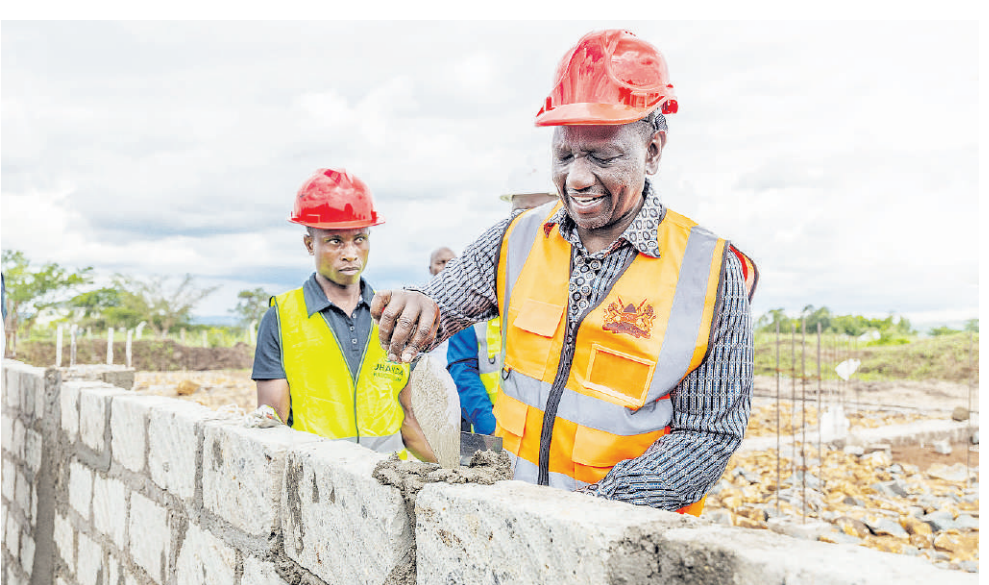
In his recent whistle-stop tours of various counties, the latest in Narok, Ruto exuded confidence that he is on track to deliver, against the odds.
He said his eyes are set on affordable housing, agriculture interventions and infrastructure upgrades through Public-Private Partnerships.
“We are upgrading our infrastructure to turn our country into a destination of choice for investors,” Ruto said.
The President has been launching road projects, markets and national government funded projects across the country.
Ruto exuded confidence that the “transformative initiatives have resulted in the revival and stability of the economy.”
“We are now on the path to accelerating growth through our numerous development projects that are stimulating the economy and generating inclusive wealth,” he said.
Kenyans are being asked to tighten their belts until at least 2034, with no clear path out of the debt situation.
Meanwhile, questions linger on how past loans have been utilised and whether hidden clauses could expose Kenya to even greater risks.