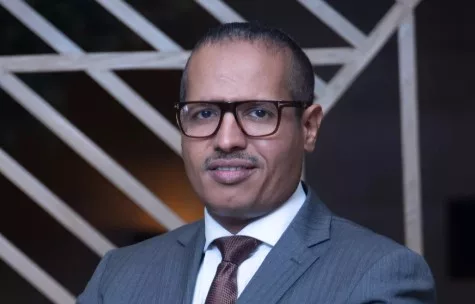
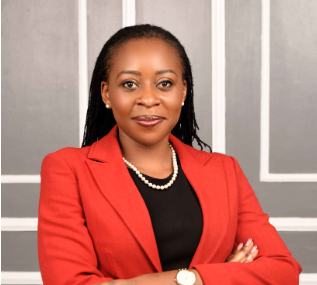
 Tony Blair Institute for Global Change Senior Advisor Phyllis Wakiaga /HANDOUT
After leading the Kenya Association of Manufacturers between 2015 and 2022, which she describes as “a defining chapter” in her career where she led in shaping Kenya’s industrial journey, Phyllis Wakiaga joined the Tony Blair Institute where she currently leads the Industry and Commerce portfolio, which spans manufacturing, tourism, life sciences, critical raw materials the digital economy, SME development and public-private dialogue.
Her work focuses on supporting political leaders through country teams to design and deliver industrial strategies that drive inclusive economic transformation across key productive sectors.
The Star spoke to Wakiaga on her personal life, leadership and the way forward for industrial growth.
Who is Phyllis? Where was she born and raised? How old is she, educational background and family?
I am a city girl born in Kisumu and raised in Nairobi where our family moved to when I was just two years old. I am now in my fabulous forties (because life truly begins at 40!) and proudly the only girl in a family of three siblings, a classic middle child through and through.
Education has always been a cornerstone in my life, thanks to my late parents: my dad, a hands-on engineer and my mum,a passionate educator, Doctor of psychology and dedicated public servant.
I pursued a Bachelor of Laws (LLB) and a Master of Laws (LLM) in International Trade and Investment Law at the University of Nairobi. I also earned a Diploma in Law from the Kenya School of Law and was admitted an Advocate of the High Court of Kenya.
To broaden my leadership and business perspective, I completed an Executive MBA at JKUAT, and I am currently finalising my PhD in Leadership and Governance.
My career has taken me across the legal, aviation and manufacturing sectors over the years. On the family front, I am incredibly blessed with a loving and supportive husband and four amazing children.
My firstborn is already in university, which feels both surreal and deeply fulfilling. My family is my greatest grounding force and everything I do is anchored in faith and purpose.
What was your childhood dream and did it come true?
From as early as I can remember, I wanted to become a lawyer. I had a strong sense of justice and was always that child who challenged rules, asked tough questions and never quite accepted “because I said so” as a valid answer.
Let us just say I gave my parents plenty of practice in negotiation, in fact they often joked that I was born a lawyer! That passion for justice led me into the legal profession and fulfilling that dream was incredibly meaningful. But my journey didn’t stop there.
As I grew older, I became increasingly drawn to the intersection of law, policy and industry. I witnessed firsthand the struggles of Kenya’s manufacturing sector where my father worked during the retrenchments and economic shrinkage of the 1990s.
It opened my eyes to how policy decisions shape lives, jobs and futures at scale. That realisation pushed me to advocate from a broader platform, shifting from legal practice to influencing public policy, supporting industrial development and working with institutions to unlock sustainable, inclusive growth across the continent.
What is the one thing that you will never miss in your handbag and why?
Beyond the usual essentials like my phone, I never leave home without a book. For me, reading is more than a hobby, it is a source of inspiration, reflection and continuous learning.
Books allow me to explore new ideas, gain fresh perspectives and sometimes just find a moment of calm in the middle of a hectic day.
So far, I have read seven books this year and I am currently juggling two more: Dream Count and When to Jump. Yes, I’m that person who reads multiple books at once!
How do you balance work and family?
Balancing work and family is an ongoing process that requires intentionality, flexibility and a deep sense of purpose. I have come to realise that it is not about achieving perfect balance every day but about living a centred life, one where my priorities are clear and aligned with my values.
I am incredibly thankful for a supportive husband and children who not only cheer me on but also keep me anchored. I prioritise quality time with my family, carving out moments that matter - whether it’s dinner together, family devotion, travel, or just catching up on the little things.
My faith keeps me centred and grounded, reminding me what really matters even when life gets busy and unpredictable.
You served at the Kenya Association of Manufacturers for nearly nine years. How was it as the CEO?
Being at KAM and leading the association from 2015 to 2022 was a defining chapter in my career. It was more than just a job, it truly felt like a calling. It was a front-row seat to shaping Kenya’s industrial journey, filled with both complex challenges and incredible opportunities for impact.
I had the privilege of working with a passionate, talented team and industry players whose commitment made even the toughest days worthwhile.
Together, we championed critical policy reforms in the economy, strengthened regulatory frameworks and launched programmes that continue to empower local industries—like the Women in Manufacturing Programme, SME Hub, the Changamka Kenya Shopping Festival, Centre for Green Growth and Climate Change and the Association remains close to my heart.
I was also fortunate to work with a supportive board that constantly challenged us to think bigger and be bolder. That spirit of collaboration extended beyond the organisation—to government, development partners, SMEs and industry leaders.
It reaffirmed for me that sustainable industrial growth is only possible when we all pull in the same direction. Of course, the role came with its share of tests. Covid-19 was a particularly tough period, but it also highlighted the resilience of Kenya’s manufacturing sector.
I was proud to stand alongside our members to keep Kenya Moving during the crisis. Looking back, my time at KAM shaped me as a leader in more ways than I can count.
What would you say were some of the biggest achievements during your tenure?
Though it’s been three years since I handed over the reins at KAM to move to a role at Tony Blair Institute, that season remains one of the most fulfilling of my professional life.
I was privileged to lead an institution at the heart of Kenya’s economic transformation, shaping industrial policy during pivotal moments like the EAC Common External Tariff(CET) review, AfCFTA negotiations, and the Economic Partnership Agreement discussions with the EU amongst others. One of my proudest achievements was positioning KAM as a respected, solutions-driven thought leader not just in Kenya, but across the continent.
This significantly amplified our advocacy efforts and enabled real, tangible outcomes. A good example is the Manufacturing Priority Agenda, which we developed as a key tool to sharpen policy engagement and articulate the sector’s needs clearly and consistently that is an annual flagship advocacy publication.
We also launched the Women in Manufacturing Programme, in partnership with Flora Mutahi who was the first female Chairperson of KAM and other trailblasing women in industry. This initiative remains close to my heart; it was a bold and necessary step toward gender equity in a traditionally male-dominated space.
We successfully championed key policy reforms ranging from tax and county development government programme to judicial engagement and infrastructure improvements, firmly embedding manufacturing firmly into Kenya’s Vision 2030 and the Big Four Agenda.
At the same time, we strengthened KAM’s regional chapters to ensure nationwide representation. We also played a catalytic role at continental level working through COMESA Business Council and co-founding alongside other manufacturing associations both the East Africa and Pan-African Manufacturers Networks.
During one of the most challenging periods, Covid-19, we advocated for manufacturers to be recognised as essential service providers, enabled access to stimulus measures and worked with industry to scale up production of Covid-related products.
The efforts helped the sector remain resilient during a time of national and global uncertainty. We also hosted the Global Compact Network Kenya at the association, and I had the honour of serving as its first Chairperson of the network alongside a visionary board and the dynamic Executive Director Judy Njino, helping grow the largest sustainability network in the country.
Internally, we invested heavily in governance and institutional capacity, building a high-performing, values-led Secretariat committed to professionalism, transparency and impact.
One of my greatest joys was working alongside a team that believed deeply in the mission and consistently went above and beyond to serve the sector. I am incredibly proud that the foundation we laid has continued to grow stronger.
The team at the Secretariat today under the leadership of CEO Tobias Alando continues to uphold and advance that legacy, driving forward KAM’s mandate with passion, resilience and innovation. It is exciting to see them not only sustain the momentum but also push boundaries and take the institution to new heights.
Looking back, it was a season of service, stretching out of my comfort zone and deep leadership. I am grateful for the trust,the teams and the lifelong friendships and partnerships across private sector that shaped that journey.
Any regrets?
No regrets at all. I believe every role is for a reason and a season and during my time at KAM, I served with conviction and clarity of purpose.
I embraced the opportunities and challenges that came with the role and walked away with experiences and relationships that continue to shape and support me to this day.
What makes a good CEO in your opinion?
A good CEO leads with vision, integrity and empathy. They are strategic thinkers who can navigate complexity, communicate clearly and rally teams around a shared purpose.
But what I have learned both in the role and through experience is that great leadership isn’t about having all the answers. It is about creating the conditions for others to thrive and giving people the space to bring their best selves to work.
Adaptability, emotional intelligence, curiosity and resilience are just as important. Some of these traits aren’t taught in classrooms but they are cultivated over time, often through the highs and lows of leadership.
I certainly didn’t have it all figured out on day one. I learned on the job, leaned into mentorship and stayed open to feedback lessons I still carry with me today.
Ultimately, a good CEO remains a learner: someone who is ready to learn, unlearn and relearn, listen deeply and build leadership in others. That is what transforms potential into real, lasting impact.
What challenges do you feel Kenya needs to address to realise its targeted industrial growth?
Kenya’s industrialisation journey reflects a broader challenge seen across many African and emerging economies: how to build globally competitive, inclusive manufacturing sectors amid structural and policy constraints.
A key enabler for industrial growth is the creation of a predictable, transparent and supportive policy and regulatory environment.
Like in many peer countries, Kenyan businesses often contend with shifting policies, abrupt tax changes and regulatory complexity all of which increase the cost of doing business and constrain long-term investment.
Unlocking industrial growth requires consistency, clarity and a strong delivery culture in policy implementation.
Tax regimes, for instance, must strike a careful balance. While revenue generation is critical, especially in developing economies, the design of taxation frameworks must also support productivity, innovation and job creation.
This is a common tension across the continent and one that calls for smarter, more growth-oriented fiscal strategies. Critical enablers such as energy costs, logistics and access to affordable finance remain shared bottlenecks across the region.
Addressing them will require coordinated investment, cross-sector reform and stronger public-private collaboration. Importantly, while many African countries, including Kenya have developed robust industrial policy frameworks, the real challenge lies in execution.
The difference between ambition and achievement is often delivery. Translating policy into progress requires sustained political commitment, capable institutions and strategic partnerships that prioritise results over rhetoric.
In that sense, Kenya’s path mirrors that of many other economies at a similar stage of development. The opportunity lies in doubling down on industrialisation as a long-term, transformational agenda anchored in regional collaboration, integrated value chains and bold, sustained execution.
You moved to the Tony Blair Institute for Global Change as Senior Advisor. Tell us about your role?
I joined the Tony Blair Institute in 2022, and it has been a great journey intellectually rich, globally engaging and deeply purpose driven.
TBI’s mission is to support political leaders to deliver bold reform and drive inclusive, sustainable development. As part of our Global Advisory team, I currently lead the Industry and Commerce portfolio, which spans manufacturing, tourism, life sciences, critical raw materials, the digital economy, SME development, public-private dialogue.
My work focuses on supporting political leaders through our country teams to design and deliver industrial strategies that drive inclusive economic transformation across key productive sectors.
How is it working with a global entity?
It is an enriching experience. Working with the Institute has given me the opportunity to engage across several countries, supporting governments in diverse contexts and at different stages of their development journeys.
It has stretched me, challenged me and reinforced my sense of purpose to help shape systems that deliver real impact. Being part of a global organisation that works in over 40 countries has also broadened my perspective.
The work I have done across different countries has exposed me to a wide range of economic models, leadership styles and policy challenges.
I have valued the opportunity to contribute to transformative work with my colleagues across Africa and beyond applying global insights while staying grounded in local realities.
Any lessons from your global role?
One of the most important lessons is that context matters deeply. There is no one-size-fits-all approach each country has its own unique dynamics, challenges and windows of opportunity. Success lies in listening, adapting and co-creating solutions that are locally owned and led.
It’s also reinforced the critical importance of delivery, which is a key part of the work at the Institute. Vision and strategy are essential and it’s disciplined in execution, getting things done, that ultimately changes lives.
Real impact comes from delivery and building systems that follow through translating plans into progress and ambition into outcomes.
Most importantly, I have seen that politics when harnessed as a force for good can be truly transformative. With the right vision, the right mindset, the right support and the right moment, meaningful change becomes possible.
What have been the biggest challenges you have faced so far?
One of the biggest challenges has been holding space for complexity navigating competing priorities, diverse expectations and the reality that impact is not always immediate. In economic development, progress is often incremental and takes time.
Staying focused, patient and outcome-oriented while managing that ambiguity has been a real area of growth for me. Balancing the intensity of the role, particularly the travel while staying present for my family has also required discipline, adaptability and constant realignment of priorities.
This season also brought profound personal loss. I walked through the illness and passing of my parents and mother-in-law while navigating demanding professional responsibilities.
Holding space for both grief and my career taught me resilience in new ways and reminded me of what truly matters.
What are some of the biggest achievements?
This season of my life has been defined by meaningful work, collaboration, and continued growth.
At TBI, I have had the opportunity to contribute to industrialisation strategies and support the development of our industry and commerce portfolio alongside my colleagues.
The work we have done has deepened the support we offer to country teams and the political leaders we advise, helping to translate economic priorities into actionable strategies that drive transformation.
I also continue to invest in my passion on career and leadership development through CareerSight Kenya, a platform that brings together professionals across all stages of their careers to learn, share and grow.
As Patron, I have seen the power of creating spaces where people can reflect on their purpose, connect with others and access the tools they need to lead with clarity and confidence.
In parallel, I continue to serve on several boards across, which provide an excellent platform to exercise my passion for governance and institutional growth.
In 2024, I was recognised by the Women on Boards Network in the Women on Boards category an encouragement to continue contributing meaningfully in boardrooms and beyond.
Anything that keeps you awake at night?
What keeps me up is less anxiety and more a deep sense of responsibility to lead well, live with purpose and make the most of the opportunities I have been entrusted with.
I think about my family and how to remain present and supportive, especially while managing the pace of a packed calendar.
I reflect on how to influence systems for good, sometimes turning over a project in my mind to find new angles or perspectives. I think about the book I am writing, finalising my PhD work and occasionally get up to jot down thoughts or review my thesis.
But some nights, it is quieter. I find myself journalling and reflecting, my own journey how to stay anchored in who I am, safeguard my mental well-being and not let everything else matter so much that I forget to simply be and enjoy this season of life.
And yes, there are also nights when a great book or the YouTube rabbit hole keeps me awake far longer than planned.
What is the best professional advice you have ever received or can give?
The best professional advice I have ever received is from a Stephen Covey book and one I often share is: “Live life in crescendo; your greatest work is always ahead.”
It is a mindset that keeps me forward-looking, no matter how much I have achieved. It reminds me to stay adaptable, keep learning and approach every opportunity with purpose and humility.
Across my personal and professional journey, I have seen the value of staying curious, embracing change and never settling.
Growth does not end with a title or milestone, it continues if we are willing to show up, evolve and serve with intention.
What do you do outside your professional life?
I enjoy music, reading, cooking and travelling with my family. I also make time for walking, catching up with close friends and family, and carving out space for stillness and reflection. I am actively involved in my church, where I teach Sabbath School in the children’s Ministry.
Mentorship remains a strong personal commitment. Through CareerSight Kenya, I host different activities including a monthly webinar that brings together professionals across different fields to share insights, build community and grow together.
Writing is another creative outlet. I regularly write articles and reflections on industry and leadership. That is how I process, express, and stay engaged with the world around me.
And yes, there are days when watching Netflix is exactly what I need. A great series or movie at home is often the perfect way to relax, reset and just enjoy the moment.
How would you rate Kenya in regard to the number of women in public leadership positions?
Kenya has made commendable strides in increasing the visibility of women in public leadership, but we are still far from where we need to be.
Achieving gender parity requires more than representation. It calls for deliberate, sustained efforts to break structural barriers and build pathways for women to lead at every level.
I strongly advocate for policies and programmes that support women’s leadership development starting early, from education and mentorship, all the way to executive and decision-making roles.
Creating environments where women can thrive and lead is not just the right thing to do it’s a strategic imperative for national progress and inclusive development.
There are concerns that while the girl child has been empowered, the boy child has been forgotten. What is your take?
Balanced empowerment is essential. While we have made important strides in supporting the girl child, we must be equally intentional about addressing the evolving needs of boys.
True equity means uplifting both so that we build a society where everyone can thrive, contribute and lead with confidence.
As a mother of three boys, this conversation is personal. I am deeply intentional about raising them with strong values, emotional intelligence and the support they need to realise their full potential.
Boys, just like girls, need safe spaces, mentorship and guidance to navigate an increasingly complex world.
Empowering the next generation must be inclusive. It is not a zero-sum game—it’s about building a future where every child, regardless of gender, is equipped to lead and serve meaningfully.
What gives you satisfaction?
I find deep fulfilment in contributing to meaningful change whether it is driving policy that unlocks opportunity, mentoring and coaching professionals, governing institutions or helping shape strategies that uplift communities and open doors for others.
Seeing tangible results from work that empowers people brings me real joy. Equally, I draw great satisfaction from being present with my family and nurturing my children as they grow into confident, grounded individuals.
My involvement in church, particularly teaching and mentoring children, gives me a strong sense of purpose and spiritual balance.
What would you tell a youngster who dreams of becoming a successful CEO—or let’s say, a future Phyllis?
Don’t chase titles, chase growth, purpose and impact. Focus on building your character before your résumé. Learn to lead yourself before you lead others.
Success is not about having all the answers, it is about staying grounded, being teachable and showing up with consistency and courage. Your journey will evolve and so will your definition of success.
Stay anchored in your values, surround yourself with people who challenge and uplift you and don’t be afraid to take the long road, it often builds the deepest roots.
And finally, remember that becoming “you” is the real goal. The world doesn’t need another Phyllis, it needs you, fully formed, purpose-led and ready to lead in your own way.