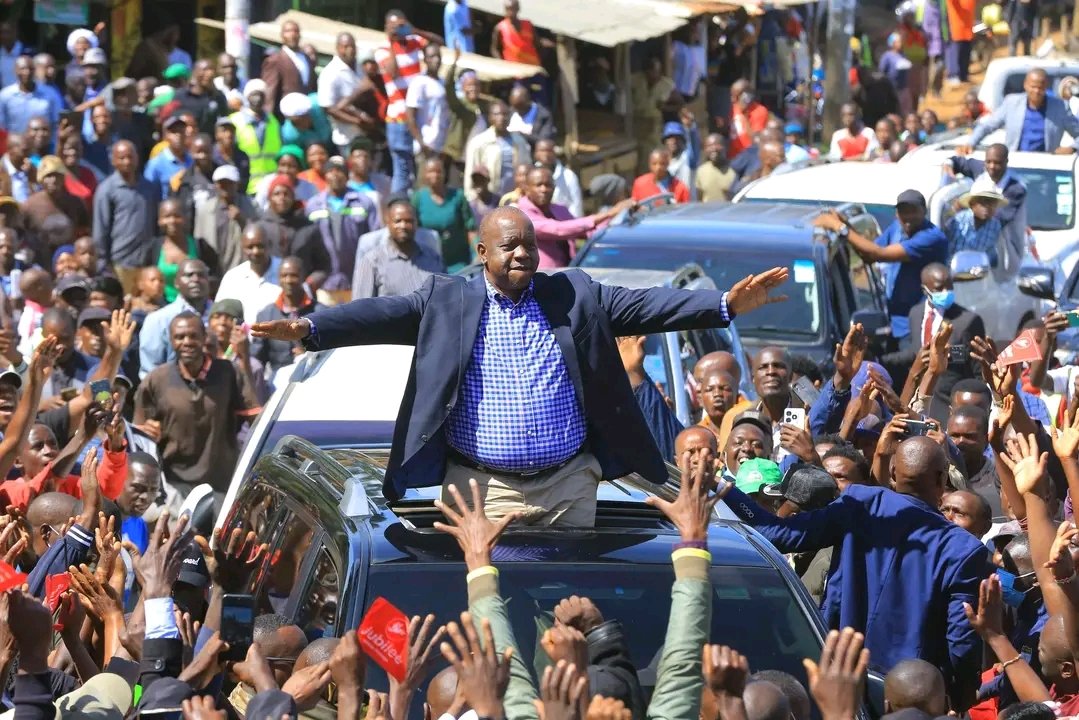
The Kenyan political landscape is once again witnessing the emergence of a figure whose rise mirrors that of Uhuru Kenyatta’s early political career — shaped not by grassroots mobilisation or electoral victories, but by elite patronage.
Fred Matiang’i, the former Interior Cabinet Secretary, has recently begun to signal a possible presidential run in 2027.
His nascent trajectory is drawing striking parallels to the so-called ‘Project Uhuru’, orchestrated by President Daniel arap Moi between 1997 and 2002, when Kenyatta was controversially thrust into the national spotlight.
As in that earlier case, the heavy hand of presidential endorsement looms large — this time from former President Uhuru Kenyatta himself — raising questions about the legitimacy and viability of such a top-down political project in a more discerning democratic environment.
Like Uhuru in the late 1990s, Matiang’i lacks an independent political base. He has never contested nor won an elective seat, and his prominence stems entirely from high-level appointments, particularly under Uhuru Kenyatta’s administration.
This reliance on executive placement, as opposed to grassroots engagement, evokes Uhuru’s own early ascent, from chairman of the Kenya Tourism Board to a nominated MP — all achieved without facing the electorate.
Neither figure cultivated a robust following before being projected onto the national stage, thereby entering politics with visibility but without voter validation.
Equally telling is the mode of elevation. Uhuru’s rise was a direct result of Moi’s deliberate grooming, often perceived as an attempt to impose a dynastic successor on the Kenyan public.
Similarly, Matiang’i’s increased visibility and more than rumoured ambitions appear tightly bound to his association with Uhuru. Much like “Uhuru ni Moi, Moi ni Uhuru,” the emerging perception is “Matiang’i ni Uhuru, Uhuru ni Matiang’i”— a continuation of elite succession politics, repackaged for a new electoral cycle.
Moreover, Matiang’i’s political capital — like Uhuru’s in the early 2000s — is administrative rather than electoral. Whereas Uhuru’s initial attempt at elective politics in Gatundu South in 1997 ended in defeat, Matiang’i enters the 2027 race without even that formative contest.
His perceived strength lies in his technocratic record, yet that may prove insufficient in a political culture that increasingly demands authentic engagement and demonstrable mass appeal. He risks being seen as an elite imposition, a candidate manufactured within power circles rather than emerging from genuine public support.
The historical echo deepens when considering how such projects tend to marginalise more seasoned or popular figures. Moi’s elevation of Uhuru sidelined many Kanu stalwarts, breeding internal discontent and contributing to the eventual collapse of the party’s hegemony.
Today, there are murmurs that Matiang’i’s possible candidacy — should it materialise with the tacit blessing of Uhuru — could crowd out other contenders from the so- called Wamunyoro bloc or Central-Nyanza political space.
Such a move, especially if perceived as undemocratic, may erode support from regions that have long resisted top-down political directives.
Looking ahead to 2027, the odds appear stacked against a candidate like Matiang’i, whose appeal remains elite and whose links to the electorate are tenuous. President William Ruto, with his vast campaign machinery and mastery of populist rhetoric, remains the frontrunner.
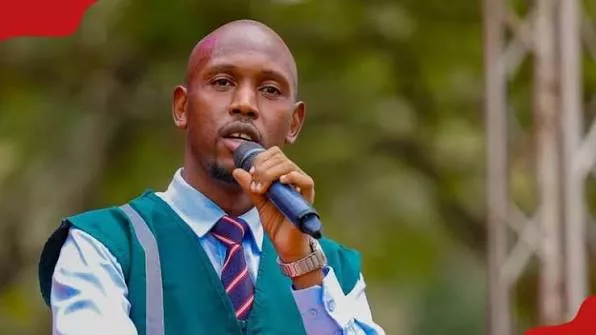
Trailing him could be younger, more dynamic figures like Morara Kebaso, whose charisma and generational appeal might resonate more with Kenya’s restless youth demographic. In such a contest, Matiang’i’s technocratic profile and establishment aura might prove to be liabilities rather than assets.
Further down the field could be candidates such as former Chief Justice David Maraga, whose moral stature and professional record are undeniable but whose lack of political infrastructure makes a viable nationwide campaign difficult.
Like Matiang’i, Maraga’s appeal is largely elite, with limited resonance in Kenya’s rural heartlands and informal urban settlements where electoral battles are often won or lost.
Speculation that the Kisii community could produce a president by 2032 adds another layer to this evolving narrative. It raises the possibility that Matiang’i’s 2027 bid may be more about laying the groundwork for future political realignments than securing an immediate victory.
If his candidacy is indeed an Uhuru-backed project, it may function as a strategic placeholder — keeping certain alliances intact whilst testing the waters for longer-term ambitions.
Matiang’i’s possible 2027 presidential campaign evokes striking parallels with the ‘Project Uhuru’ phenomenon of the late 1990s. Elite sponsorship, an absence of electoral grounding and a calculated bypassing of democratic endorsement in favour of technocratic credentials and institutional proximity define both trajectories.
While Uhuru eventually overcame these deficits to become president in his own right, his initial defeat in 2002 serves as a stark reminder of the perils of patronage politics in an evolving democracy.
For Matiang’i to succeed, he must shed the ‘project’ label, cultivate authentic connections with voters and build a political movement grounded in grassroots legitimacy. The 2027 election will not only test his resolve but will also reveal whether Kenyan politics has truly moved beyond the shadow of presidential imposition.
The writer is a physics and mathematics educator based in Gaborone, Botswana, with a research interest in African political history and governance reform
![Hamisi Mwaguya [in coulored baseball cap] at the Kings Arena at Khadija estate in Nyali subcounty on Tuesday / BRIAN OTIENO](https://cdn.radioafrica.digital/image/2026/10/340e650a-21d8-475b-b658-a429e82e9367.jfif)