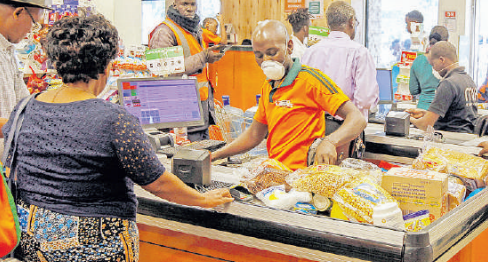
The cost of medicine, milk and sugar will, after all, not go up after the government made swift changes to the draft Finance Bill, 2025, approved by the Cabinet last week.
In the fresh Finance Bill presented to the National Assembly on May 6, the National Treasury has moved several raw materials, including pharmaceutical manufacturing inputs, sugarcane transportation and inputs for the manufacture of animal feed, back to zero rating from tax-exempt.
This allows manufacturers to claim Value Added Tax (VAT) refunds from the Kenya Revenue Authority (KRA) as opposed to tax exemption that prohibits them from claiming tax refunds, thereby passing the additional cost to consumers.
On Wednesday, tax experts at Deloitte took journalists through the proposed revenue-raising measures for the 2025/6 budget, warning of possible new changes in the final draft to be subjected to public participation.
Fredrick Kimotho, Associate director and Tax Policy Lead, Deloitte Kenya, hailed the proposed law for largely focusing on efficient tax administration rather than introducing new taxes, but warned that the public must wait for the ‘green copy’.
On Tuesday, Ernst Young alluded to the same during its annual budget review webinar, where tax experts from the firm gave highlights of the Finance Bill but warned that more changes could be in the offing.
Economist Ken Gichinga of Mentoria Economics warned that the substantive Finance Bill, 2025, was not out yet. Stephen Ndegwa and Robert Maina, both associate directors at EY, amplified this.
The government is treading carefully with this year’s finance bill in a bid to curb public opposition to its revenue-raising measures, akin to the Finance Bill, 2024, which was rejected in its entirety following bloody protests that claimed the lives of tens of people and destroyed property.
A senior National Treasury official who sought to remain anonymous due to the sensitivity of the matter told the Star that the government is ‘listening more to the public, especially on this Finance Bill issue.’
Apart from reclassifying those crucial products back to VAT zero-rated, the National Treasury has cut back on the proposal to reduce Export and Investment Promotion Levy on semi-finished products of iron or non-alloy steel bars and rods from 17.5 per cent to five per cent. In the new proposal, the exchequer has recommended a 10 per cent.
Even so, tax experts at Deloitte have welcomed the reduction, saying that it if passed into law, it will push down the cost of imported construction materials, a move that will support the government’s affordable housing project and rejuvenate the construction sector which slumped two per cent in 2024 according to the Economic Survey data released Tuesday.
Other notable changes, according to Deloitte, include stamp duty exemption on the transfer of property during internal reorganisation, where property is transferred to shareholders in proportion to their shareholding.
The Bill proposes to repeal the preferential CIT rate of 15 per cent for companies that construct at least 100 residential units annually and companies whose business is the local assembling of motor vehicles (for the first five years).
According to EY, these preferential tax regimes were introduced to encourage investment in the real estate and local assembly industry sectors.
This appears to be in line with the general move to rationalise tax expenditure.
Several other provisions have been retained and, if enacted, would offer meaningful relief to specific groups.
Among them is the dramatic increase in tax-free per diem allowances for private sector employees from Sh2,000 to Sh10,000.
This is expected to benefit travellers on official assignments or business and, in the long run, stimulate the hospitality industry.
Local farmers could also benefit from the proposed excise duty on imported agricultural products. The Bill seeks to impose a 25 per cent excise duty on imported eggs, imported onions, imported potatoes and crisps.
Over the years, cheaper eggs and onions from Uganda and Tanzania, respectively, have been flooding the market, crowding out local farmers.