WHEN the government announced free primary education in 2003 and later extended the policy to secondary education in 2008, it was heralded as a monumental step towards educational equity.
But over two decades later, many parents like Mary Atieno are asking: “What exactly is free about free education?”
A single mother of three in Kisumu county, Atieno is a vegetable vendor. Her son attends a public secondary school that proudly bears the tagline, “Free Education for All”, on its gates.
Yet every term, she is handed a fee structure—often with charges that rival those of private institutions.
Her experience is far from isolated. Across Kenya, parents report being asked to pay various levies by school administrators and teachers—despite the government’s promise of free basic education.
Some schools even turn students away for failing to pay these unofficial fees. According to Kenya’s Basic Education Act, every child is entitled to free and compulsory basic education.
The government allocates capitation grants to public schools: Sh22,244 per secondary school student, Junior School: Sh15,042 per student and Sh1,420 per primary school pupil annually. These funds are meant to cover tuition, learning materials and administrative costs.
But education stakeholders argue that the allocations are insufficient to meet the operational demands of most schools—especially those in urban slums and rural areas.
A survey by Elimu Bora Working Group, a network of Kenyan civil society organisations working to promote the right to education released last week, shows an increasing trend of these levies.
The survey conducted between March and April 2025 that looked at 370 public schools at primary and junior secondary levels found that unlawful levies include charges on admission, desks, lockers, books, reams of papers and other stationery, development projects, remedial and extra lessons, co-curricular activities, and examinations.
Although primary and junior secondary education should be free, the survey revealed that over 90 per cent of schools unlawfully charge admission fees.These fees vary from Sh500 to Sh25,000, particularly in urban areas.
“I paid Sh10,000 when admitting my daughter in a public school in Umoja. I also pay Sh700 for exams as demanded by the school and Sh5 per day for lunch,” William Mochere told the Star.
Moreover, many schools impose additional charges on parents for desks and lockers, occasionally requiring them to supply the furniture themselves.
For secondary schools, parents are paying up to Sh53,554 in most public schools which is broken down to Sh26,778 in term one, Sh16,066 in term two and Sh10,710 in term three, with the government funds totaling Sh22,244 per student in a year.
MM Shah Primary in Kisumu charges between Sh15,000 and Sh20,000 for admission. Victoria Primary in Kisumu requires Sh13,000 to Sh15,000 for admission, along with an additional Sh5,000 for a locker.
In Mombasa, St Mary’s Primary School charges Sh10,000 for admission and Sh4,500 for a locker.
At Kibau Primary and Junior Secondary School in Machakos, parents must pay Sh1,000 for admission and Sh4,000 for desks.
Despite free and compulsory basic education requiring the government to cover textbooks, between 45 and 55 per cent of schools surveyed still charge for them.
Some schools require cash payments directly, whereas others provide parents with shopping lists.
St Mary’s Primary School in Mombasa charges Sh6,000 for books in the lower primary, while Taranganya Mixed Junior Secondary School in Migori insists that parents pay Sh1,500 each term.
Gukipimo Primary School in Migori demands that parents purchase five specific textbooks every term.
According to the survey, 58 per cent of junior secondary schools and 40 per cent of primary schools impose development levies, which are often labeled as classroom, laboratory or toilet construction fees.
For example, Thome Primary in Kitui charges Sh2,000 per parent, while Taranganya Mixed Junior Secondary School in Migori demands Sh4,000 yearly.
“Fees for remedial lessons are also widespread despite such classes being banned. About 89 per cent of schools compel learners to take extra tuition at a cost, especially in upper primary and junior secondary schools,” reads the report by Elimu Working Group.
“At MM Shah Primary School in Kisumu, parents must pay Sh800 monthly in lower primary, Sh1,000 in upper primary, and Sh1,500 in junior secondary school. At Peter Kibukosya Primary School in Nairobi, remedial lessons cost Sh1,000 monthly at all levels.”
*John, a teacher in Tassia Embakasi in Nairobi who spoke on condition of anonymity, said free education is a noble idea, but the reality is that schools still need money for infrastructure, electricity, water and paying support staff.
“If government funding delays or falls short, the burden shifts to parents,” he said.
Already the government owes secondary schools about Sh70 billion, according to Kenya Secondary School Heads Association chairperson Willie Kuria.
He said the amount has accrued since 2021, leaving schools in serious debts and hampering their operations.
The chairperson, who is also the principal of Murang’a Boys High School, said the government was to release 50 per cent of each student’s annual capitation, which amounts to Sh22,244 last term.
For instance, in the last disbursements, the government released Sh8,319 per learner instead of Sh11,122, leaving a deficit of Sh2,803 for last term.
“We have been asking the government to ensure the remainder is released before schools re-open to help schools clear their debts and pay salaries for last term,” Kuria said.Lack of sufficient funding, he warned, jeopardises both the smooth operation of co-curricular programmes and overall school management. This financial shortfall, he argued, heightens the risk of chaotic outbursts, as frustrated students may resort to destructive rampages when resources and engagement opportunities fall short.
“This is why we are asking the Ministry of Education to ensure the funds are made available to avert these issues,” he said.
Even though government funding should fully cover exam fees, approximately 80 per cent of junior secondary schools and 60 per cent of upper primary schools continue to impose them.
At Kibisi FYM in Bungoma, parents pay Sh1,000 per term, while those with children at Nyang’iti Primary School in Migori pay Sh150 per exam and Sh2,400 yearly at Victoria Primary School in Kisumu.
A spot check across Western revealed that parents are charged for sporting activities, exams, remedial lessons and projects.
In Kakamega county, parents are charged between Sh1,200 and Sh1,500 per year for remedial. Grades 7, 8 and 9 are required to buy a ream of photocopying paper per year.
Parents also pay Sh100 per term for paying salaries of teachers employed by the Boards of Managment and another Sh100 per term for sporting activities.
Parents are also asked to pay between Sh100 and Sh200 for exams and another Sh250 to Sh1,000 for projects.
In Vihiga county, parents said they are asked to pay registration fee ranging between Sh300 and Sh1,000 and another between Sh1,000 and Sh2,000 as admission. They also pay fee of Sh500 per term. Some schools ask parents to buy report books.
In Busia, parents said they are charged between Sh500 and Sh2,000 for remedial depending on the location of the schools. Schools in urban areas charge higher than those in rural areas.
“Another catch is in the practicals students do. For example when students are to learn cooking eggs, each is asked to bring two eggs. In a class of 50, you will collect 100 eggs but they end up cooking about 20. When it is cooking chapati, each student is to bring a kilo of wheat flour and they use less than five packets. Where do the rest go?” said a parent in Amagoro.
Mash Muleli, a parent in Eldoret, lamented that education is turning into a preserve for the privileged in the society who can afford to pay the many levies introduced by schools.
“We thought free means we would not be forced to pay anything but as it stands now we pay almost for everything for our children to remain in schools,” he said.
Education consultant and parent Nicholas Maiyo says free basic education would have been practically free if every stakeholder played their roles as per the 2013 Basic Education Act through which the policy was introduced.
“The Act stipulates obligations for parents, the government and other stakeholders”, said Maiyo.
Sammy Borr from the Kenya National Union of Teachers said delayed capitation remains one of the major challenges undermining the free basic education policy.
“We can blame teachers but when they have children at their disposal in schools and with no money then they have to devise ways of ensuring that learning goes on and that is how some of them turn to parents,” he said.
Borr wants the government to streamline the capitation so that schools receive all the money require for operations so that there is no excuse to levy parents.
Most schools do not provide receipts for these payments, making it difficult for parents to keep records or question the illegal charges.
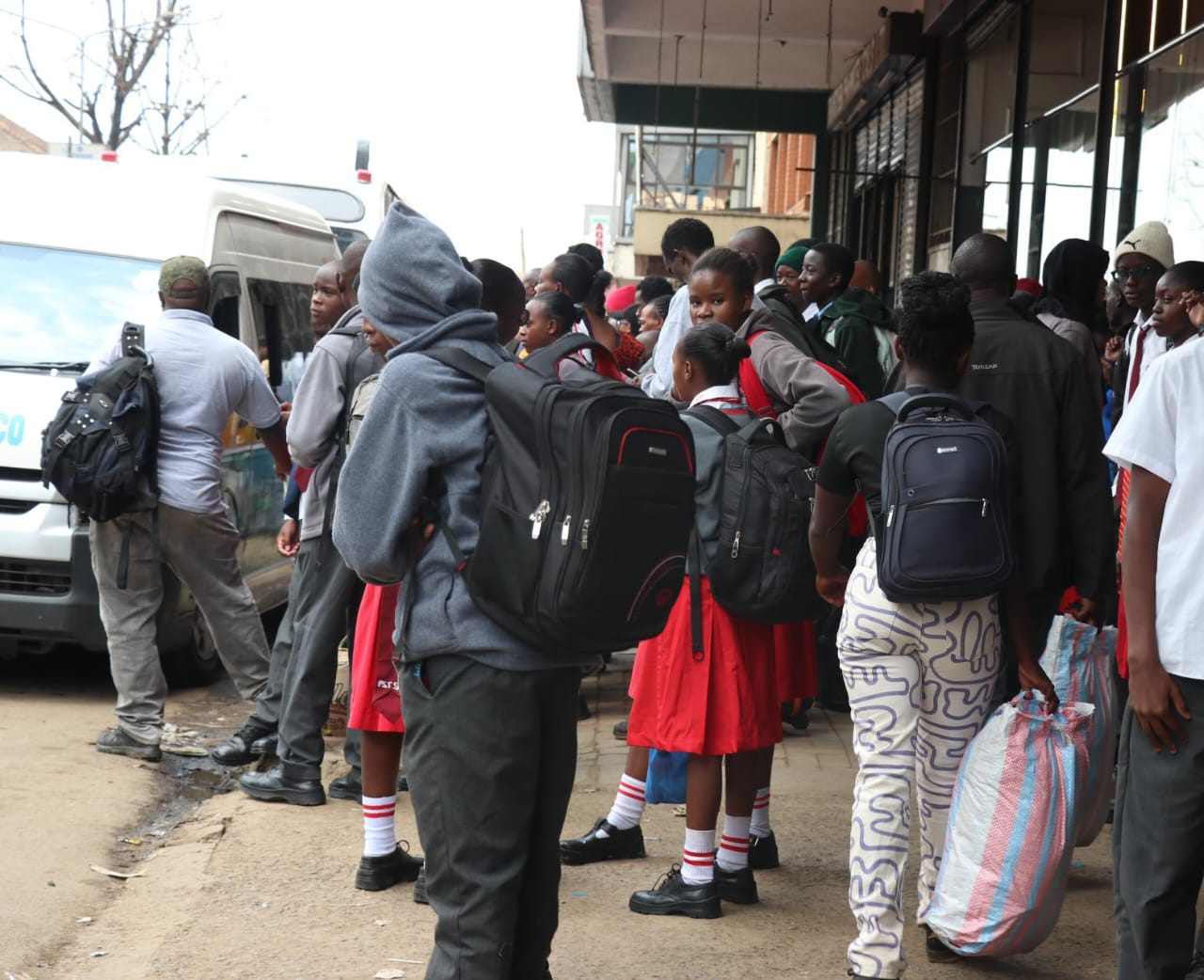
The impact of these illegal levies is dire: 85.7 per cent of the schools surveyed send learners home if they cannot pay.
Many students ultimately drop out, denying them their right to education. About 45 per cent of parents reported knowing children who stayed at home because their families could not afford the fees.
INSTANT ANALYSIS
The risk of dropping out was higher in junior secondary schools than primary due to the increasing unlawful costs. Underfunding, poor monitoring and lack of enforcement have been blamed for an unjust education system in which families are compelled to pay for what ought to be free.