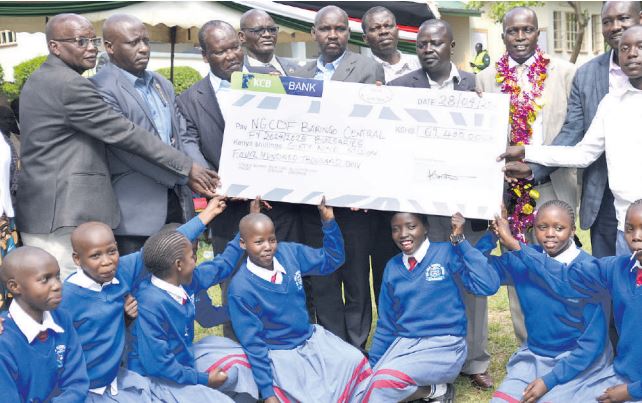
 Baringo Central MP Joshua Kandie with beneficiaries of Sh69.4 million bursary at the Kabarnet National Museum grounds on April 29 /KNA
In Kenya, where education often stands as a breakthrough from poverty, bursary funds are more than just financial aid.
For thousands of children, especially those from marginal In Kenya, where education often stands as a breakthrough from poverty, bursary funds are more than just financial aid.
For thousands of children, especially those from marginalised communities, these funds are a lifeline—an essential means to stay in school and pursue a better future. Yet, what should be a powerful tool for empowerment has instead become prey to misuse by some unscrupulous politicians and officials, who divert the funds for personal or political gain.
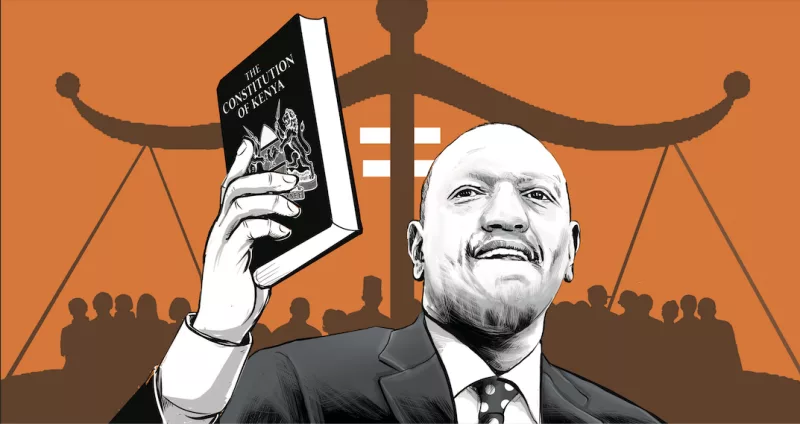
This misappropriation is not just a financial scandal; it is a deep social injustice. It undermines the constitution’s promise of equal opportunity and strikes at the heart of the country's future, the youth.
The real victims are often invisible – bright children forced to drop out of school because of unpaid fees. Many end up in child labour, early marriages, or lay-abouts individuals on the streets.
Others, in desperation, fall into crime or substance abuse. Each of these stories is not just a personal tragedy but a national loss. For every child pushed out of school by corruption, Kenya loses a potential doctor, teacher, scientist, or entrepreneur.
Education is not just a right; it is a national investment and an equaliser. In many parts of the country, bursary allocation has been reduced to a political weapon.
Reports abound of bursaries being awarded not on the basis of need or merit, but political loyalty.
Constituents who do not align with the local MP or political interests are often sidelined.
This undermines the purpose of the bursary system and deepens existing inequalities. Public funds are not personal gifts from politicians; they are public trust, meant to be distributed fairly, transparently and meritoriously.
Even more troubling is the culture of impunity surrounding these misdeeds. The Auditor General and the Ethics and Anti-Corruption Commission have done a good job in ensuring that flagged irregularities are prosecuted to their logical conclusion.
In some cases, ghost students appear on beneficiary lists, with funds going to unknown individuals or institutions. Bursary committees often operate with little transparency or community involvement.
Lists of recipients are rarely published and many citizens remain unaware that they have a right to this information. The end result is a widening of the gap the bursary system was meant to close. Those with connections continue to benefit, while the poorest are left behind.
In counties like Turkana, Garissa and Kilifi – where poverty is entrenched and dropout rates are high – bursaries can make the difference between a future in school and a life of hardship. When these funds are stolen or manipulated, the damage ripples across generations, robbing entire communities of the hope education brings.
Addressing this crisis requires urgent systemic reforms.
First, bursary applications and disbursements must be digitised and linked to national ID and student registration systems to reduce fraud.
Second, the names of bursary recipients must be made public through school websites, notice boards and online platforms. Transparency breeds accountability.
Third, community oversight should be strengthened by involving teachers, clergy, youth and civil society in bursary committees.
Fourth, the Auditor General should carry out regular random audits whose findings should be shared regularly with investigative agencies such as the EACC and the DCI.
The EACC has done a fairly commendable job in investigating and pushing for the prosecution of those found culpable.
Finally, Parliament must consider stiffer penalties for any public official who diverts education funds. This is not just corruption—it is an assault on the nation’s development.
The misuse of bursary funds is not a victimless crime. It ruins lives, crashes dreams and stalls progress. As citizens, we must demand change.
Youth must rise in civic awareness. Communities must speak up against injustice. And institutions must stop shielding the corrupt.
Bursary funds must serve their rightful purpose—empowering the vulnerable, uplifting the poor and educating Kenya’s next generation of leaders.
Anything less is a betrayal too costly to bear.