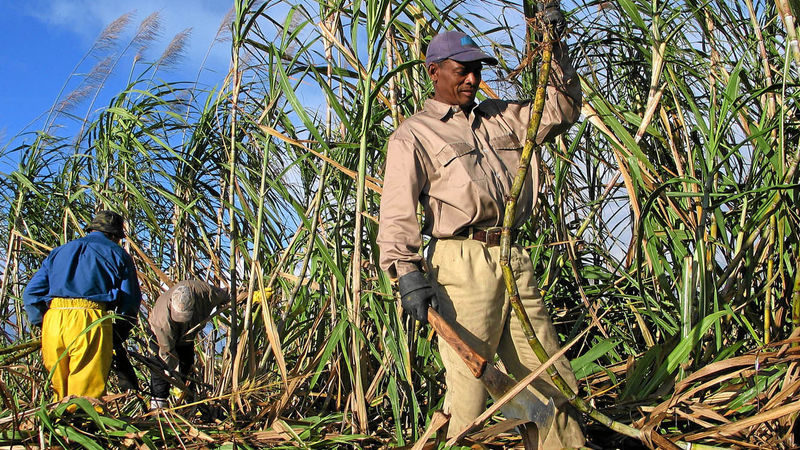
 Sugarcane farmers/FILE
Sugarcane farmers have welcomed the government’s plan to lease out Nzoia, Chemilil, Muhorono, and Sony, a move aimed at boosting efficiency, reducing debt burdens, and revitalizing the struggling sugar sector.
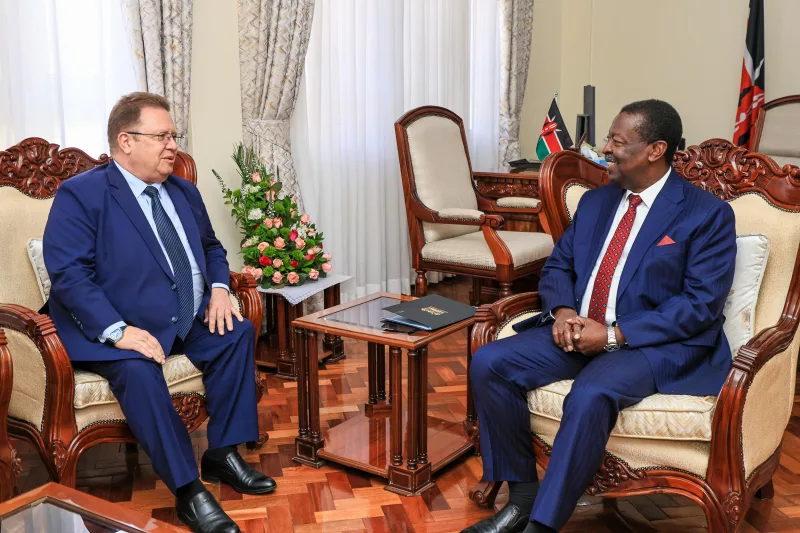
The Kenya National Federation of Sugarcane Farmers (KNFSF) and the Kenya Union of Sugar Plantation and Allied Workers (KUSPAWU) said this when they met on Wednesday with the committee overseeing the leasing process and Agriculture and Livestock Development Cabinet Secretary Mutahi Kagwe.
“We are ready for the factories to be leased out, farmers were very clear during the public participation stage that we do not want the factories to be privatized,’’ KNFSF National secretary general Kilion Anyango said.
He added private sugar millers’ pay farmers every week and without fail.
According to Anyango, farmers have always supported the move, having submitted their views to the Sugar Taskforce led by former Agriculture CS Peter Munya and then MSMEs Cabinet Secretary Wycliffe Oparanya.
“Leasing will enable farmers under the four factories to enjoy the same benefits. All we ask is for the regulator Kenya Sugar Board, to standardize weighbridges to ensure fairness and transparency.”
On its part, KUSPAWU asked the government to ensure that the lessees who win the rights to take over the four factories honor the current Collective Bargaining Agreements (CBAs) between the factories and unions.
“We welcome the government’s proposal to have a one-year period under which no employees will lose their jobs as the lessees assess the factories and determine their labor needs. No employee should earn less than what they are earning under the current CBA,’’ the union’s secretary general, Francis Wangara, said.
Kagwe reassured the two unions that the leasing will not be done without the input of Farmers and Workers, adding that the process is ongoing and will not be finalised before the issues facing both groups are resolved.
“Next week I have a series of meetings with various stakeholders, including the Members of Parliament, the sugar caucus and the governors of the areas where these factories are. We cannot do this arbitrarily, there is leadership in that area that cannot be ignored, we cannot ignore the unions, we cannot ignore the farmers’ representatives,’’ Kagwe said.
He added that nobody would be allowed to take over the factories before they are properly vetted and can meet the conditions set by the government.
“The negotiations are still going on to ensure that when we lease out the factories, the interests of farmers and workers are protected,’’ Kagwe said.
During the meeting, the National Treasury, represented by the director general, Public Investments and Portfolio Management, Lawrence Kibet, assured farmers and workers that all pay arrears will be paid.
Last week, the deputy director at the Sugar Directorate, Richard Magero, said the initiative is one of several strategic reforms aimed at revitalising the industry, which has been grappling with persistent underperformance.
“For years, the sugar sector has faced significant challenges, including outdated machinery, poor management, and recurring financial crises that have forced the government to repeatedly bail out farmers,” Magero said.
He added that various assessments have revealed a stark contrast between private and public sugar mills, with privately run factories consistently outperforming their public counterparts in cane production, processing efficiency, and revenue generation. These findings informed the decision to seek private investors to lease and manage public sugar mills.
The leasing process officially began late last year after the resolution of several court cases.
It has since progressed to an advanced phase, with potential investors currently being vetted based on their proposals.
“We are confident that we will soon identify credible and experienced investors who can transform these public mills and deliver tangible benefits to farmers and the national economy,” Magero said.