Banks have opposed the government’s plan to use the Central Bank Rate (CBR) as the base reference rate, with final lending rates as opposed to the current risk-based loan-pricing regime.
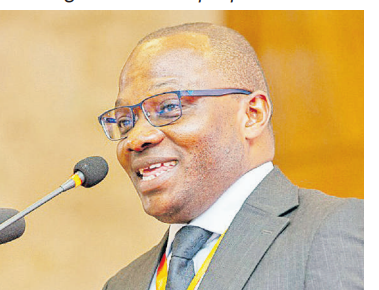
In a statement on April 30, KBA CEO Raymond Molenje said that the premium ‘K’ will comprise the bank’s operating costs related to lending, return to shareholders, and the borrower’s risk premium.
The banker’s lobby stated that the proposal will reduce lending to Kenyans and businesses, especially MSMEs, as experienced between 2016 and 2019 when the interest rate capping law was in place.
Additionally, the CEO said CBK will not operationalize the monetary policy decision after setting the CBR.
“Setting the CBR without triggering its transmission leads to misaligning market outcomes from the policy,” KBA said.
Besides, Molenje said banks will not be able to honour KBA’s commitment to support small businesses with loans of Sh150 billion annually from 2025.
Molenje said KBA proposed to CBK for the adoption of the interbank rate as the base reference rate, that is, market-driven and allowing the premium ‘K’ to be fully flexible.
The lobby says that the proposal underpins several factors, including global best practice, which shows that market-based rates are derived from short-term market rates, such as the SOFR (USA), SONIA (UK), and EURIBOR (EU).
According to KBA, Previous efforts towards a unified base rate, the Kenya Banks Reference Rate (KBRR), did not benefit from a supportive monetary policy framework that requires CBK to activate the transmission of policy action.
“Its design did not benefit from CBK actively operationalizing its policy decisions. The interbank market is the best anchor for transmitting monetary policy signals. There would be a weak transmission of policy signals if CBR is not operationalized via liquidity injections or withdrawals,’’ KBA said.
The lobby says that flexibility on the premium 'K' is consistent with the law that recognizes a liberalized interest rate regime in Kenya, adding that beyond the base rate, 'K' should be allowed to be fully flexible across banks, products, and clients based on each bank's differentiated cost of funds, operational costs, shareholders' expected return on investment, and customers' risk premium.
KBA is worried that in its proposal, CBK is silent on the interbank market corridor as the monetary policy implementation framework.
“This raises concerns about whether CBK has abandoned the Interest rate corridor framework and whether the market still needs to consider the interbank rate as the operational target for monetary policy.”
It warns that ignoring the interbank rate sets the market back to the pre-August 2023 challenges of CBR being misaligned with market conditions and, therefore, weaker transmission of policy.
The bankers’ lobby insists that only the cost of deposits and the cost of long-term borrowed funds determine the cost of funds for banks, dismissing CBK’s position that the cost is determined by CBR.
“The rate of return on commercial bank deposits is not benchmarked on CBR but rather the depositors' assessment of the opportunity cost of investing in Government securities, which is reflected in the Treasury bill rate.”
KBA does not support the CBK proposal in its entirety. By rejecting the interbank rate as a preferred unified base rate and proposing the CBR, the CBK will not operationalize the policy decision after setting the CBR.
Even so, the apex bank insists that the review aims to establish a credit-pricing framework that is not only responsive to evolving risk and market dynamics but also fundamentally transparent and fair to borrowers across all lending platforms.
Early last month, CBK governor Kamau Thugge lamented that banks are not cutting down the cost of loans despite the base lending rate having dropped since August last year.
Speaking to journalists during the post Monetary Policy Committee (MPC) briefing, Thugge said that commercial bank lending to the private sector has stagnated, only recording a modest growth of 0.2 per cent in March 2025 from a contraction of 1.3 per cent in February.
This saw CBK resort to threats and onsite visits to convince them to toe the line.
“We have so far conducted onsite inspections for 30 lenders out of 38. We anticipate concluding this exercise by June. Those found to be maintaining excessive lending rates despite lower costs of funds will face severe penalties, including fines amounting to three times their unjust gains,” Thugge said.
The statement by the bankers is in addition to a case filed challenging the National Treasury’s move to control interest rates.
In their case before the High Court in Nairobi under the aegis of the Kenya Bankers Association (KBA), the 38 commercial banks and eight microfinance banks want Section 44 of the Banking Act declared unconstitutional.
The banking sector's lobby argues that the National Treasury Cabinet Secretary cannot determine the amount of interest charged on loans or even cap lending rates.