The president said he reforms in the labour sector will expand job opportunities and strengthen the country’s economic resilience.
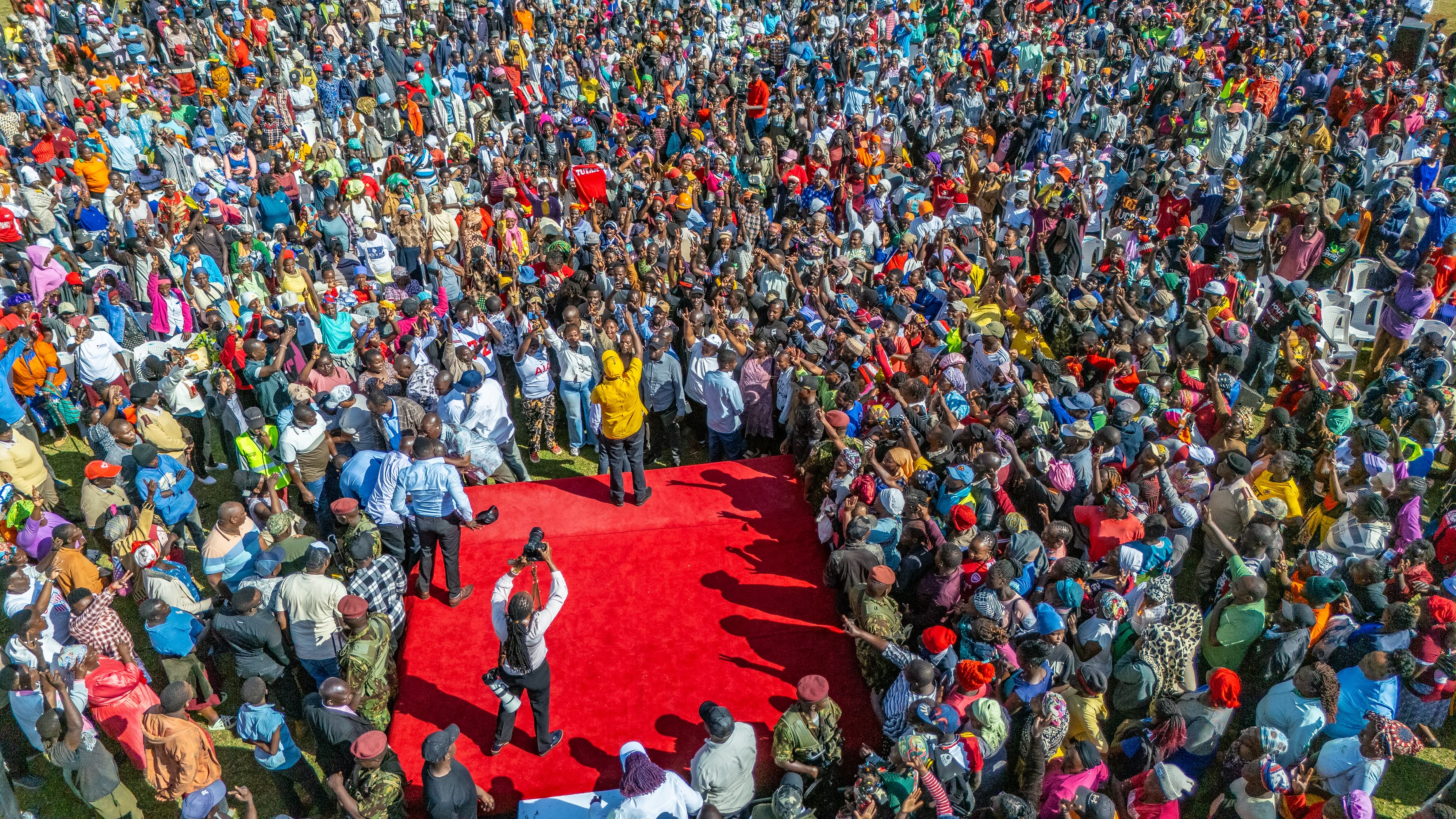
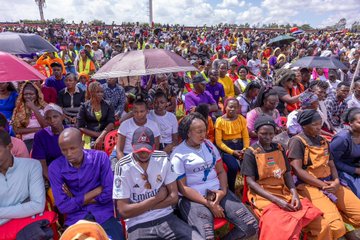
He spoke while addressing thousands of workers, trade unionists, and government officials gathered at Uhuru Gardens in Nairobi.
Ruto emphasised the importance of self-reliance in driving economic growth under the theme “Self-Reliance in Production is the Key to Economic Growth.”
“International Labour Day grants us a timely reminder of our constitutional and moral duty to uphold the dignity of labour without discrimination— by age, gender, race, ethnicity, or ability—and to continually confront the evolving challenges facing our workforce,” Ruto told the crowd.
The president unveiled several major reforms under the recently approved 2025 Finance Bill, which he described as a central instrument in Kenya’s ongoing economic transformation.
Among the headline measures is a change to the Pay As You Earn (PAYE) system, where employers will now be required to apply eligible tax reliefs and exemptions directly during payroll processing.
“This is a significant shift from the current system where workers can only claim these reliefs from the Kenya Revenue Authority afterwards,” Ruto said.
“It will increase efficiency and immediately benefit employees by improving their take-home pay.”
In a move likely to be welcomed by retirees, Ruto announced that all pensions and gratuity payments across both public and private sectors will now be tax-exempt.
“This reform is a recognition of the service and sacrifice of our senior citizens and workers, and a step toward ensuring that retirement is met with dignity, not distress,” he said.
Small businesses also stand to benefit from simplified tax treatment, as they will now be allowed to fully deduct the cost of everyday equipment in the year of purchase, reducing delays in accessing tax relief.
Ruto emphasised the importance of growing Kenya’s national savings, describing it as critical to achieving true economic self-reliance.
He highlighted the success of the 2023 law mandating a 6 per cent savings contribution by both employees and employers through the National Social Security Fund (NSSF).
“Until 2023, the average Kenyan worker saved just KSh200 a month through NSSF, and over 60 years, we had collectively saved KSh320 billion as a nation,” Ruto noted.
“In just two years, we have mobilised Sh280 billion — nearly equal to what was saved over the past six decades. By the end of this year, we will have doubled that figure, and by 2027, we project to have raised over KSh1 trillion in domestic savings.”
Ruto said his administration aims to lift Kenya’s savings-to-GDP ratio from the current 10–12% to 25% over the medium term.
Highlighting his administration’s Bottom-Up Economic Transformation Agenda, Ruto pointed to key sectors including agriculture, micro, small, and medium enterprises (MSMEs) and universal healthcare.
Others are affordable housing and the digital and creative economy as central engines of job creation and growth.
In agriculture, Ruto said reforms such as reducing fertiliser prices and streamlining the coffee sector have significantly boosted farmer incomes.
“The reduction of fertiliser prices has led to a 40% surge in maize production,” he said, while coffee prices for farmers have risen from KSh50 to between Sh110 and Sh150 per kilogram.
The president also celebrated achievements in the sugar sector, noting increased production, improved incomes, and bonus payouts for farmers.
“I recall with deep personal satisfaction seeing Mama Redempta Makokha of Mumias receive a bonus cheque of Sh80,000 in January — money she proudly used to advance her wellbeing. That is what real impact and transformation look like,” he said.
The Affordable Housing Programme, another flagship initiative, has created over 250,000 jobs across various trades and professions and is set to expand home ownership in the coming months.
The president also highlighted labour migration as a key component of his job creation strategy.
He said over 200,000 Kenyans secured employment abroad last year, and the recent opening of a Labour Attaché Office in Berlin is expected to help unlock even more opportunities, particularly in Europe.
On health, Ruto reported major progress toward Universal Health Coverage, revealing that over 21 million Kenyans have registered under the newly established Social Health Authority, up from just 8 million under the now-defunct National Hospital Insurance Fund (NHIF).
He urged all Kenyans to enrol to secure health protection for themselves and their families.
Ruto reaffirmed his administration’s commitment to inclusive economic transformation.
“Distinguished workers, ladies and gentlemen, we are not merely making declarations; we are taking bold, concrete, and measurable steps,” he said.
Labour Day, marked annually on May 1, is celebrated worldwide to recognise the achievements and contributions of workers.
In Kenya, it has traditionally provided a platform for unions and leaders to address the nation on issues of labour rights, wages, and economic progress.