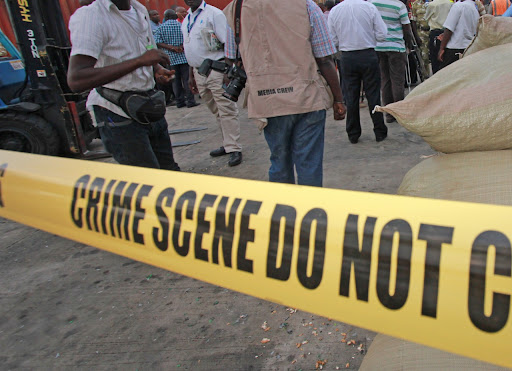
The brutal murder of Kasipul MP Charles Ong’ondo Were on April 30 has cast a dark shadow over Kenya’s political landscape, adding to a disturbing pattern of lawmakers gunned down in cold blood.
Were was ambushed and shot dead by unknown assailants riding a motorcycle near the City Mortuary Roundabout along Ngong Road in Nairobi around 7:30 p.m.
His death sent shockwaves across the country because of his chilling revelations in the weeks leading to his killing—where he publicly said his life was in danger.
Here is a list of other politicians killed in similar circumstances.
George Muchai
Muchai was a Kenyan politician and trade unionist who served
as the Member of Parliament for Kabete Constituency following the 2013
elections. He was a member of the Jubilee Alliance.
In October 2011, Muchai survived an assassination attempt.
On February 7, 2015, while returning from a family dinner, his car was rammed in Nairobi.
Several armed attackers emerged from the other vehicle and shot and killed Muchai, along with his two bodyguards and driver.
A
briefcase and two pistols belonging to the bodyguards were stolen.
One suspect was arrested on February 11, and seven suspects
were put on trial later that year. As of January 2020, the trial was still
ongoing.
Mellitus Mugabe Were
Mellitus Mugabe Were was a Kenyan politician affiliated with the Orange Democratic Movement (ODM).
He was elected to the National Assembly
to represent Embakasi Constituency in the parliamentary elections held on
December 27, 2007.
He was killed on January 29, 2008, outside his home in the
Nairobi suburb of Woodley, adjacent to Kibera slum.
Tony Ndilinge
The former assistant trade minister and then-Kilome MP was
shot dead in August 2001 in the Githurai suburb of Nairobi.
Ndilinge had served as Kilome MP since 1992, representing
the ruling Kenya African National Union (KANU) party.
He had long been viewed as a rebel MP within KANU but had reaffirmed his allegiance to President Daniel arap Moi.
At the time, MPs claimed Ndilinge was a victim of political
assassination.
David Kimutai Too
David Too was a Kenyan politician affiliated with the Orange Democratic Movement (ODM).
Before entering politics, he worked as a high school teacher and later as a principal in Kericho, Rift Valley.
He was elected to the National Assembly from Ainamoi Constituency in the December 2007 parliamentary elections.
Too was shot dead on January 31, 2008, by policeman Andrew Moache.
According to the official account, he was killed alongside his alleged girlfriend, policewoman Eunice Chepkwony, who was also romantically involved with Moache.
Tom Mboya
Tom Mboya was a Kenyan trade unionist, educator,
Pan-Africanist, author, independence activist, and statesman. He was one of the
founding fathers of the Republic of Kenya.
Mboya led the negotiations for Kenya’s independence at the
Lancaster House Conferences and was instrumental in forming the Kenya African
National Union (KANU), where he served as its first Secretary-General.
He was gunned down on July 5, 1969, on Government Road (now Moi Avenue) in Nairobi’s CBD after visiting Chaani’s Pharmacy. He was 39.
Nahashon Isaac Njenga Njoroge was convicted of murder and later hanged.
Pio Gama Pinto
On February 24, 1965, Pinto was shot dead in the Westlands
neighbourhood of Parklands, Nairobi.
He was shot at close range in his driveway while waiting for the gate to be opened, with his daughter in the car.
Pinto became the first
Kenyan politician to be assassinated after independence.
At the time of his assassination, Pinto was 38.
In 1963, he was elected a Member of the Central Legislative Assembly, and in July 1964, he was appointed a Specially Elected Member of the House of Representatives.
He also worked to establish the Lumumba Institute in
1964 to train KANU party officials.
Josiah Mwangi Kariuki (JM Kariuki)
Josiah Mwangi Kariuki, popularly known as “JM,” was a Kenyan
socialist politician during Jomo Kenyatta’s administration.
He held various government positions from Kenya’s independence in 1963 until his assassination in 1975.
In 1974, he was elected as Nyandarua’s Member of Parliament and became an assistant minister in the Kenyatta government.
Despite government efforts to thwart his re-election, Kariuki’s popularity among ordinary Kenyans was seen as a threat to Kenyatta himself.
He was last seen alive on March 2, 1975, at the Hilton
Hotel, accompanied by Kenyatta’s bodyguard.