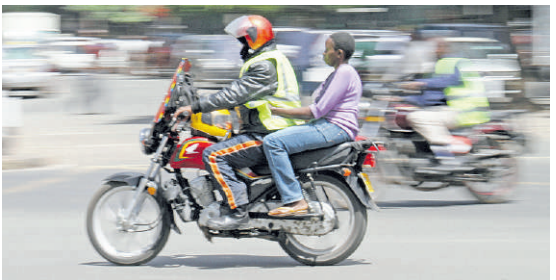
The contribution of the bodaboda sector to Kenyas GDP has grown to from 4.4 per cent in 2025 generating an estimated Sh660 billion annually, according to a newly launched report titled “The Booming Boda Boda Sector.”
This is a growth from 3.4 per cent recorded last year putting the sector among critical force in the nation’s socio-economic development.
Despite their massive impact to the economy, Kenya’s boda boda sector — a vital lifeline for millions — has however been grappling with widespread disorder amid calls for regulation and reforms.
What began as an affordable, efficient mode of transport has ballooned into a loosely governed industry marred by lawlessness, insecurity, and frequent accidents.
However, some of the industry players now argue out that the legislation has not been structured to suit the boda boda industry.
Digital Financial Services Association of Kenya (DFSK) Chair Kevin Mutiso, pointed out that legislative and insurance bottlenecks are hampering progress.
Citing the impracticality of current third-party insurance laws, he proposed adopting a Philippines-style model that limits liability, making underwriting viable and encouraging formal coverage.
“The insurance sector is limited because of the Third Party Liability Act. It essentially says that each incident that a boda, or anyone who has third-party liability, has an infinite number of claims can be made on one incident,” said Mutiso.
“Why would an underwriter take that risk? So we need to innovate. And this is where government and the insurance sector need to come together and figure out how do we make this ecosystem work.”
Watu Credit Head of Commercial Chris Rumenda said the findings offer a forward-looking perspective into the next frontier — sustainability through the adoption of electric vehicles. Most importantly, it underscores the need for collaboration across the industry to drive meaningful and lasting progress.
The report produced jointly with Viffa Consult, Watu Credit, Mogo and Bodaboda Association of Kenya, further shows that on average that 67 per cent of riders say ownership gives them stronger financial security, while 33 per cent cite increased personal safety as a major benefit.
According to the National Transport and Safety Authority (NTSA), over two million licensed boda boda riders are currently active in Kenya, earning an average of Sh1,100 per day.
With average daily earnings of SH 1,100 over six working days, the report says the sector is generating an estimated Sh60 billion annually in fuel taxes and Sh21 billion in licensing fees.
"The sector supports over two million jobs, yet many riders still struggle with ownership due to high costs and lack of financing," said VIFA Concert Managing Director Victor Otieno-Agola.
However, the report warns that challenges such as prohibitive interest rates, high insurance premiums, and limited financial literacy still hinder broader access to affordable credit.
“For the sector to reach its full potential, collaborative action is needed from all stakeholders, operators, financiers, policymakers, and manufacturers. Improving access to credit, enhancing safety, and embracing sustainable practices will be key to driving continued growth,” added Otieno.