The lack of a master plan for Kenya's public transport sector is messing up the industry and scaring away investors, according to new revelations by the stakeholders.
Nairobi’s matatus have been ruling the roads with a chaotic dance of loud music, graffiti, and reckless speed, weaving through traffic and bribing at every corner.
At the terminus, rival crews clash over routes, and road blockage has become a common thing.
However, the Federation of Public Transport Sector — the umbrella body bringing together all associations within the public transport industry—now says this is as a result of a failure on the government's part to streamline the sector.
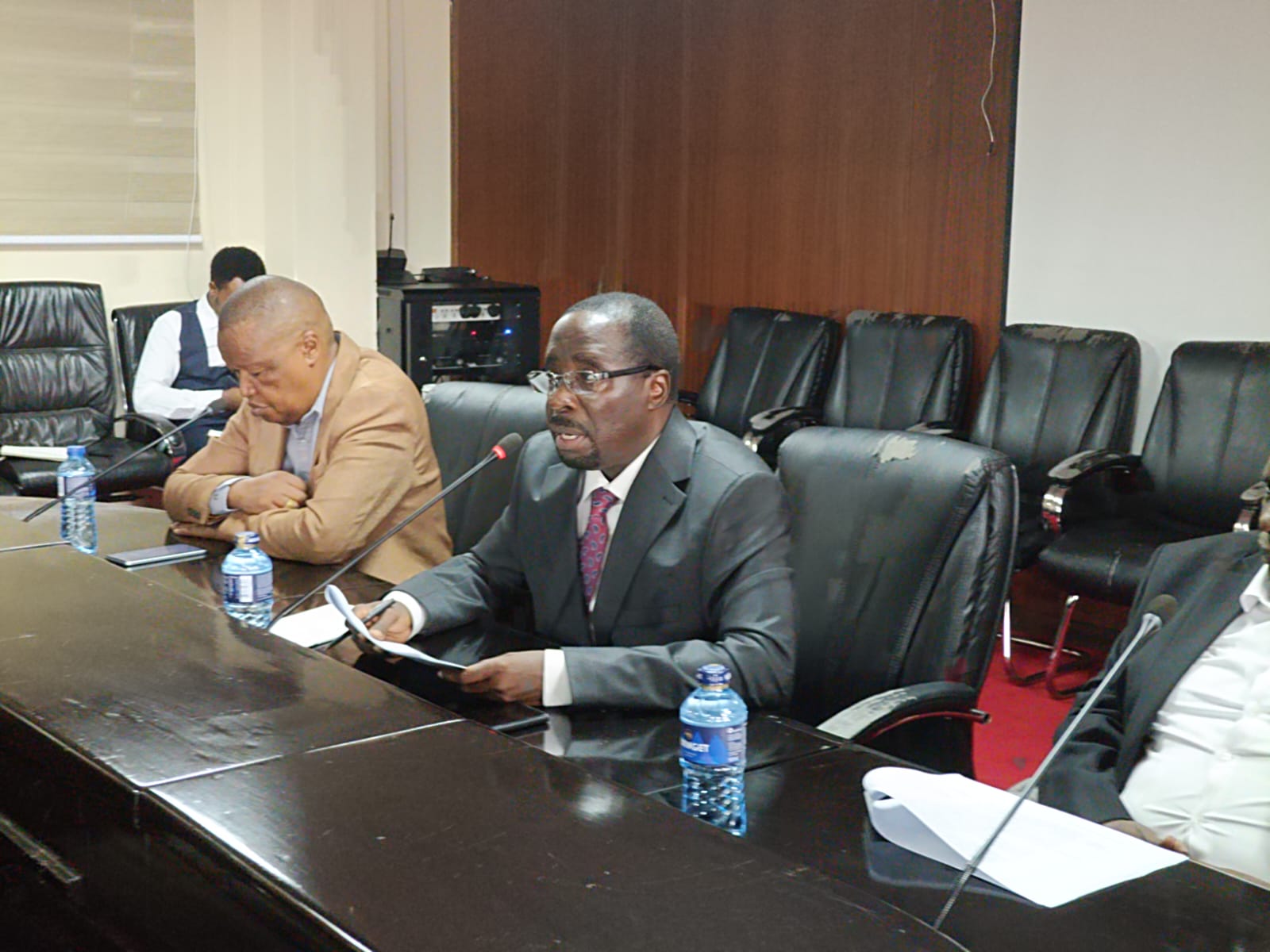
The federation chair Edwin Mukabana, in submissions to the parliamentary Transport Committee, is now urging Parliament to push for policy reforms and strategic planning to stabilize and modernise the sector.
In the submissions, the operators want the adoption of international models such as gross-cost contracts, where the operator is paid a fixed amount (per hour or kilometer) for providing a specific service, regardless of the revenue collected.
This, they argue, would allow public transport operators to offer services without destructive competition.
“If you go to town here now, there are buses all over, county governments have given slots all over, and we just don't know where it is going to end, because there are too many vehicles being put on the road against fewer passengers,” said Mukabana.
“This creates a lot of competition, and it creates accidents and creates the chaos that we see.”
The industry, which moves over six million passengers daily in Nairobi alone, is grappling with risks that deter investment.
According to the federation, over Sh70 billion has been invested in Nairobi’s matatu sector, yet the players feel ignored by government institutions.
The federation is now calling for an urgent need for a long-term national transport master plan, citing examples from countries where 25- to 50-year plans provide investment certainty and guide sustainable transport growth.
The operators criticized the National Transport and Safety Authority (NTSA) for issuing short-term licenses that hinder long-term planning. Unlike other countries where operators receive 10- to 12-year licenses, Kenya’s one-year permits create instability, making it difficult to invest in permanent staff or infrastructure.
“You can’t run a proper public transport system without a master plan. Such a plan would give private investors the confidence to commit to long-term ventures, including purchasing buses that operate for 10–15 years, rather than being phased out prematurely due to policy instability,” said Mukabana.
Under some of their proposals, matatu operators across Kenya will have to be accredited by a specially approved government institution before seeking employment in the sector, similar to what is happening in rail and air transport.
“Chairman, you are aware that for the Ministry of Health to function properly, we train a lot of doctors, nurses, and medic officers using government funds. But for anybody to touch a student, it must be a trained teacher, and most of them are through government training institutes,” argued Mukabana.
“In transport, there is the East African School of Aviation that trains airline people. In railway, we have the Railway Training Institute. In marine, we have Bandari College. In pipeline, which is part of transport, we have the Morendat Institute.”
The Federation also wants the Nairobi Metropolitan Area Transport Authority (NaMATA), which currently operates under an executive order, to be anchored in legislation to better coordinate transport across Nairobi and neighboring counties, including Machakos, Kiambu, Kajiado, and Murang’a.
In a twist, however, the operators rejected the notion of public transport as a free market, arguing that it should be a controlled sector like aviation.
They urged the committee to implement route planning and fleet limits to prevent chaos.
“Public transport is always operated as a controlled market. You can't allow planes to leave Wilson Airport at will, land at will, and take off at will, wait to fill passengers, and go. It is never done like that. So it is high time that we had interventions from this committee to ensure that transport is a controlled market,” added Mukabana.
Members of Parliament expressed concern over the issues raised and acknowledged the need to involve other agencies like the NTSA in future engagements to address systemic problems.
“I think this is a discussion that will require a multi-stakeholder approach. We can convene in June with all the involved parties to address them,” said Transport Committee Chair George Kariuki.