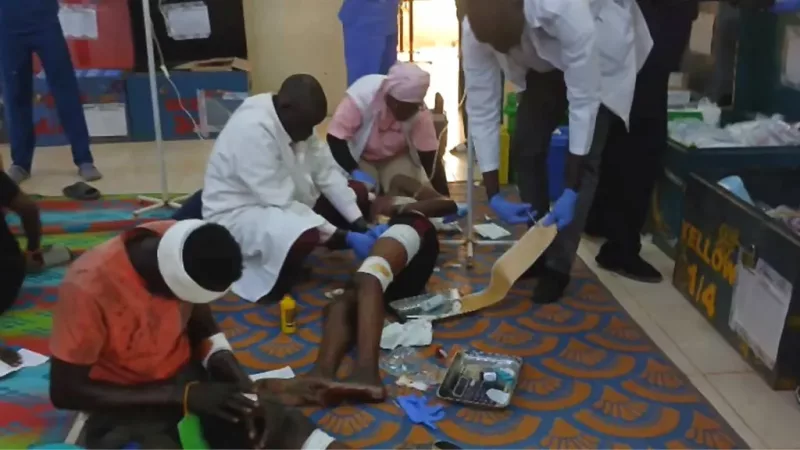
Patients suffering from meningitis are set to receive improved healthcare services after the World Health Organization published its first-ever global guidelines for diagnosis, treatment and care.
The guidelines will speed up detection, ensure timely treatment and improve long-term care for those affected.
Based on the latest evidence-based recommendations, the guidelines provide a critical tool for reducing deaths and disability caused by the disease.
The disease remains a significant global health threat despite effective treatments and vaccines against some of its forms.
Its symptoms include high fever, severe headaches, neck stiffness, vomiting, confusion, light sensitivity, and fontanelle bulging in infants.
Bacterial meningitis is the most dangerous form and can be fatal within 24 hours.
Many pathogens can cause meningitis, with an estimated 2.5 million cases reported globally in 2019.
The number includes 1.6 million cases of bacterial meningitis, which resulted in approximately 240,000 deaths.
Around 20 per cent of people who contract bacterial meningitis develop long-term complications, including disabilities.
The disease also carries heavy financial and social costs for individuals, families, and communities.
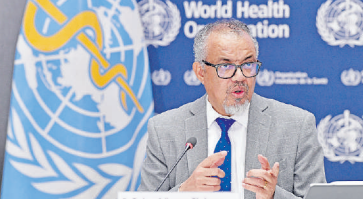
WHO director-general Dr Tedros Ghebreyesus said bacterial meningitis kills one in six patients and leaves many others with lasting health challenges.
"Implementing these new guidelines will help save lives, improve long-term care for those affected by meningitis, and strengthen health systems."
Meningitis can affect anyone anywhere and at any age. However, the disease burden remains particularly high in low- and middle-income countries and in settings experiencing large-scale epidemics.
The highest burden of disease is in a region of sub-Saharan Africa, referred to as the ‘meningitis belt’, which is at a high risk of recurrent epidemics.
Kenya’s Health Ministry in 2023 finalised a draft National Meningitis Elimination Plan, inspired by WHO's global roadmap to defeat meningitis by 2030.
The strategy focuses on prevention and epidemic control, diagnosis and treatment, disease surveillance, care and support, and advocacy and engagement.
Meningitis is a grave public health concern that claimed 250,000 lives in the country in 2019 and affected survivors profoundly.
Despite being preventable through vaccination, meningitis lags behind other preventable diseases.
The WHO guidelines say improving clinical management is essential to reducing mortality and morbidity, minimising long-term complications and disability, and improving the quality of life of affected individuals and communities.
The guidelines provide evidence-based recommendations for clinical management of children over one month of age, adolescents, and adults with acute community-acquired meningitis.
They address all aspects of clinical care, including diagnosis, antibiotic therapy, adjunctive treatment, supportive care, and management of long-term effects.
Given the similarities in clinical presentation, diagnosis and management approaches across different forms of acute community-acquired meningitis, the guidelines address both bacterial and viral causes.
The guidelines provide recommendations for both non-epidemic and epidemic settings, the latter superseding previous 2014 WHO guidelines, which covered meningitis outbreak response.
As resource-limited settings bear the highest burden of meningitis, the guidelines have been specifically developed to provide technical guidance suitable for implementation in low- and middle-income countries.
The guidelines are intended for use by healthcare professionals in first- and second-level hospitals, including emergency, inpatient, and outpatient services.
Policymakers, health planners, academic institutions, and civil society organisations can also use them to inform capacity-building, education, and research efforts.
The guidelines contribute to the broader Defeating Meningitis by 2030 Global Roadmap, adopted by WHO member states in 2020.
The roadmap aims to eliminate bacterial meningitis epidemics, reduce cases of vaccine-preventable bacterial meningitis by 50 per cent and deaths by 70 per cent, and reduce disability and improve quality of life after meningitis.
Achieving these goals requires coordinated action across five key areas. These include diagnosis and treatment, prevention and epidemic control, disease surveillance, care and support for those affected by meningitis and advocacy and engagement.